
A debt mutual fund is a SEBI-regulated investment scheme that pools money from retail investors and deploys it into fixed-income instruments (government bonds, corporate bonds, treasury bills, commercial paper, and other debt securities) to generate stable, predictable returns.
Whether you just heard this term for the first time, are weighing it against your fixed deposit, or want stability after a rough equity portfolio time, investors find this common pathway in Debt Mutual Funds.
This guide covers what debt mutual funds are, how they work, and when they make sense for Indian investors in 2026. One thing to know before you go further: if you put in a lump sum, your returns will show up as CAGR (how fast your money actually grew in an annual year) . If you invest through a SIP, which is measured in XIRR instead, because each instalment goes in on a different date and needs its own calculation. Both are explained in context inside this guide.
Related Reading Section: What is XIRR in Mutual Funds | What is CAGR in Mutual Funds
A debt mutual fund is a category of mutual fund scheme that invests in fixed-income or debt securities, where the borrower agrees to pay a fixed rate of interest and return the principal at maturity. These instruments include Government of India securities (G-Secs), state development loans, corporate bonds, debentures, treasury bills, certificates of deposit, and commercial paper.
Unlike equity mutual funds that buy ownership stakes in companies listed on NSE and BSE, debt mutual funds lend money. The fund becomes the creditor. Returns come from interest income and from changes in the market price of the bonds the fund holds.
Think of debt mutual fund as a professionally managed lending pool like any other Mutual Funds. You and many other investors like you contribute ₹10,000 or any such amount. The fund manager deploys this collective capital by lending it to the Government of India, AAA-rated PSUs, or high-quality corporates at agreed interest rates. The interest income flows back to you as NAV appreciation, quietly and daily, without you having to track individual bonds.
A debt mutual fund gives you exposure to the same instruments as direct bond investing with a starting amount as low as ₹500. By contrast, direct bond investing requires buying large, expensive blocks and dealing with complex paperwork.

What Is NAV In Mutual Funds?
Two concepts drive everything in a debt mutual fund: yield and duration.
| Concept | What It Means | Low = | High = |
| Yield | Interest rate the fund earns on bonds it holds | Lower income, more stable NAV | Higher income, more NAV movement |
| Duration | Sensitivity of NAV to interest rate changes | Barely moves when RBI acts (liquid fund, 91 days) | Swings harder when RBI acts (gilt fund, 10 years) |
Yield is the interest rate the fund earns on the bonds it holds. When the RBI cuts rates, new bonds entering the market pay less interest than the bonds your fund already owns. That makes your fund's older, higher-paying bonds more valuable. Their prices rise and your NAV goes up. When the RBI raises rates, the reverse happens. Your existing bonds look less attractive compared to newer ones, their prices fall, and your NAV dips temporarily.
Duration tells you how strongly your fund reacts to that movement. A liquid fund holding bonds that mature in 91 days barely feels a rate change. A gilt fund holding 10-year government bonds feels it sharply, because those bonds have years left before they can reprice.
In short, yield tells you what your fund is earning. Duration tells you how much risk it is carrying to earn it.
Every debt mutual fund's NAV (the per-unit price calculated daily from the current market value of all bonds the fund holds) is published on BSE and NSE every business day. Unlike a fixed deposit where your return is locked in from day one, the NAV of a debt fund moves with the market. How much it moves depends entirely on the type of deb mutual fund you are in.
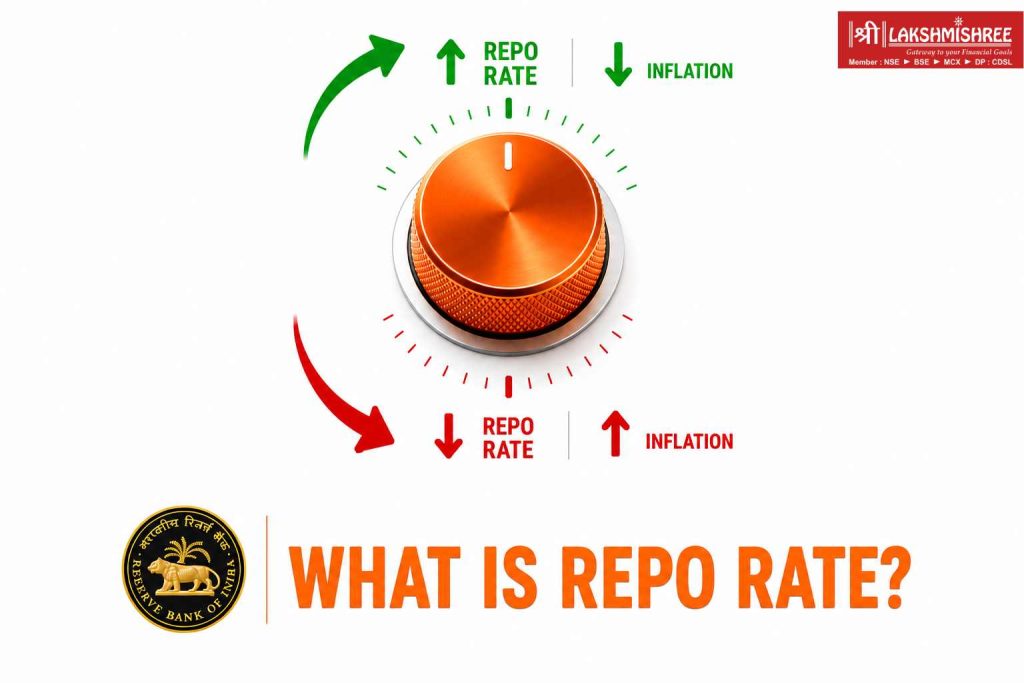
Related reading form this section: What is repo rate and how it affects you.
SEBI has classified debt mutual funds into 16 categories based on maturity profile and credit quality. Of these, the following 9 are most relevant for retail investors in India:
| Fund Type | Where It Invests | Ideal Holding Period | Risk Level |
| Liquid Fund | Money market instruments up to 91 days | 1 day to 3 months | Very Low |
| Ultra Short Duration Fund | Instruments with 3–6 month maturity | 3–6 months | Low |
| Short Duration Fund | Instruments with 1–3 year maturity | 1–3 years | Low to Moderate |
| Corporate Bond Fund | High-rated corporate bonds (min 80% AA+) | 2–3 years | Moderate |
| Banking and PSU Fund | Banks, PSUs, PFIs only | 2–3 years | Low to Moderate |
| Gilt Fund | Government securities only | 3–5 years+ | Moderate |
| Dynamic Bond Fund | Actively managed across maturities | 3+ years | Moderate |
| Credit Risk Fund | Lower-rated bonds (min 65% below AA) | 3+ years | High |
| Overnight Fund | Overnight securities only | 1 day | Negligible |
Liquid and overnight funds are your cash management tools: safer than savings accounts, more flexible than fixed deposits, and redeemable within one business day. Corporate bond and banking and PSU funds are the workhorses for 2 to 3 year money. Gilt funds are the interest rate play, powerful when the RBI rate cycle turns downward and volatile when rates are rising.
If you want to explore all 16 categories, the complete classification is available on the AMFI/SEBI website.
Most fixed-income options in India ask you to choose between safety and access. A fixed deposit gives you safety but locks your money. A savings account gives you access but barely beats inflation. A debt mutual fund gives you both, and that is what makes it different from every other fixed-income instrument available to Indian retail investors.
Here is what you actually get:
One thing that separates debt funds from almost every other fixed-income product: returns accrue as NAV appreciation, not as periodic interest payments. The bank decides when your FD interest is credited and taxed. In a debt fund, you decide when to redeem, which means you decide when the tax event happens. That single difference can save investors in higher tax brackets a meaningful amount every year simply through timing.
The most underrated benefit which can benefit someone who is asking “what is debt mutual fund” for Indian retail investors is liquidity without penalty. A bank fixed deposit locks your money for a fixed tenure. Breaking it early costs you 0.5–1% interest penalty. A debt mutual fund has no such penalty.
Three further benefits:
Debt mutual funds are not risk-free. But the risks are defined, measurable, and manageable once you know what to look for.
The Interest Rate Risk is the one most investors feel first. When the RBI raises the repo rate, bond prices fall and your fund's NAV dips. The longer your fund's duration, the harder it falls. This is not a theory. In the rising rate environment of 2022 and 2023, investors who held gilt funds and long duration funds watched their NAV deliver negative or near-zero returns for several quarters in a row, not because the fund manager made a mistake, but because they were in the wrong type of fund at the wrong point in the rate cycle.
Credit risk is quieter but more permanent.Interest rate risk reverses when rates turn. Credit risk does not always recover. If a bond issuer in the fund's portfolio defaults or gets downgraded by a rating agency, the fund's NAV can fall sharply and may not come back. The 2018 to 2019 NBFC credit crisis made this real for Indian investors. When IL&FS and DHFL defaulted, several debt funds holding their bonds saw NAV drops that took years to recover, and some never fully did.
Liquidity risk
It is the least discussed and the most dangerous in a crisis. A debt fund with low AUM (Assets Under Management, the total corpus the fund manages) holding illiquid bonds can run into serious trouble if a large number of investors try to redeem at the same time. The fund may be forced to sell bonds at distressed prices to meet redemptions, which hurts the NAV for every investor still holding units. SEBI introduced liquidity management rules post-2020 to reduce this risk, but it remains a real factor for smaller or niche debt fund categories.
This is the section most finance articles explain poorly, and getting it wrong costs you real money. Debt mutual fund taxation changed fundamentally in April 2023, and what you pay now depends entirely on when you invested, not just how long you held.
The older rules still apply to those units. If you held them for more than 24 months, your gains are taxed as LTCG (Long Term Capital Gains) at 12.5% without indexation benefit. If you held them for 24 months or less, your gains are taxed at your applicable income tax slab rate.
All gains are treated as short-term capital gains and taxed at your slab rate, regardless of how long you hold the fund. One year, five years, ten years — it does not matter. The holding period no longer changes your tax treatment.
| Purchase Date | Holding Period | Tax Treatment |
| Before April 1, 2023 | More than 24 months | LTCG at 12.5% without indexation |
| Before April 1, 2023 | 24 months or less | STCG at your slab rate |
| On or after April 1, 2023 | Any holding period | Slab rate, always |
What this means in plain numbers:
Before 2023, if you were in the 30% tax bracket and held a debt fund for 3 years, indexation could reduce your effective tax to as low as 5 to 8% on real gains. That advantage is gone. Today, a 30% bracket investor pays 30% on debt fund gains, the same as on fixed deposit interest.
| Your Tax Bracket | FD Interest Tax | Debt Fund Tax (Post April 2023) |
| 5% | 5% | 5% |
| 20% | 20% | 20% |
| 30% | 30% | 30% |
So has the debt fund advantage disappeared entirely?
Not entirely. Three advantages remain that a fixed deposit cannot match:
For investors in the 5% or nil tax bracket, debt mutual funds remain highly attractive. For investors in the 30% bracket, the decision now comes down to how much you value liquidity and redemption timing over the certainty of a fixed deposit rate.
One important distinction: ELSS funds (Equity Linked Savings Scheme) are equity-oriented and taxed under equity rules, not debt rules. Do not confuse them with debt mutual funds when planning your tax strategy.
LTCG Vs STCG taxation: The Complete Guide
If you searched "what is debt mutual fund," there is a good chance a fixed deposit is already sitting somewhere in your mind as the comparison point. That is exactly where most Indian investors start. FD is familiar, FD is safe, FD is what your parents used. The question you are really asking is not just what a debt fund is. It is whether it is worth switching, or at least worth knowing about.
The honest answer is compared below objectively.
| Feature | Debt Mutual Fund | Bank Fixed Deposit |
| Returns | Market-linked (6–8% typical) | Fixed at booking (6.5–7.5% current range) |
| Liquidity | Any business day, no penalty | Penalty for premature withdrawal (0.5–1%) |
| TDS | No TDS until you redeem | TDS deducted if interest exceeds ₹40,000/year |
| Tax (30% bracket) | Slab rate on gains at redemption | Slab rate on interest every year |
| Capital safety | Not guaranteed (NAV fluctuates) | DICGC insured up to ₹5 lakh |
| Minimum investment | ₹500 (most funds) | ₹1,000 (most banks) |
| Loss set-off | Losses can be carried forward against future gains | Not allowed |
| Expense | Expense ratio of 0.1–0.5% (direct plans) | No such charge |
If your debt fund makes a loss, you can carry it forward and set it off against capital gains in future years. FD interest has no such relief. It is taxed as income every year, whether you withdraw it or not.
A 7.2% FD booked today pays 7.2% regardless of what the RBI does next. A debt fund's return moves with bond prices and interest rates. If you cannot afford any uncertainty on a specific corpus, the FD wins.
Debt mutual funds make sense when you need liquidity, want control over your tax timing, or are parking short-term money. Fixed deposits make sense when the return must be guaranteed and certainty matters more than flexibility.
Most investors spend more time picking a restaurant than picking a debt fund. That is fine for dinner. But a wrong debt fund choice can quietly erode capital you spent years building, through hidden credit risk, mismatched duration, or a fund house you never researched. Here is what actually matters before you put your money in.
| # | What to Check | What to Do |
| 1 | Duration vs your time horizon | Under 1 year: liquid or overnight funds. 1–3 years: short duration or corporate bond funds. 3+ years: gilt or dynamic bond funds. Getting this wrong is the most common mistake |
| 2 | Credit quality of the portfolio | 90%+ of the portfolio should be AAA-rated or government-backed. Avoid credit risk funds unless you fully understand that higher returns here mean lower-quality borrowers. |
| 3 | Modified duration number | A modified duration of 3 means a 1% rate rise causes approximately a 3% NAV fall. Check this number and match it honestly to your rate outlook and risk tolerance |
| 4 | Expense ratio of direct vs regular plan | Even a 0.3–0.5% difference matters when gross returns are only 6–8%. That gap compounds silently every year. Always choose direct plans over regular plans |
| 5 | AUM size and fund house history | Low AUM funds holding illiquid bonds crack under redemption pressure in bad markets. Stick to established, SEBI-registered AMCs with at least 5–8 years of verified history |
| 6 | AMC-level diversification | Two funds from the same AMC often hold the same bonds and the same issuers. That is not real diversification. Split your money across two different fund houses |
| 7 | Promoter-level concentration in portfolio | A fund can lend to three seemingly different companies that share one promoter. One group default hits all three at once. Always check who controls the borrowers, not just who they are |
| 8 | Unusually high returns as a warning sign | High returns in a debt fund mean the manager is taking on credit or duration risk to generate them. Ignore star ratings for this reason. Debt funds are for preserving capital, not chasing it |
You can invest in Debt Mutual Funds through few channels:
Or,
Always choose the Growth option over the Dividend option to allow NAV to compound without triggering unnecessary tax events. For liquid and overnight funds, lump sum deployment makes more sense than SIP (Systematic Investment Plan- investing a fixed amount at regular intervals). SIPs suit longer duration categories where averaging in over time adds value.
Debt mutual fund ek SEBI-registered investment scheme hai jo aapka paisa government bonds, corporate bonds, aur doosre fixed income instruments mein lagaata hai. Yaani yeh company ya sarkar ko paisa udhar deta hai aur uspar faida kamaata hai.
Equity mutual fund ki tarah yeh share market mein seedha invest nahi karta, isliye NAV zyada stable rehta hai. Liquid funds mein 1 din mein paisa nikal sakte hain, FD ki tarah lock-in nahi hota.
April 2023 ke baad taxation badal gayi hai. Ab debt fund ka faida aapke income tax slab ke hisaab se lagta hai. Pehle wali indexation benefit khatam ho gayi. Toh 30% tax bracket waale investors ko ab FD aur debt fund ke returns carefully compare karna chahiye.
A debt mutual fund is not a replacement for equity. It is the stability layer in a complete portfolio. It is the part that holds value when markets fall, provides liquidity when you need it, and compounds quietly while your equity SIPs do the heavy lifting over the long term.
The post-2023 tax changes have narrowed the gap between debt funds and fixed deposits for investors in the 30% bracket. But liquidity, redemption timing control, and access to professional credit management are advantages no fixed deposit can replicate.
Used correctly, a debt mutual fund is not a compromise between safety and returns. It is the instrument that lets you stay invested in equity without being forced to sell it at the wrong time. That quiet role is worth more than most investors realise until the moment they actually need it.
Build your complete portfolio: equity growth plus debt stability, on Shree Varahi by Lakshmishree.
Open Demat Account →
A debt mutual fund is a SEBI-regulated scheme that invests in fixed-income instruments: government bonds, corporate bonds, treasury bills, and money market instruments. It generates returns through interest income and bond price changes. It offers more liquidity than fixed deposits and more stability than equity mutual funds.
Since April 1, 2023, all gains from debt mutual funds are taxed at your income tax slab rate, regardless of how long you hold the fund. The earlier 20% LTCG with indexation benefit for holdings beyond 3 years no longer applies. A 30% bracket investor now pays 30% on debt fund gains, the same rate as on fixed deposit interest.
The fund manager deploys your money into bonds and debt instruments that pay interest, which accrues daily into the fund's NAV. Bond prices also fluctuate with market interest rates. When rates fall, bond prices rise and NAV increases. When rates rise, bond prices fall and NAV dips temporarily, especially in longer duration funds.
Debt mutual funds carry interest rate risk and credit risk. They are not risk-free. Liquid funds, overnight funds, banking and PSU funds, and gilt funds have very low credit risk. No debt mutual fund guarantees returns the way a fixed deposit does, but well-managed debt funds have strong track records of capital preservation over their recommended holding periods.
Equity mutual funds invest in stocks listed on NSE and BSE. Returns are market-linked and volatile but higher over the long term. Debt mutual funds invest in bonds and fixed income instruments. Returns are more stable but lower. Equity suits long-term goals of 5 years or more. Debt mutual funds suit short to medium-term goals of 3 months to 3 years, emergency funds, and capital preservation needs.
Short-duration and corporate bond debt funds have historically delivered 6 to 8% returns in India, modestly ahead of average CPI inflation of 5 to 6%. They are not designed to deliver inflation-beating equity returns. Their purpose is capital preservation, liquidity, and stable compounding over time.
When the RBI raises the repo rate, newly issued bonds offer higher interest than existing bonds, making existing bonds less valuable. Bond prices fall and the fund's NAV dips. A gilt fund can fall 3 to 5% in a quarter of sharp rate hikes. Short duration and liquid funds are largely insulated from this movement. Matching your fund's duration to your holding period is the primary way to manage interest rate risk.
Debt mutual fund ek SEBI-registered scheme hai jo aapka paisa government aur corporate bonds mein lagaata hai. Share market mein seedha invest nahi karta, isliye zyada stable hota hai. Liquid funds mein 1 din mein redemption milta hai. Lekin April 2023 ke baad indexation benefit khatam ho gayi, isliye ab tax FD jaisi hi lagti hai.
Disclaimer: This article is for educational and informational purposes only and does not constitute investment advice or a recommendation to invest in any specific mutual fund scheme. Mutual fund investments are subject to market risks. Past performance is not indicative of future returns. Please read all scheme-related documents carefully before investing. Lakshmishree Investment and Securities is a SEBI-registered entity.