

Investing in the stock market can help investors build wealth over time, provided they make informed decisions and understand the risks involved. The best long term stocks are generally companies with sustainable business models, growth potential, and sound financial fundamentals. However, selecting stocks requires research, patience, and an investment strategy aligned with individual financial goals.
This article will explore the best long term stocks to invest in 2026.
Long-term stocks are shares investors plan to hold for several years, often five to ten years or longer. They are selected based on a company’s financial strength, business fundamentals, and growth potential.
Unlike short-term trading, long-term investing focuses on revenue growth, profitability, debt, management quality, and competitive advantages rather than daily price movements.
The aim is to benefit from business growth and, in some cases, dividend income. Reinvesting gains and dividends may also help build wealth through compounding.
However, holding a stock for years does not guarantee returns. Investors should regularly review their holdings and reassess whether each company’s growth prospects and fundamentals remain strong.
Investors looking for the best long term stocks in India can explore companies across banking, pharmaceuticals, jewellery, digital marketplaces, education, media & entertainment and security technology. However, a company's industry or past share price performance alone does not make it a suitable long-term investment.
Below is a table showcasing some of the top long term stocks for 2026, including their market capitalization and one-year share price CAGR.
| Company Name | Market Cap (₹ crore)* | 1-Year Share Price CAGR* |
| Karur Vysya Bank | 32,853 | 50% |
| CarTrade Tech | 14,372 | 19% |
| Sky Gold | 14,269 | 173% |
| RBL Bank | 62,686 | 53% |
| Glenmark Pharmaceuticals | 68,276 | 18.89% |
| Punjab National Bank | 1,32,571 | -1.33% |
| City Union Bank | 22,523 | 48% |
| PhysicsWallah | 41,795 | N/A** |
| Sun TV Network | 23,641 | -14% |
| Aditya Infotech (CP PLUS) | 51,322 | 204.70% |
*Market capitalisation and 1-year growth data are based on the latest available figures and are subject to market fluctuations.
**The company was listed recently, so longer historical share price CAGR figures may not be available.
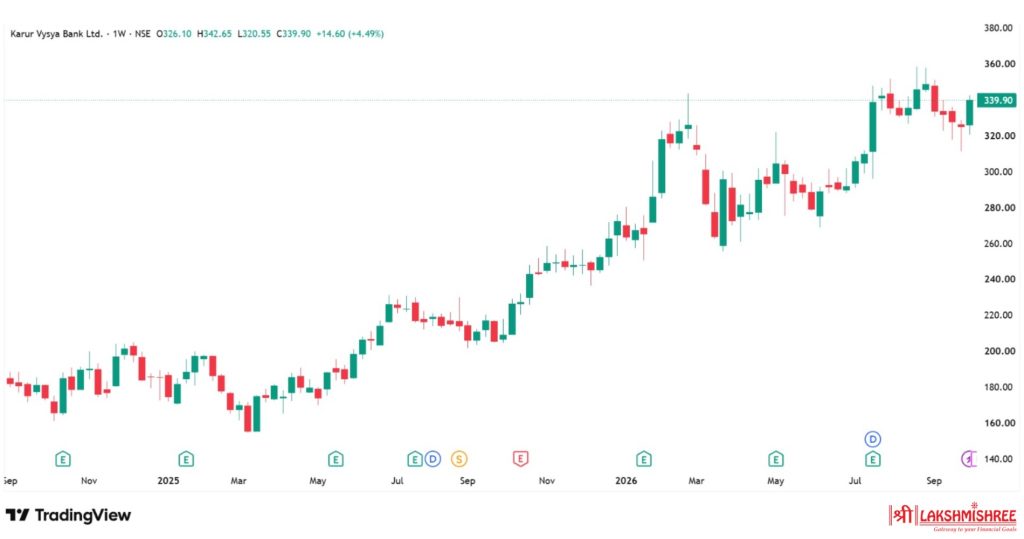
Karur Vysya Bank provides commercial banking, retail lending, corporate banking, and treasury services. Its potential growth drivers include credit expansion, deposit mobilisation, and improvements in operating efficiency. Investors should monitor asset quality, lending margins, and competition from larger private sector banks.
CMP: ₹340
Market Cap: ₹32,853 crore
P/E Ratio: 12.0
ROCE: 7.62%
Dividend Yield: 0.76%
| 1-Year Share Price CAGR | 3-Year Share Price CAGR | 5-Year Share Price CAGR |
| 50% | 45% | 54% |
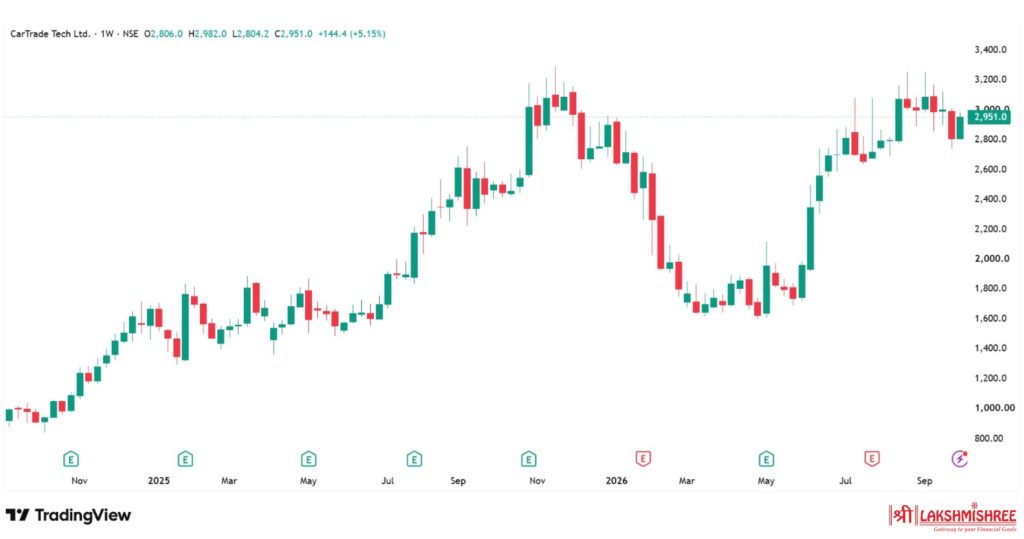
CarTrade Tech operates digital automotive platforms, including CarWale, BikeWale, and CarTrade. Its growth potential is linked to online vehicle transactions, platform expansion, and operational efficiency. Key risks include competition, changing automotive demand, and the possibility that a high valuation may limit future returns.
CMP: ₹2,951
Market Cap: ₹14,372 crore
P/E Ratio: 60.4
ROCE: 11.8%
Dividend Yield: 0.00%
| 1-Year Share Price CAGR | 3-Year Share Price CAGR | 5-Year Share Price CAGR |
| 19% | 67% | 16% |
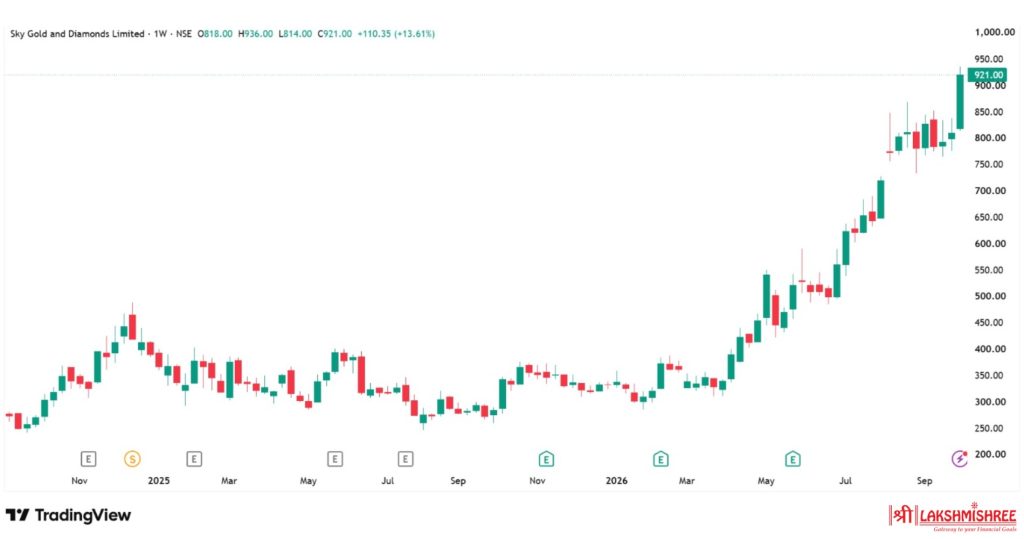
Sky Gold designs, manufactures, and markets gold jewellery, primarily through a business-to-business model. Its potential growth drivers include demand from organised jewellery retailers, customer expansion, and manufacturing capabilities. Investors should assess gold price movements, working-capital requirements, debt, and valuation.
CMP: ₹921
Market Cap: ₹14,269 crore
P/E Ratio: 59.3
ROCE: 23.7%
Dividend Yield: 0.00%
| 1-Year Share Price CAGR | 3-Year Share Price CAGR | 5-Year Share Price CAGR |
| 173% | 186% | 151% |
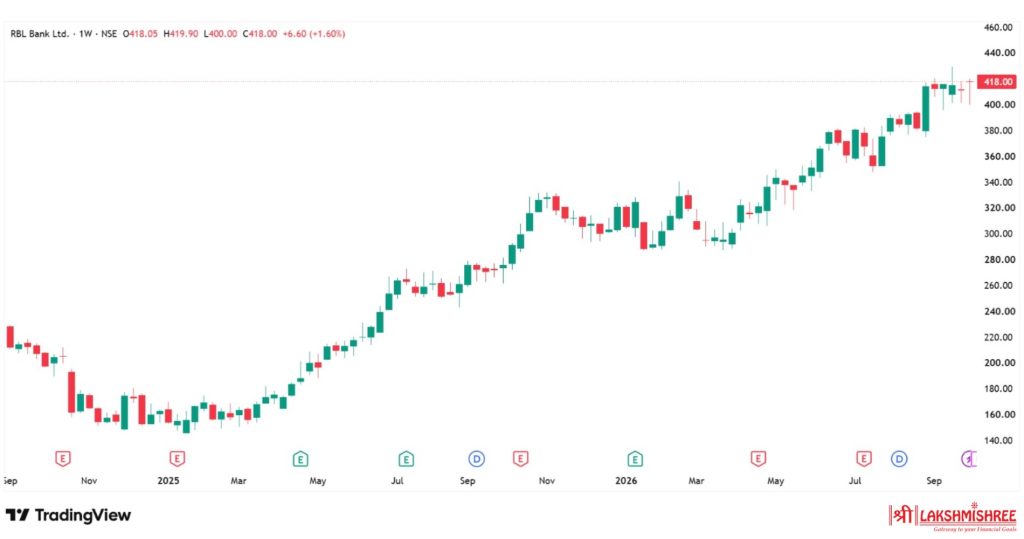
RBL Bank offers retail, commercial, corporate, and treasury banking services. Its long-term prospects depend on sustainable loan growth, deposit mobilisation, profitability, and effective credit risk management. Investors should closely monitor asset quality, credit costs, and the bank's ability to improve returns.
CMP: ₹404
Market Cap: ₹62,686 crore
P/E Ratio: 71.6
ROCE: 5.77%
Dividend Yield: 0.25%
| 1-Year Share Price CAGR | 3-Year Share Price CAGR | 5-Year Share Price CAGR |
| 53% | 21% | 17% |
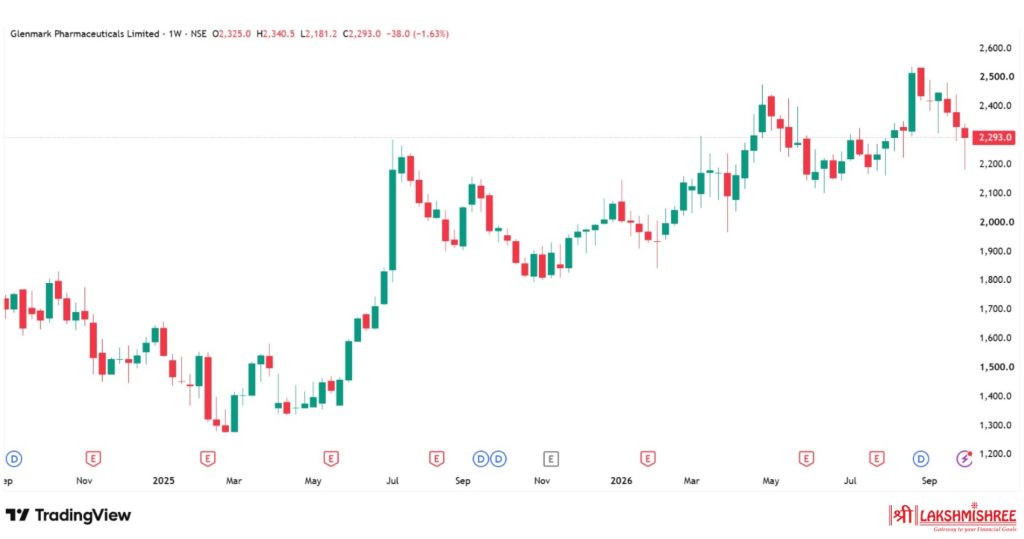
Glenmark Pharmaceuticals is a research-led pharmaceutical company with operations across generics, specialty medicines, and over-the-counter products. Product development, international market access, and demand for healthcare products may support growth. Important risks include regulatory compliance, pricing pressure, research expenditure, and competition.
CMP: ₹2,419
Market Cap: ₹68,276 crore
P/E Ratio: 46.8
ROCE: 6.51%
Dividend Yield: 0.21%
| 1-Year Share Price CAGR | 3-Year Share Price CAGR | 5-Year Share Price CAGR |
| 18.89% | 188.32% | 331.71% |
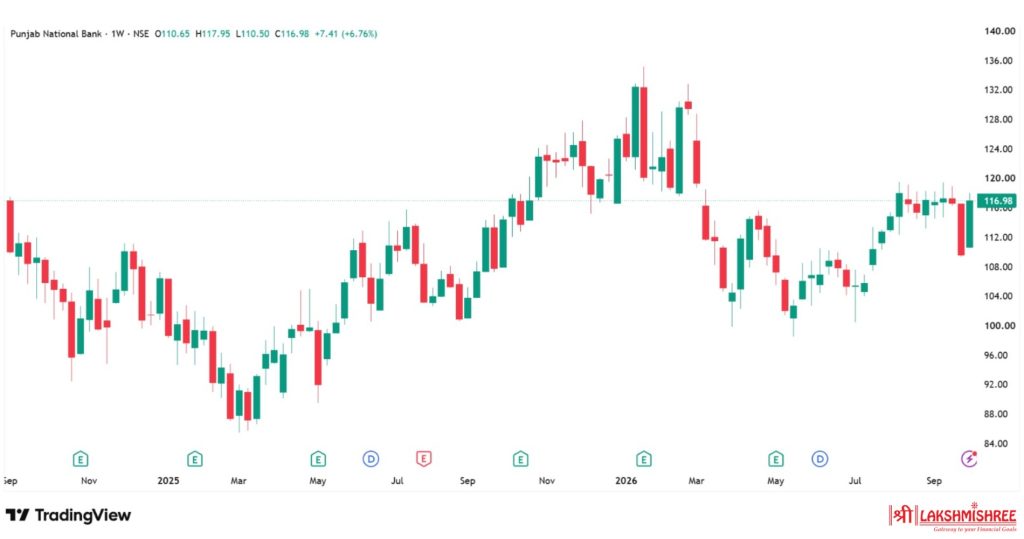
Punjab National Bank is a public sector bank offering banking and financial services throughout India. Its potential growth drivers include credit expansion, deposit growth, and improvements in asset quality and profitability. Investors should monitor non-performing assets, capital adequacy, and the effects of regulatory changes.
CMP: ₹116
Market Cap: ₹1,33,080 crore
P/E Ratio: 6.50
ROCE: 6.09%
Dividend Yield: 2.60%
| 1-Year Share Price CAGR | 3-Year Share Price CAGR | 5-Year Share Price CAGR |
| 9% | 17% | 23% |
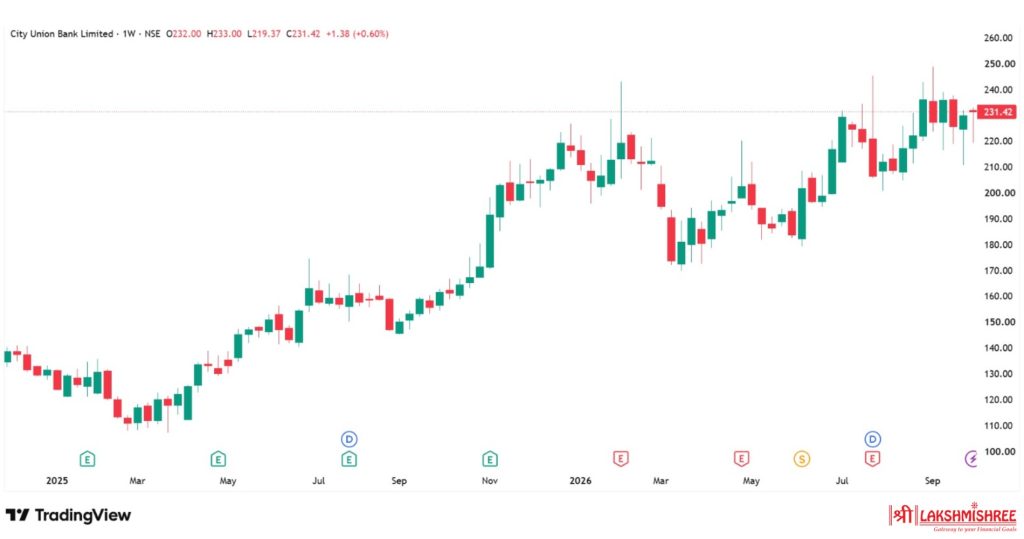
City Union Bank focuses on retail, wholesale, and business banking, with an established presence in South India. Its growth drivers include lending to businesses, customer expansion, and sustainable credit growth. Investors should assess loan quality, deposit costs, margins, and profitability before making investment decisions.
CMP: ₹227
Market Cap: ₹22,523 crore
P/E Ratio:16.0
ROCE: 6.74%
Dividend Yield: 0.88%
| 1-Year Share Price CAGR | 3-Year Share Price CAGR | 5-Year Share Price CAGR |
| 48% | 32% | 14% |
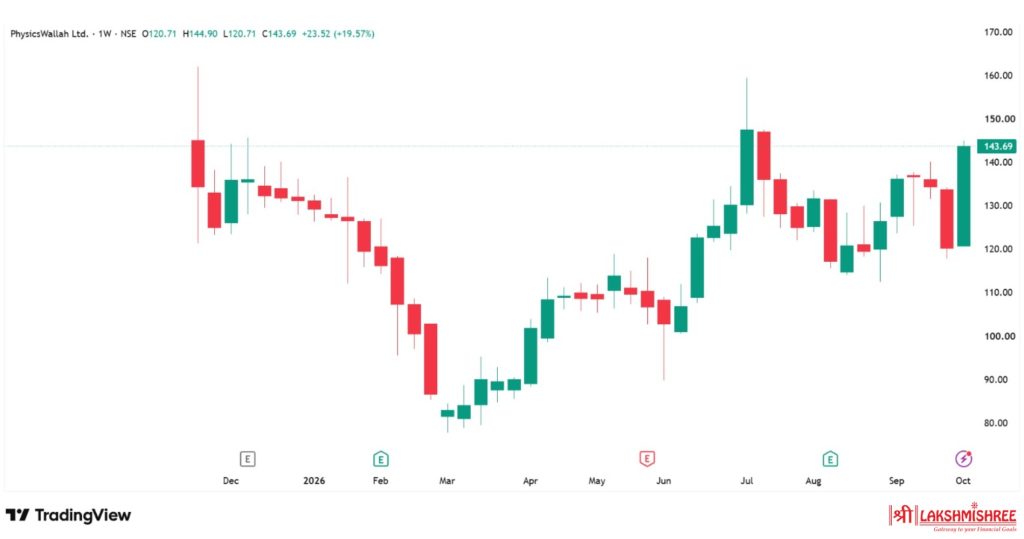
PhysicsWallah provides online, offline, and hybrid educational services, including competitive examination preparation and professional upskilling courses. Its growth potential depends on student enrolments, course expansion, and the ability to improve profitability. Competition, operating costs, and valuation are important risks to consider.
CMP: ₹144
Market Cap: ₹41,795 crore
P/E Ratio: 684
ROCE: 3.99%
Dividend Yield: 0.00%
Note: The company was listed recently, so longer historical share price CAGR figures may not be available.
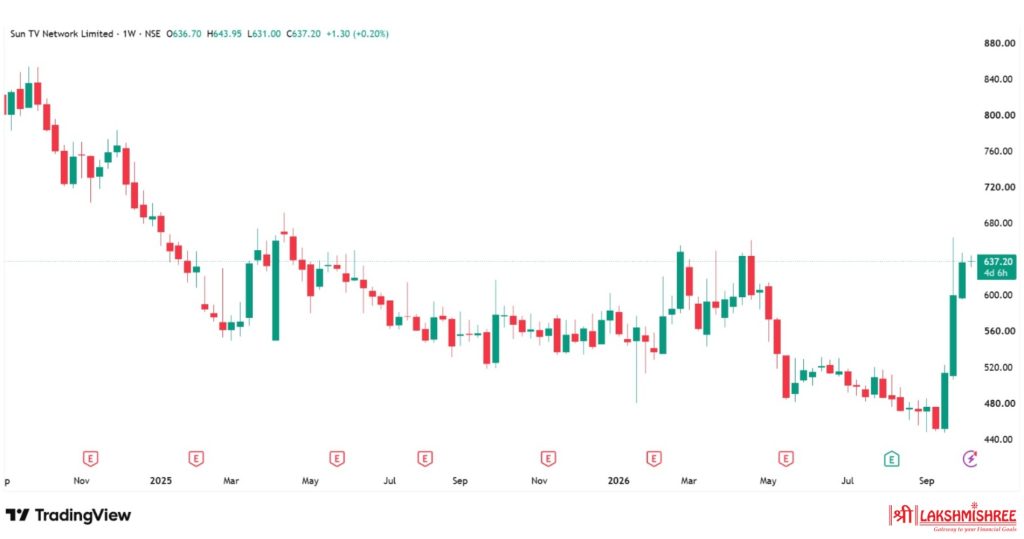
Sun TV Network operates television channels across several Indian languages, along with film production, FM radio, and the SUN NXT streaming platform.
Its growth drivers include regional content demand, advertising revenue, and digital streaming. However, competition from OTT platforms, changing viewing habits, and fluctuations in advertising spending may affect its performance. Investors should assess its financial growth and future prospects before investing.
CMP: ₹600
Market Cap: ₹23,641 crore
P/E Ratio: 15.3
ROCE: 16.5%
Dividend Yield: 2.08%
| 1-Year Share Price CAGR | 3-Year Share Price CAGR | 5-Year Share Price CAGR |
| -14% | -8% | -1% |
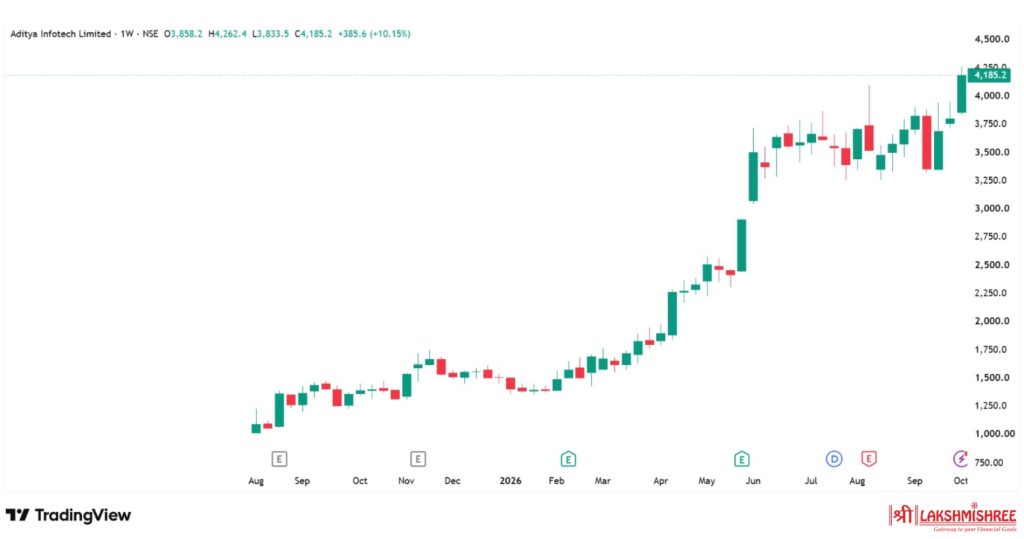
Aditya Infotech manufactures and supplies video surveillance and security products under the CP PLUS brand. Its product portfolio includes cameras, recording systems, access-control products, and related software and services. Demand for security technology and product innovation may support growth, while competition, working-capital needs, and valuation remain important risks.
CMP: ₹4,185
Market Cap: ₹51,322 crore
P/E Ratio: 108
ROCE: 28.6%
Dividend Yield: 0.04%
| 1-Year Share Price CAGR | 3-Year Share Price CAGR | 5-Year Share Price CAGR |
| 201% | Not available | Not available |
CMP, Market capitalisation, P/E Ratio, ROCE, Dividend Yield, 1-year share price CAGR, 3-year share price CAGR and 5-year share price CAGR data are based on the latest available figures and are subject to market fluctuations.
The stocks in this list represent several industries, each with different growth drivers and risks.
Sector diversification can help reduce exposure to individual industry risks. However, investors should also consider how much of their portfolio is concentrated in particular companies, sectors, or economic trends.
Related Reading: Best Banks in India 2026: Top Picks for Savings, Returns & Service | Top 10 Pharma Companies in India 2026 | Best Gold ETFs in India to Invest in 2026
Stocks offer the potential to build wealth over time. However, returns depend on business performance, market conditions, and the price investors pay.
Potential for Capital Appreciation: Companies that grow their revenue, improve profitability, and strengthen their market position may deliver long-term share price growth. However, high valuations can limit returns.
Benefits of Compounding: Reinvesting dividends and investment gains can help grow wealth over time. However, stock market returns are not guaranteed, and losses are possible.
Participation in Business Growth: Buying shares gives investors partial ownership of a company. Investors may benefit when businesses expand, introduce new products, or enter new markets successfully.
Dividend Income: Some companies distribute a portion of their profits as dividends. Investors can use these payments as income or reinvest them, although dividends are not guaranteed.
Before investing in long-term stocks, evaluate these key factors:
A company with strong fundamentals may still deliver disappointing returns if purchased at an excessive valuation. Therefore, consider both business quality and the price you pay.
Long-term investing can offer opportunities, but it also involves risks that investors should understand before committing their money.
Investors should review financial results, assess valuations, and reconsider their investment rationale when material changes occur.

Investing in long-term stocks involves more than selecting companies with attractive growth prospects. Follow these steps to build a disciplined approach:
The best long term stocks are not necessarily those that have delivered the highest returns in the past. Investors should focus on business fundamentals, sustainable growth, financial strength, and reasonable valuations. The ten companies discussed in this guide operate across different industries, offering distinct opportunities and risks.
Before investing, research each company's financial performance, compare its valuation with relevant peers, and consider how it fits your investment goals and risk tolerance. Past returns are not a guarantee of future performance, so make decisions based on current information rather than market trends alone.
The right stocks depend on an investor's goals, risk tolerance, and investment horizon. Investors can begin by researching companies with sustainable business models, healthy financials, competitive advantages, and reasonable valuations. No stock is guaranteed to outperform the market.
Long-term investors often consider a period of five to ten years or longer. However, the appropriate holding period depends on financial goals and the company's performance. Review investments periodically rather than holding a stock indefinitely without reassessing its fundamentals.
No. Stocks can experience volatility and permanent losses because of weak business performance, excessive valuations, economic downturns, or regulatory changes. Diversification and careful research can help manage risk, but neither eliminates it.
Examine revenue and earnings growth, debt levels, cash flow, return ratios, management quality, competitive advantages, and valuation. Compare these factors with industry peers and review recent financial statements before making an investment decision.
Disclaimer: This article is for educational purposes only and should not be considered financial advice. Always conduct your research and consider consulting with a financial advisor before making any investment decisions.