
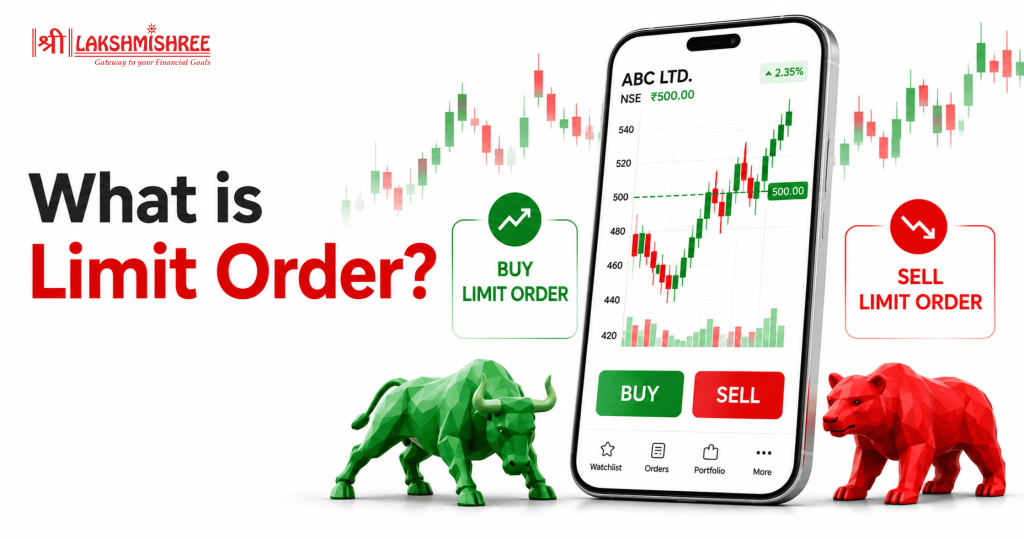
If you're new to stock trading, you might be wondering, what is limit order? The interesting part is that you may have already used one without knowing its technical name. For example, you decide to buy a stock only when its price comes to a certain level or sell it after it reaches your target price, you've essentially placed a limit order.
A limit order is one of the most widely used as it gives investors greater control over the price at which their trades are executed. Unlike market orders, which are filled immediately at the current market price, they are executed only when the stock reaches the specified price.
Understanding how this work can help investors and traders manage risk, avoid unfavourable price movements, and execute trades more strategically, especially during volatile market conditions.
It is an instruction given to your broker to buy or sell a stock at a specified price or better. Unlike a market order, which prioritises immediate execution, it prioritises the execution price.
Its primary purpose is to help investors trade at a price they are comfortable with rather than accepting the prevailing market price. This makes it particularly useful in volatile markets, where prices can change rapidly and unexpectedly.
For example, if ABC Ltd. is trading at ₹500 and you place a buy limit order at ₹490, the order will execute only if the stock price comes to ₹490 or below. Similarly, if you place a sell limit order at ₹525, your shares will be sold only if the market reaches ₹525 or higher.
This order type lets you set the price at which you want to buy or sell a stock. Instead of being executed immediately, the order is sent to the stock exchange and remains in the order book until the market reaches your specified price and a matching buyer or seller is available.
If these conditions are met, the order is executed at your limit price or a better price. Otherwise, it remains pending until it is executed, cancelled, or expires.
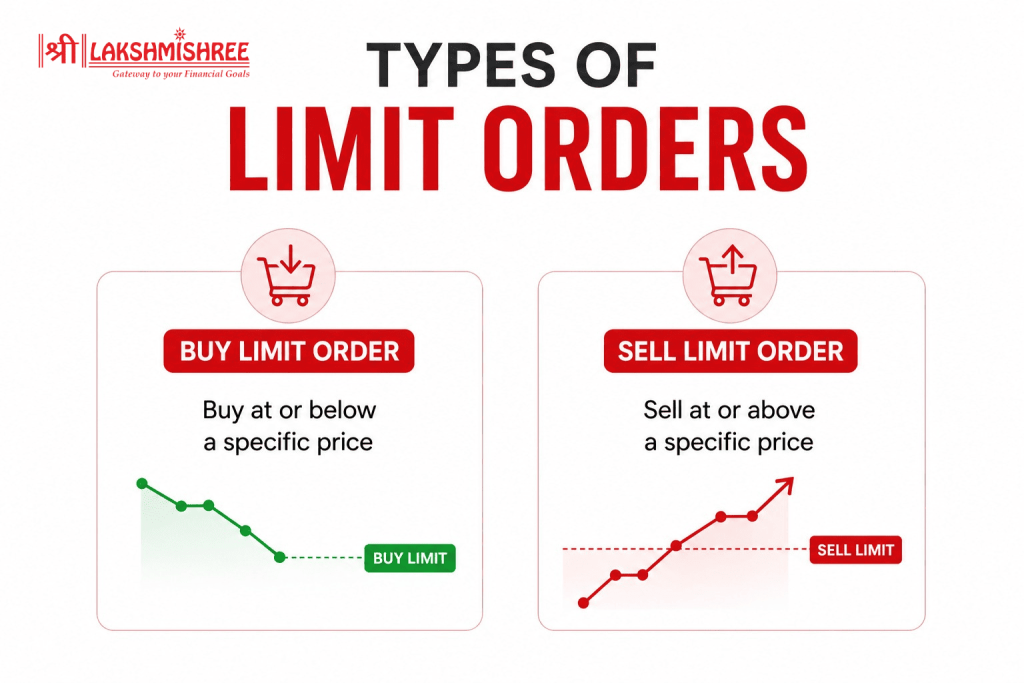
There are two primary types of limit orders, depending on whether you want to buy or sell a security. Both help investors control the execution price, but they are used for different trading objectives.
A buy limit order is an instruction to purchase a stock at your specified price or lower. It helps ensure that you do not pay more than the maximum price you are willing to spend.
You enter the highest price you're willing to pay for a stock. If the market price falls to that level or below and a matching seller is available, the order is executed.
A buy limit order is ideal when you:
A buy limit order suits investors who prefer entering stocks at predetermined prices instead of chasing market movements. This disciplined approach is a key part of successful equity investing.
A sell limit order is an instruction to sell a stock at your specified price or higher. It allows you to target a desired selling price without having to monitor the market continuously.
You enter the minimum price you're willing to accept for your shares. The order is executed only if the market reaches that price or a higher price and a matching buyer is available.
A sell limit order is useful when you:
Setting a predefined selling price encourages disciplined exits. Similarly, traders in short covering scenarios often plan their exit levels in advance to manage risk effectively.
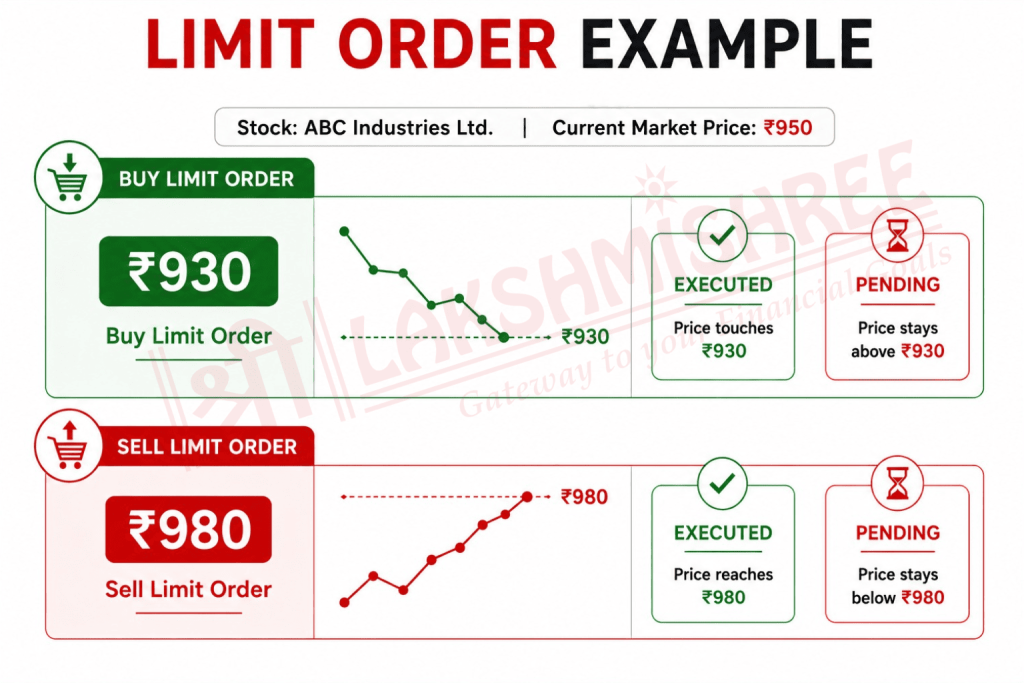
Understanding this concept becomes easier with a practical example.
Suppose ABC Industries Ltd. is currently trading at ₹950 per share.
You believe the stock offers better value at ₹930, so you place a buy limit order for 100 shares at ₹930.
There are two possible outcomes:
Now assume you already own 100 shares of ABC Industries Ltd., purchased at ₹900 per share. You want to book profits once the stock reaches ₹980, so you place a sell limit order at ₹980.
Again, two outcomes are possible:
They offer greater control over trade execution, but also have certain limitations that investors should keep in mind.
Although both limit orders and market orders are used to buy or sell securities, they differ significantly in how they are executed.
| Feature | Limit Order | Market Order |
| Definition | Executes only at the specified price or better. | Executes immediately at the best available market price. |
| Execution Priority | Price is prioritised over speed. | Speed is prioritised over price. |
| Price Certainty | High. You control the execution price. | Low. Final execution price may vary from the displayed market price. |
| Execution Speed | Depends on market conditions and price availability. | Usually executed immediately. |
| Slippage Risk | Low. | Higher, especially in volatile markets. |
| Suitable Market Conditions | Volatile or price-sensitive markets. | Highly liquid and stable markets. |
| Best Suited For | Investors and traders seeking price control. | Traders who prioritise immediate execution. |
| Chances of Execution | Not guaranteed. | Generally very high. |
In simple terms, a market order prioritises execution, while a limit order prioritises price. The right choice depends on whether your priority is completing the trade immediately or getting your desired price.
It is most effective when the price at which you trade is more important than immediate execution. Some common situations where investors use this option includes:
Using limit orders in these situations can help you trade with greater discipline while maintaining better control over your execution price.

While limit orders are straightforward, investors often make mistakes that reduce their effectiveness. Here are some common ones to avoid:
Avoiding these mistakes can improve the likelihood of successful order execution and help you trade more efficiently.
Placing a limit order through the Lakshmishree trading platform is a simple process:
1. Log in to your Lakshmishree trading account.
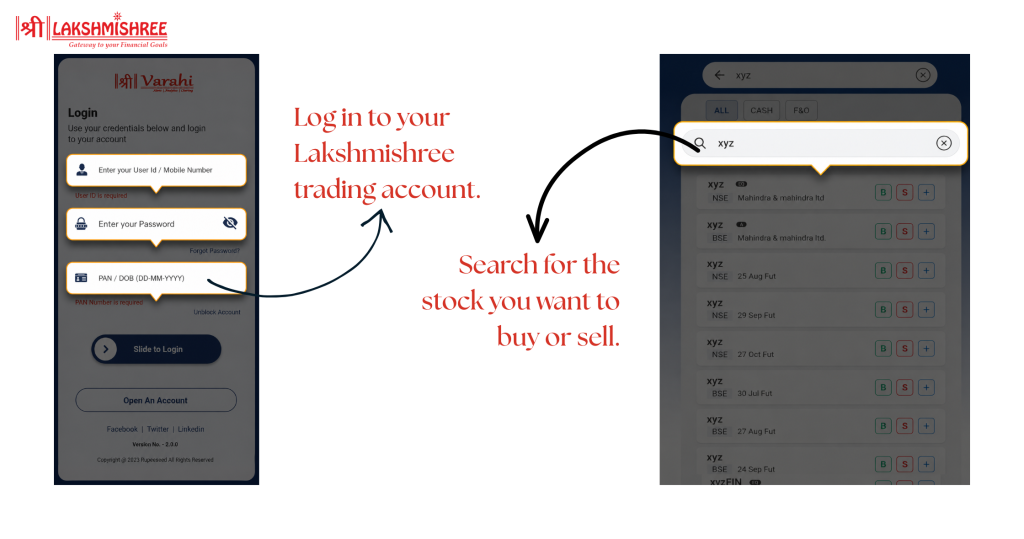
2. Search for the stock you want to buy or sell.
3. Click on Buy or Sell.
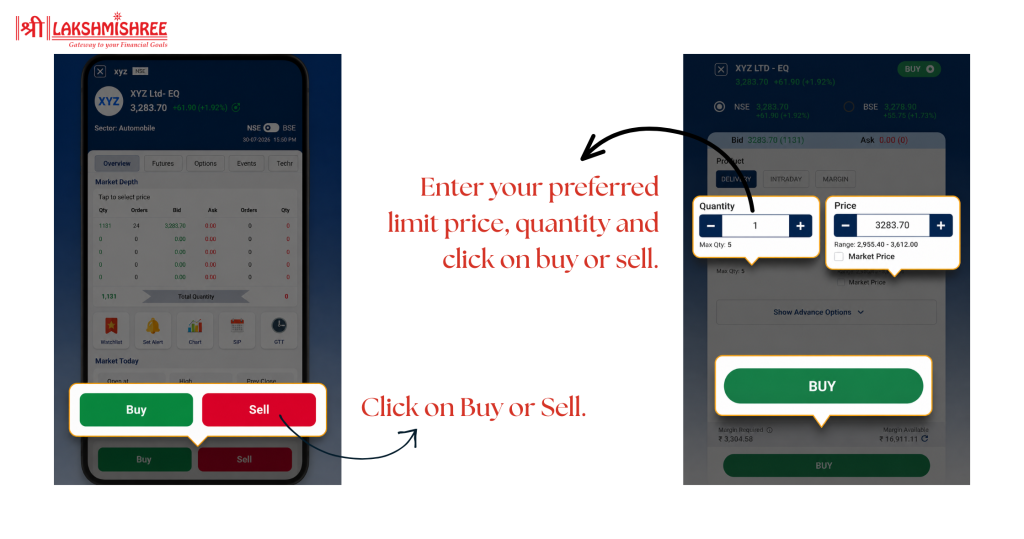
4. Enter your preferred limit price and the quantity and click on buy or sell.
5. Review all the order details carefully.
6. Submit the order and track its status through the Order Book.
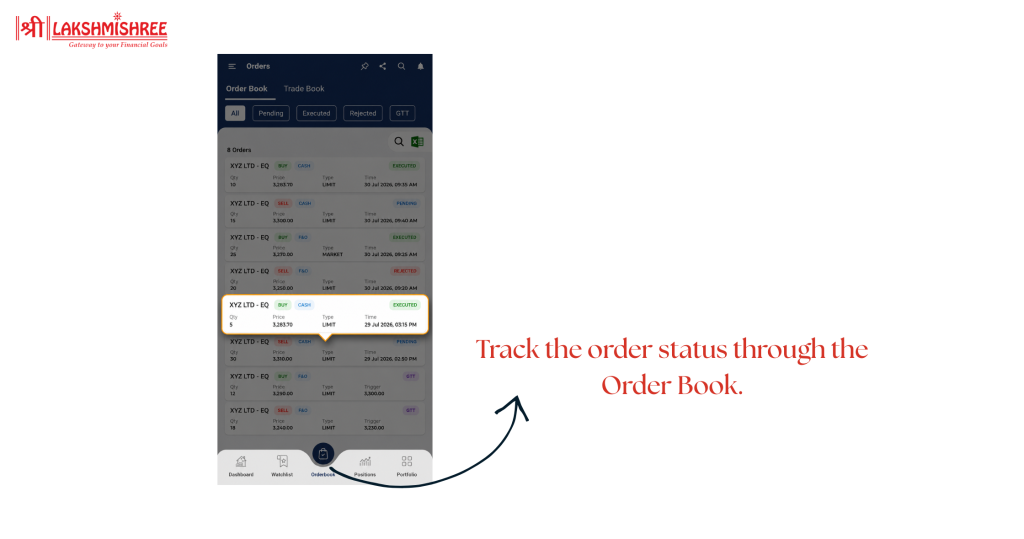
7. If the order has not been executed, you can modify or cancel it before it expires.
Understanding what is limit order can help you make better trading decisions by giving you greater control over the price at which your trades are executed. By allowing you to specify your preferred buying or selling price, it helps reduce the impact of sudden market fluctuations and supports more disciplined trading decisions.
However, while they offer better price certainty, they do not guarantee execution. Choosing between a limit order and a market order ultimately depends on your investment objectives, market conditions, and whether your priority is obtaining a specific price or executing the trade immediately. Understanding how both order types work can help you make more informed and confident trading decisions.
It is an instruction to buy or sell a security at a specified price or better. It gives investors greater control over the execution price.
A limit order remains pending until the market reaches your specified price and a matching buyer or seller is available. If these conditions are met, the order is executed.
A limit order prioritises price, while a market order prioritises immediate execution at the best available market price.
Yes. If the market does not reach your specified price before the order expires, it will lapse without execution.
Yes. If only part of your order can be matched at your specified price, a partial execution may occur.
Yes. They can help beginners avoid paying more than intended or selling below their desired price, especially in volatile markets.
Disclaimer: This article is intended for educational purposes only. Please note that the data related to the mentioned companies may change over time. The securities referenced are provided as examples and should not be considered as recommendations.