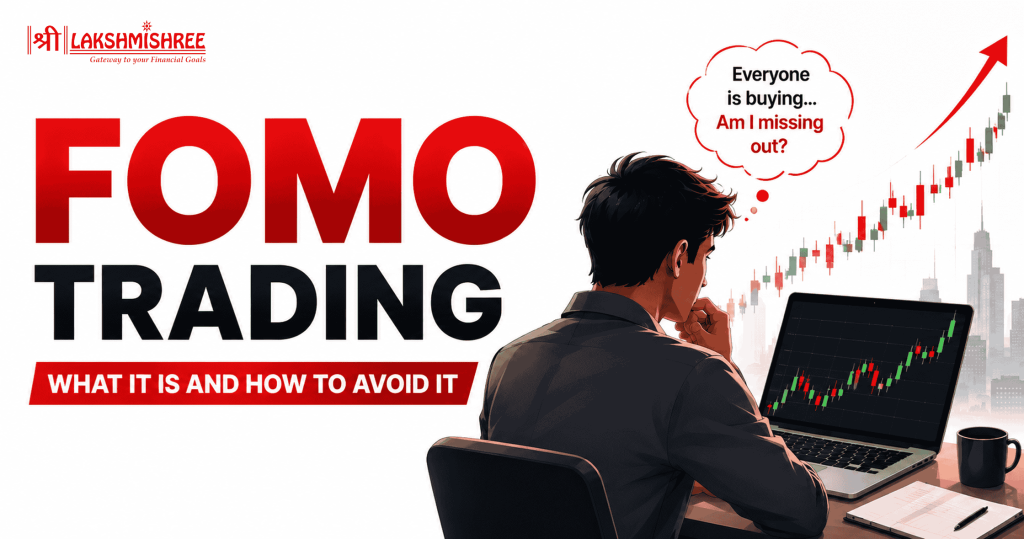
A stock suddenly takes off, everyone seems to be talking about it, and you start wondering if you are already too late. You feel an urge to enter before the price moves even higher, while the thought of missing out becomes harder to ignore. This is FOMO trading, and it can happen even when the trade was never part of your original plan.
This guide looks at how to recognize these situations and manage them with practical strategies, a structured trading plan, a simple pre-trade check, and regular journaling.
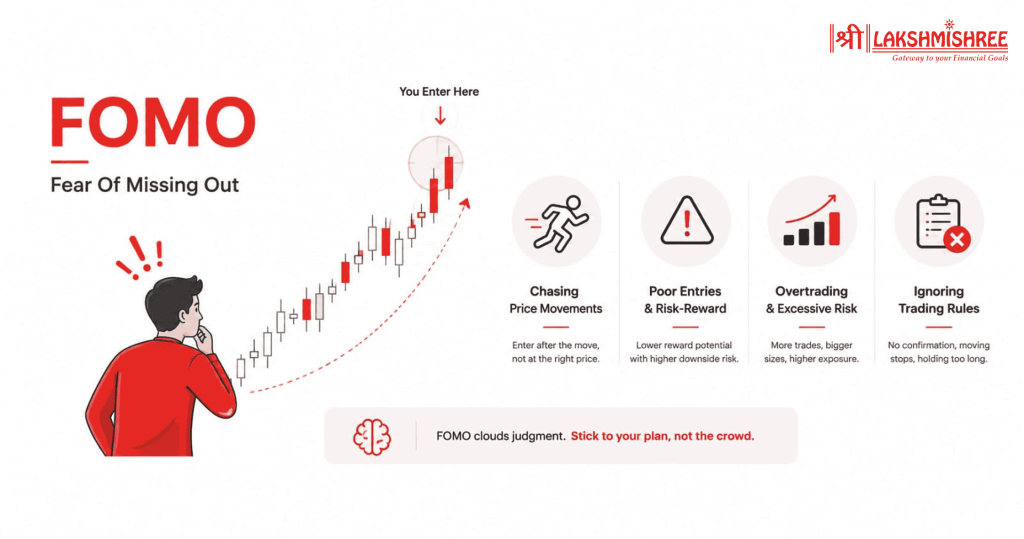
FOMO stands for Fear of Missing Out. In trading, it describes the urge to enter a position because a trader believes they are about to miss a profitable opportunity.
For example, a stock rises sharply from ₹500 to ₹550. You may buy at ₹550 because you expect the price to continue rising. However, you may not have considered whether the trade still fits your strategy.
This is what separates a FOMO trade from a planned trade. A planned trade follows predefined conditions, such as an entry level, risk limit, position size, and exit strategy. A FOMO trade is usually a reaction to what the market has already done.
FOMO can be triggered by:
The common factor is urgency. The trader feels they need to act before the opportunity disappears.
FOMO is closely linked to trading psychology. Even experienced traders can experience it because markets constantly create new opportunities.
FOMO can influence both the decision to enter a trade and how the position is managed afterward.
A quick checklist can create a pause before entering a position. It can help you assess whether the trade is based on your strategy or influenced by the fear of missing out.
Simply telling yourself to “be disciplined” may not be enough when a market moves quickly. A sharp rally or breakout can create excitement and urgency, making it harder to follow your usual rules at the moment.
For example, after a breakout, you plan to wait for a retest before entering. But as the price continues moving higher, you may start thinking that the market will not retest and could move even higher without you. That fear can push you to enter immediately, even though the original setup has not been completed.
This is why relying only on willpower can be difficult. Predefined rules, a pre-trade checklist, and a trading journal create an external structure that can help you pause, review your decision, and recognize recurring FOMO patterns.
Reviewing past trades through journal can also show when FOMO is most likely to affect your decisions. The goal is not to eliminate emotions, but to build a process that makes emotional decisions easier to recognize and manage.
FOMO is easier to manage when decisions are made before emotions take over. A clear process can help traders stay disciplined during sudden market movements.
A trading journal can help you understand what happens before, during, and after a FOMO trade. It turns individual experiences into information you can review.
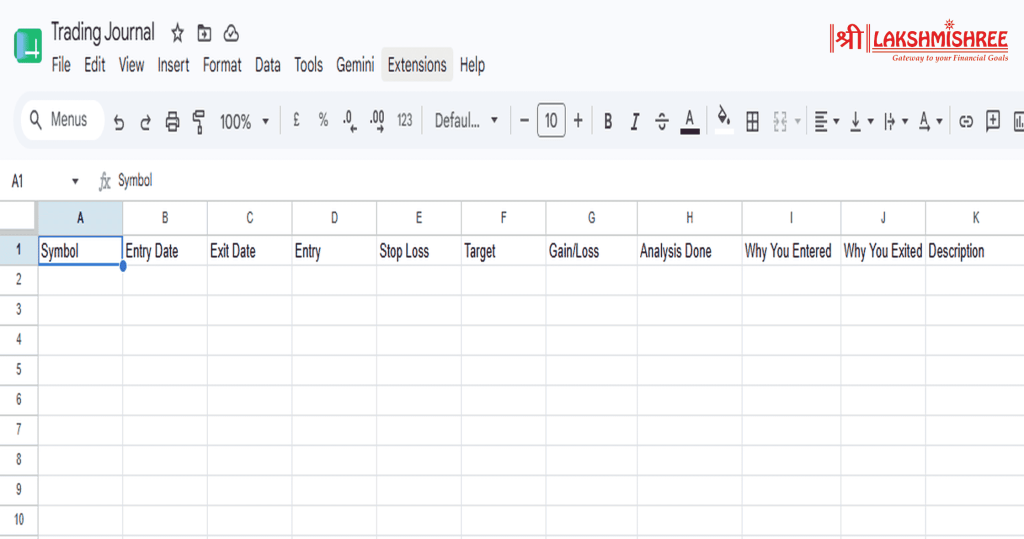
Real-world scenarios can make it easier to recognize FOMO before it influences a decision.
A stock moves from ₹400 to ₹450 within a short period. A trader who was watching the move decides to enter at ₹450 because they expect another jump.
They did not originally plan to enter at that level. The decision was driven mainly by the fear of missing further gains.
What to consider: Has the original setup already passed, and does the new entry still offer an acceptable risk-reward ratio?
A trader identifies a resistance level at ₹500. The stock breaks above it and quickly reaches ₹515.
Instead of waiting for the planned confirmation or entry condition, they buy at ₹515 because the price continues to rise. The breakout then loses momentum.
What to consider: Are you entering because the setup is valid or because the price movement creates urgency?
An individual sees a post showing that another trader made a large profit from a particular stock. They enter the same stock without conducting their own analysis.
The trade does not match their usual strategy or risk parameters. When the price reverses, they are left with a position they had not properly planned.
What to consider: Would the trade have been taken if you had never seen someone else's result?
A trader identifies a setup but hesitates to enter. The stock then moves sharply in the expected direction.
Frustrated about missing the opportunity, they immediately look for another trade and enter without a valid setup. The second trade is driven by the need to make up for the first missed opportunity.
What to consider: Is the new trade based on a genuine setup or an attempt to recover a missed profit?

FOMO trading can turn a reasonable trading plan into an emotional decision. The urge to participate in a fast-moving market can lead to late entries, excessive risk, and trades that do not match your strategy.
The goal is not to eliminate every emotional reaction. Instead, you can build a process that makes those reactions easier to recognize and manage.
A predefined trading plan, disciplined risk management, and regular journal reviews can help. Most importantly, traders should remember that missing a trade is part of trading. Protecting your capital and following a consistent process matters more than capturing every market move.
FOMO trading is entering or managing a trade because you fear missing a profitable market opportunity. It often involves emotional decisions rather than following a predefined trading strategy.
FOMO can be triggered by sharp price movements, social media activity, market news, previous missed opportunities, and the desire to avoid missing potential profits.
Follow a predefined trading plan, wait for valid setups, manage your risk, and use a trading journal to identify recurring FOMO patterns. A pre-trade checklist can also help you pause before making an impulsive decision.
No. A late entry is not automatically a FOMO trade. The key question is whether the entry still meets the trader's strategy and risk criteria.
FOMO itself is a normal emotional response. It becomes a problem when it causes traders to abandon their strategy, take unnecessary risks, or make decisions based on the fear of missing out.
Disclaimer: This article is intended for educational purposes only. Please note that the data related to the mentioned companies may change over time. The securities referenced are provided as examples and should not be considered as recommendations.