You just sold some shares. Or you redeemed a mutual fund. Now your broker sent a capital gains statement and you have no idea how much tax you owe — or whether you even owe any.
Here is the confusion most investors face: your profit is ₹2 lakh. Someone tells you the tax is 20%. Another person says it's 12.5%. A third person says the first ₹1.25 lakh is free. Who is right?
They all are Right- depending on what you sold, and when.
This is the exact question that 35,000+ people search every month in India. If you are confused about LTCG vs STCG tax rate, capital gain tax rate, long term capital gain tax, STCG on equity, LTCG tax rate 2026 or other such terms, in a nutshell they are all asking the same question: how much do I actually owe, and how do I reduce it legally?
This guide answers every variation of that question with exact rates, worked examples using real rupee amounts, and five legal strategies to reduce your capital gains tax to zero or near zero. No jargon. No vague advice. By the end, you will know exactly what to enter on your ITR.
At Lakshmishree Investment and Securities- a SEBI-registered stockbroker with over 31 years of experience and 60,000+ investors served, we see this confusion every tax season. This guide is what we wish every investor had read before they filed.
Capital gains tax is the tax on profit which you make when you sell a capital asset, such as shares, mutual funds, real estate, gold, or bonds at a price higher than what you paid.
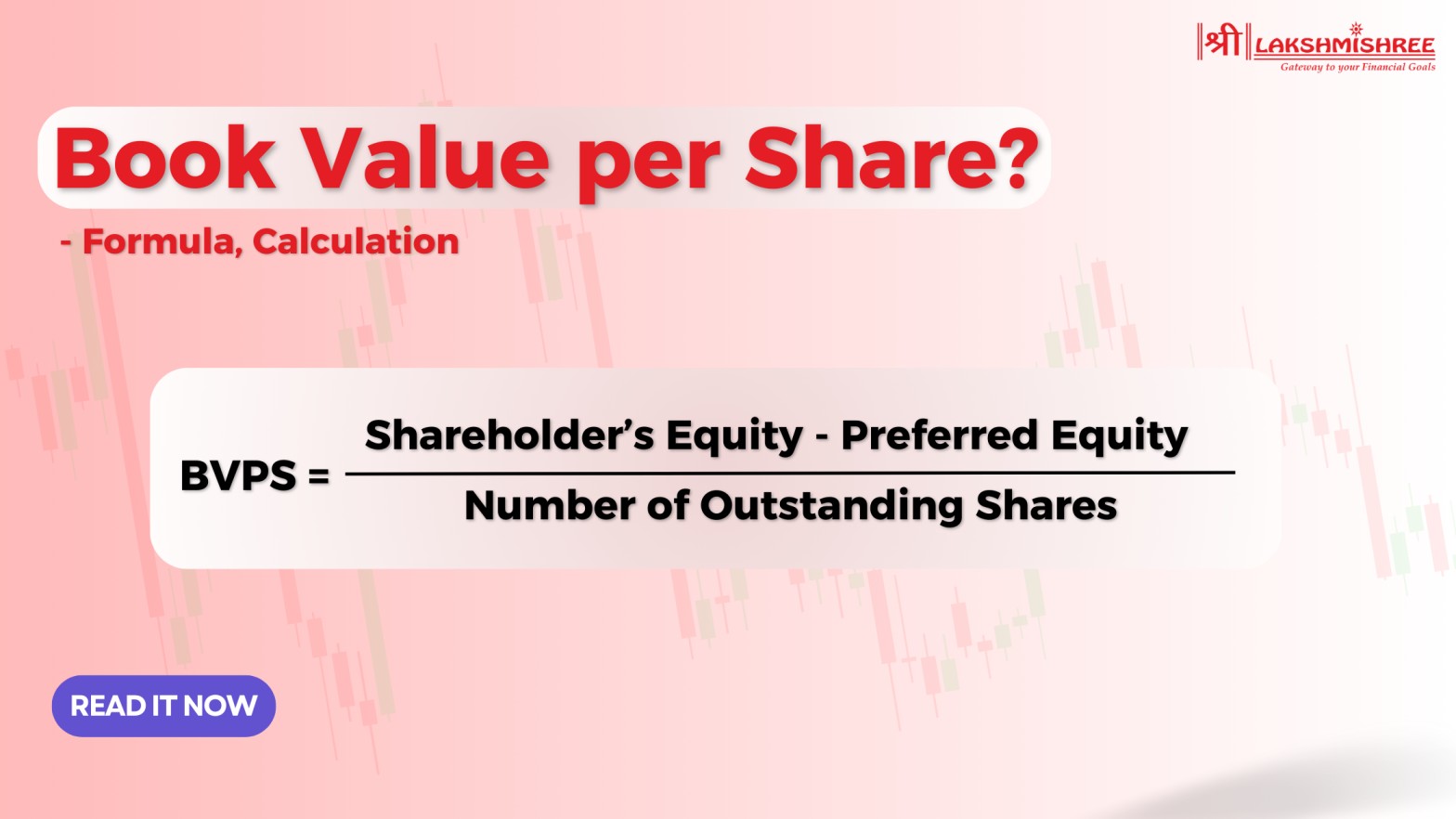
Capital gain = Sale price − Purchase price − Transfer costs
The government taxes this profit. The tax rate depends on two things: what you sold, and how long you held it before selling. That holding period determines whether your gain is Short Term (STCG) or Long Term (LTCG).
These two categories(LTCG Vs STCG) are taxed at completely different rates. This single distinction (how long you held it before selling) in short term vs long term determines whether you pay 20% tax or 12.5% tax (or even 0%) on the same profit.
STCG (Short Term Capital Gains) is the profit from selling a capital asset within the short-term holding period defined for that sprcific asset class. For listed equity shares and equity mutual funds, short-term means you sold within 12 months of buying. STCG on equity is taxed at a flat 20% under Section 111A of the Income Tax Act.
LTCG (Long Term Capital Gains) is the profit from selling a capital asset after it crosses the long-term holding threshold. For listed equity shares and equity mutual funds, long term means you held for more than 12 months. LTCG on equity is taxed at 12.5% but only on gains above ₹1.25 lakh per financial year. The first ₹1.25 lakh is completely tax-free.
This is the difference that changes everything. An investor who sells after 12 months and 1 day pays 12.5% (with a ₹1.25 lakh exemption). An investor who sells one day earlier pays 20% on every rupee of profit.
The capital gains tax rates below reflect the amendments made in Union Budget 2024, effective from July 23, 2024. These rates apply for FY 2025-26 (AY 2026-27).
| Asset Class | Short-Term Holding Period | STCG Tax Rate | Long-Term Holding Period | LTCG Tax Rate | LTCG Exemption |
|---|---|---|---|---|---|
| Listed Equity Shares | Less than 12 months | 20% (flat) | 12+ months | 12.5% | ₹1.25 lakh/year |
| Equity Mutual Funds | Less than 12 months | 20% (flat) | 12+ months | 12.5% | ₹1.25 lakh/year |
| ELSS Funds | Less than 36 months (locked in) | N/A (lock-in) | 36+ months | 12.5% | ₹1.25 lakh/year |
| Debt Mutual Funds (bought after Apr 1, 2023) | Any holding period | As per income slab | As per income slab | As per income slab | None |
| Debt Mutual Funds (bought before Apr 1, 2023) | Less than 36 months | As per income slab | 36+ months | 12.5% | None |
| Real Estate / Property | Less than 24 months | As per income slab | 24+ months | 12.5% | None |
| Gold (Physical / Jewellery) | Less than 24 months | As per income slab | 24+ months | 12.5% | None |
| Gold ETF / Gold Mutual Fund | Less than 24 months | As per income slab | 24+ months | 12.5% | None |
| Unlisted Shares | Less than 24 months | As per income slab | 24+ months | 12.5% | None |
| Sovereign Gold Bonds (SGBs) | Less than 12 months | As per income slab | 12+ months | Tax-Free at maturity | Fully exempt |
All rates are plus 4% health and education cess. Surcharge applies if income exceeds ₹50 lakh. Data as of March 28, 2026.
Budget 2024, presented on July 23, 2024, made the most significant changes to capital gains tax in India in years. If you haven't updated your knowledge since then, here is exactly what changed.
1: STCG on equity increased from 15% to 20%
The short-term capital gains tax rate on listed equity shares and equity-oriented mutual funds was raised from 15% to 20%. This makes short-term trading significantly more expensive on an after-tax basis. If you traded actively in FY 2023-24, your tax rate was 15%. If you traded in FY 2024-25 or 2025-26, your STCG rate is 20%.
2: LTCG on equity increased from 10% to 12.5%, exemption raised from ₹1 lakh to ₹1.25 lakh
Long-term capital gains tax on equity was raised from 10% to 12.5%. However, the annual exemption was simultaneously increased from ₹1 lakh to ₹1.25 lakh. For most retail investors with modest gains, the exemption increase partially offsets the rate increase.
3: Indexation benefit removed on property, gold, and debt funds
This is the most impactful change for property sellers. Previously, when selling property or gold held long-term, you could use indexation ( a process of adjusting your purchase price upward for inflation using the Cost Inflation Index (CII) to reduce your taxable gain. Budget 2024 removed this benefit.
What this means in practice is that if you bought a house for ₹40 lakh in 2010 and sold it for ₹1.2 crore in 2026, your indexed cost (with CII adjustments) would have been approximately ₹95 lakh, giving a taxable LTCG of ₹25 lakh. Without indexation, your taxable gain is ₹80 lakh i.e. Unfortunately, more than three times higher.
Understanding the LTCG tax rate is one thing. Knowing exactly how to calculate your liability is what you actually need before filing your ITR.
The date of purchase and date of sale determines the holding period, which determines STCG or LTCG classification.
Capital gain = Sale price − Purchase price − Transfer costs
Transfer costs for equity include brokerage paid at purchase and sale, STT (Securities Transaction Tax), and any other direct costs of the transaction.
If holding period is below the threshold for your asset class → STCG. If above → LTCG.
Taxable LTCG = Total LTCG − ₹1,25,000
If your total equity LTCG for the financial year is below ₹1.25 lakh, your tax liability is zero.
For STCG on equity: tax = taxable gain × 20% For LTCG on equity above ₹1.25 lakh: tax = (total LTCG − 1,25,000) × 12.5%
Final tax = calculated tax × 1.04
Example 1: Equity, LTCG:
Riya bought 500 shares of Infosys at ₹1,200 each in January 2024. She sold them at ₹1,900 each in March 2026 i.e. holding for over 24 months, well past the 12-month LTCG threshold.
Gross LTCG = (1,900 − 1,200) × 500 = ₹3,50,000 Less ₹1.25 lakh exemption: ₹3,50,000 − ₹1,25,000 = ₹2,25,000 taxable LTCG tax at 12.5%: ₹2,25,000 × 12.5% = ₹28,125 Plus 4% cess: ₹28,125 × 1.04 = ₹29,250 total tax
Example 2: Equity, STCG:
Rahul bought 200 shares of TCS at ₹3,500 each in August 2025. He sold them at ₹4,200 each in February 2026 i.e. only 6 months. This is STCG.
Gross STCG = (4,200 − 3,500) × 200 = ₹1,40,000 No exemption applies to STCG. STCG tax at 20%: ₹1,40,000 × 20% = ₹28,000 Plus 4% cess: ₹28,000 × 1.04 = ₹29,120 total tax
Notice: Rahul and Riya made different amounts of profit but paid nearly identical tax amounts. Rahul's STCG rate of 20% on ₹1.4 lakh cost almost as much as Riya's 12.5% on ₹2.25 lakh. Holding period is everything.
Example 3: The Difference One Day Makes:
Suresh bought shares on April 1, 2025 and sold them on March 31, 2026 — 364 days, one day short of 12 months. His profit: ₹2,00,000.
STCG at 20% = ₹40,000 + cess = ₹41,600
If he had waited just one more day:
LTCG at 12.5% on (₹2,00,000 − ₹1,25,000) = ₹9,375 + cess = ₹9,750
By selling one day early, Suresh paid ₹31,850 extra in tax. It is Completely legally avoidable by waiting 24 hours.
Mutual fund taxation is where most investors get confused because different fund categories are treated completely differently.
Equity Mutual Funds (65%+ equity allocation)
These include large cap funds, mid cap funds, small cap funds, flexi cap funds, balanced advantage funds with equity-dominant allocation, ELSS funds, and index funds tracking equity indices.
For equity mutual funds, the STCG rate is 20% if you redeem within 12 months. The long-term capital gains tax rate is 12.5% if you hold for 12+ months, with the ₹1.25 lakh annual exemption. Each SIP instalment is counted as a separate purchase with its own purchase date and 12-month clock.
This means if you invest ₹10,000/month via SIP and redeem a lump sum after 14 months, only the SIP instalments that have individually crossed 12 months qualify for LTCG treatment. The most recent 12 months' instalments are still STCG. The Lakshmishree platform shows each SIP instalment's tax status in your capital gains report, a feature our 60,000+ investors use extensively during ITR season.
This is where Budget 2023 made a significant change. Debt mutual funds bought on or after April 1, 2023 are taxed at your applicable income slab rate regardless of holding period. There is no LTCG benefit, no 12.5% rate, and no indexation. If you are in the 30% tax bracket, your debt fund gains are taxed at 30% whether you hold for 1 year or 10 years.
Debt funds bought before April 1, 2023 still get the old treatment: held 36+ months = LTCG at 12.5% (without indexation from Budget 2024 onwards).
The tax treatment depends on the equity allocation. If the fund maintains 65%+ in equity, it is taxed as equity. If equity falls below 65%, it is taxed as debt. Check the fund's classification in its scheme information document.
Real estate has its own holding period threshold: 24 months. If you sell a property you have held for less than 24 months, the entire capital gain is STCG and taxed at your income slab rate (up to 30% for the highest bracket). If you hold for 24+ months, the LTCG tax rate is 12.5% but without indexation since Budget 2024 removed it.
Why removing indexation hurts property sellers significantly:
Before Budget 2024, a property bought for ₹50 lakh in 2010 and sold for ₹1.5 crore in 2026 would have had an indexed cost of approximately ₹1.1 crore (using CII adjustments), making the taxable LTCG just ₹40 lakh.
After Budget 2024 (no indexation), the taxable LTCG is ₹1 crore (₹1.5 crore − ₹50 lakh). The LTCG tax at 12.5% = ₹12.5 lakh. Under the old regime with indexation and 20% rate, the tax would have been ₹8 lakh. Property sellers are now paying more tax despite the rate appearing lower.
There is one exception for properties bought before July 23, 2024. For properties acquired before this date, taxpayers can choose between the new 12.5% rate (without indexation) or the old 20% rate (with indexation) whichever results in lower tax. This choice is allowed only for properties, not for gold or other assets.
Gold in all its forms physical gold, jewellery, gold ETFs, gold mutual funds, and Sovereign Gold Bonds has a long-term holding threshold of 24 months.
Hold gold for less than 24 months and sell it leads to STCG at your income slab rate. So, a general advice is to hold gold for 24+ months and sell it: it will lead to LTCG at 12.5% without indexation.
Sovereign Gold Bonds are the single biggest exception. SGBs issued by the RBI and redeemed at maturity (after 8 years) are completely exempt from capital gains tax. The redemption proceeds at maturity are tax-free. Only if you sell SGBs before maturity on the stock exchange do capital gains rules apply. This makes SGBs the most tax-efficient form of gold investment for long-term holders.
At Lakshmishree, we have helped thousands of investors structure their gold allocation between SGBs for the tax benefit and gold ETFs for liquidity. If you want guidance on how to balance these, our research team is available through our investor helpline.
Match your goals by evaluating how Digital Gold, Physical Gold, and Gold ETFs behave in a live portfolio to master your allocation.
The annual LTCG exemption of ₹1.25 lakh on equity is one of the most underused tax planning tools available to Indian investors.
Here is exactly how it works: every financial year, your first ₹1.25 lakh of long-term capital gains from listed equity shares and equity mutual funds is tax-free. Only gains above this threshold are taxed at 12.5%.
The strategic opportunity: if your total LTCG( profit) in a financial year is less than ₹1.25 lakh, your equity LTCG tax is zero.
Tax harvesting means booking LTCG profits up to ₹1.25 lakh at the end of each financial year and immediately reinvesting. This resets your purchase cost to the current market price, so your future gains calculation starts from a higher base.
Priya has been holding mutual fund units purchased 3 years ago with unrealised LTCG of ₹3 lakh. Instead of waiting, she redeems units with ₹1.25 lakh of gains in March 2026 (tax = zero). She immediately reinvests the same amount. Her purchase price is now reset. Next year she can do the same. Over 5 years, she books ₹6.25 lakh of gains completely tax-free gains that would have been taxed at 12.5% (approximately ₹78,125) if she had held and sold in one go.
The reinvestment rule: there is no waiting period. You can sell and reinvest on the same day. The key is that the original units must have been held for 12+ months to qualify as LTCG.
Before selling any investment, use this decision framework. Lakshmishree's research team uses this same structure when advising investors on exit timing.
Question 1: How many months have I held this?
If less than the long-term threshold for this asset class → selling now means STCG. Check: can I wait a few more months to cross into LTCG territory? The tax saving usually outweighs the cost of waiting.
Question 2: What is my total LTCG from equity this financial year?
If total equity LTCG (including this sale) will be below ₹1.25 lakh → go ahead and sell. Zero tax. If total equity LTCG will be above ₹1.25 lakh → consider splitting the sale across two financial years (before and after March 31) to use two annual exemptions.
Question 3: Do I have any capital losses to offset?
LTCG losses can offset LTCG gains. STCG losses can offset both STCG and LTCG gains. If you have unrealised losses in your portfolio, selling those positions before selling your profitable ones reduces your net taxable gain.
Question 4: What is my income tax slab?
For assets taxed at slab rate (debt funds, property, gold in short term), the higher your income, the more expensive a short-term sale becomes. A person in the 30% bracket selling a debt fund held 2 years (STCG, taxed at slab) pays 30% + cess = 31.2%. The same person holding 36+ months for LTCG pays only 12.5% + cess = 13%.
Every equity investment held past the 12-month mark converts from 20% STCG to 12.5% LTCG (with the ₹1.25 lakh exemption). On a ₹5 lakh gain, this is the difference between paying ₹1,00,000 (STCG, no exemption) and paying ₹46,875 (LTCG after exemption) — a saving of ₹53,125. This is the single highest-return action any equity investor can take.
As explained above, booking LTCG up to ₹1.25 lakh every financial year and reinvesting saves ₹15,625 per year (12.5% of ₹1.25 lakh) in perpetuity, with zero change to your portfolio.
If you hold shares or funds that are in loss, selling them before March 31 generates a capital loss that can be offset against your gains. Long-term capital losses can only be set off against LTCG. Short-term capital losses can be set off against both STCG and LTCG. Losses that cannot be used in the current year can be carried forward for 8 assessment years.
ELSS (Equity Linked Savings Scheme) funds give you a Section 80C deduction of up to ₹1.5 lakh at the time of investment (saving up to ₹46,800 in tax at 31.2% slab). At redemption after 3 years, the gains are treated as equity LTCG — taxed at 12.5% with the ₹1.25 lakh exemption. You get a tax break at both ends. For someone in the 30% bracket, ELSS is the highest tax-efficient equity investment available.
If your investment horizon for gold is 8 years, SGBs offer complete LTCG exemption at maturity — 0% tax. Additionally, SGBs pay 2.5% annual interest (taxed as income). Compared to a gold ETF held 10 years (LTCG at 12.5% on the entire gain), the SGB saves the entire 12.5% LTCG on what is often a substantial gain for long-term gold holders.
If you have capital gains from equity or property, you cannot use ITR-1 (unless your LTCG from equity is below ₹1.25 lakh from FY 2024-25 onwards — this was specifically relaxed by the IT department).
Standard forms: ITR-2 for individuals without business income, ITR-3 for individuals with business or professional income.
Go to Schedule CG (Capital Gains) in your ITR form. For equity LTCG, fill Section 112A. For equity STCG under STT, fill Section 111A. For all other assets, use the appropriate sub-section.
Your broker is required to provide a consolidated capital gains statement for each financial year. On the Lakshmishree platform, you can download your complete capital gains statement — categorised by STCG and LTCG, broken down by asset class, directly from your account dashboard. This document maps directly to the ITR Schedule CG format, making filing straightforward.
If you use multiple brokers, platforms like CAMS or KFINTECH provide a Consolidated Account Statement (CAS) for mutual funds.
For FY 2024-25, the IT department required taxpayers to report capital gains separately for transactions before July 23, 2024 (old rates: STCG 15%, LTCG 10%) and on/after July 23, 2024 (new rates: STCG 20%, LTCG 12.5%). For FY 2025-26, only the new rates apply i.e. no split is required.
Non-Resident Indians (NRIs) are subject to the same LTCG and STCG rates on Indian assets as resident Indians. The key difference is TDS (Tax Deducted at Source).
For equity and equity mutual funds: TDS on LTCG is 12.5% deducted at the time of redemption. For STCG: 20% TDS. For property: the buyer must deduct 12.5% TDS before paying the NRI seller.
NRIs can claim a refund if TDS deducted exceeds their actual tax liability. India has Double Tax Avoidance Agreements (DTAA) with 90+ countries. NRIs from countries with a DTAA may pay lower rates. This requires filing an ITR in India and submitting a Tax Residency Certificate (TRC) from the country of residence.
| Factor | STCG (Short Term) | LTCG (Long Term) |
|---|---|---|
| Equity holding period | Less than 12 months | 12+ months |
| Property/Gold holding period | Less than 24 months | 24+ months |
| Equity tax rate | 20% (flat, Section 111A) | 12.5% (Section 112A) |
| Equity exemption | None | ₹1.25 lakh per year |
| Property tax rate | As per income slab | 12.5% (no indexation) |
| Debt fund tax rate (post-Apr 2023) | As per income slab | As per income slab |
| Gold tax rate | As per income slab | 12.5% (no indexation) |
| Indexation benefit | Not applicable | Removed in Budget 2024 |
| Set-off rules | Can set off against STCG or LTCG | Can only set off against LTCG |
| Carry forward period | 8 assessment years | 8 assessment years |
| ITR form | ITR-2 or ITR-3 | ITR-2 or ITR-3 (ITR-1 if LTCG < ₹1.25L) |
| Tax on SGB at maturity | N/A | Zero (fully exempt) |
After everything in this guide, here is what to remember every time you are about to sell an investment:
12 months represents the critical threshold that converts equity STCG (20%) to LTCG (12.5%). Often, just a few weeks of patience can save tens of thousands of rupees in tax outflows.
₹1.25 lakh is your annual LTCG exemption on equity, yet every year this goes unused is money left on the table. Make it a habit to book profits up to this limit every March to reset your cost base tax-free.
12.5% stands as the unified LTCG tax rate that applies to almost all long-term investments, including equity, property, gold, and older vintage debt funds. It is simple, uniform, and significantly lower than the aggressive 20% STCG rate on equity.
Capital gains tax planning is not about finding loopholes. It is about understanding the rules that the government explicitly created to reward long-term investing and using them fully to protect your wealth.
At Lakshmishree, we provide capital gains tax reports automatically from your trading account, categorized by STCG, LTCG, asset class, and ITR schedule, ready to submit to your CA. Our 31 years of helping 60,000+ investors navigate every budget cycle means we have seen every scenario described in this guide and built systems to make tax time effortless for our investors.
If you are planning a significant exit from equity, property, or mutual funds, speak with our research team before executing. A single conversation about timing can sometimes save more than a year of returns.
Lakshmishree Investment and Securities is a SEBI-registered stockbroker (Reg. No. INZ000200835). This article is for educational purposes only and does not constitute tax advice. Tax laws are subject to change. Please consult a Chartered Accountant for personalised tax planning.
Related Reading from Lakshmishree:
The long-term capital gains tax rate in India in 2026 is 12.5% for listed equity shares and equity mutual funds (after the ₹1.25 lakh annual exemption). For property, gold, and debt funds (pre-April 2023), the LTCG tax rate is also 12.5% but without any exemption and without indexation.
The short-term capital gains tax rate for listed equity and equity mutual funds is 20% (flat) under Section 111A. For property, gold, and debt funds (post-April 2023), STCG is added to your total income and taxed at your applicable income slab rate — up to 30% for the highest bracket.
Yes. Each SIP instalment is treated as a separate purchase with its own date. Instalments held for 12+ months attract LTCG at 12.5%. Instalments held for less than 12 months attract STCG at 20%. When you redeem a lump sum from a SIP portfolio, the capital gains are calculated instalment by instalment — this is why your broker's capital gains statement will show different rates for the same redemption.
₹1,25,000 per financial year on gains from listed equity shares and equity-oriented mutual funds. This exemption was raised from ₹1 lakh in Budget 2024. It applies per investor, not per fund or per transaction. If you have multiple equity investments, the total LTCG across all of them in one year uses a single ₹1.25 lakh exemption.
No. Long-term capital losses can only be set off against long-term capital gains. However, short-term capital losses are more flexible — they can be set off against both STCG and LTCG. Unused losses can be carried forward for 8 assessment years.
Property sold after holding for 24+ months attracts LTCG at 12.5% without indexation. However, for properties acquired before July 23, 2024, you can choose between 12.5% (no indexation) or 20% (with indexation) — whichever is lower. For properties acquired after July 23, 2024, only 12.5% without indexation applies.
For debt mutual funds purchased after April 1, 2023, there is no STCG vs LTCG distinction — all gains are taxed at your income slab rate regardless of how long you hold them. For debt funds purchased before April 1, 2023, gains after 36 months of holding are LTCG taxed at 12.5% without indexation.
No. Capital gains tax is only triggered when you sell (or redeem) the asset. Unrealised gains on shares or funds you continue to hold are not taxable. Tax is calculated in the financial year of the sale, not the year of appreciation