
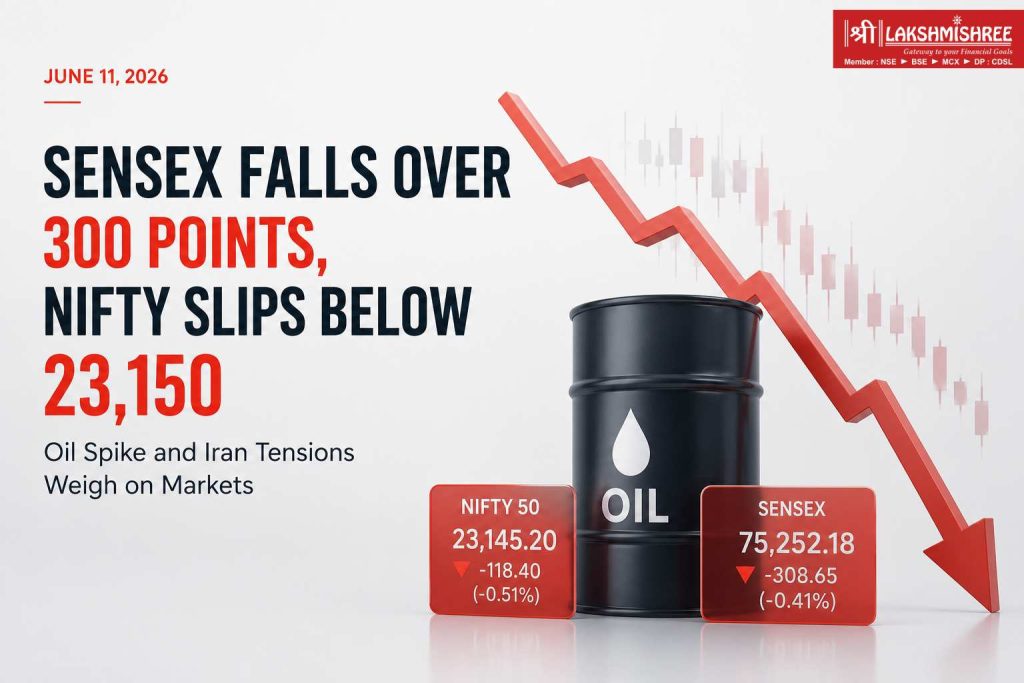
Indian benchmark indices traded lower on June 11, with the Sensex falling more than 300 points and the Nifty slipping below the 23,150 mark as investors reacted to rising geopolitical tensions in the Middle East, surging crude oil prices, and weakness across global markets.
The decline came after fresh military strikes involving the United States and Iran reignited concerns about energy supply disruptions. The closure of the Strait of Hormuz, one of the world’s most important oil shipping routes, pushed Brent crude prices sharply higher and raised fears of renewed inflationary pressure across major economies.
Higher oil prices are particularly significant for India, which imports a large portion of its energy requirements. Rising crude costs can increase inflation, widen the current account deficit, put pressure on the rupee, and reduce corporate profitability, creating a challenging environment for equity markets.
Global sentiment remained weak as investors also digested a stronger-than-expected US inflation reading. The data increased expectations that the US Federal Reserve may maintain a tighter monetary stance for longer, pushing bond yields higher and triggering a sell-off in global equities. Major Asian markets traded in the red, while US futures pointed to continued caution among investors.
The pressure was visible across sectors, with information technology and consumer stocks among the notable laggards. Shares of HCL Technologies and Asian Paints declined up to 2 percent during early trade, contributing to the weakness in benchmark indices.
Currency markets also reflected the risk-off mood. The Indian rupee weakened by around 35 paise against the US dollar in early trading as rising oil prices increased demand for dollars from importers. Market participants noted that the Reserve Bank of India continues to closely monitor currency movements and may intervene if volatility intensifies.
Analysts believe foreign institutional investors are likely to remain cautious in the near term as geopolitical uncertainty, elevated crude prices, and global monetary policy concerns continue to cloud the outlook. Recent FII participation in Indian equities has remained subdued, limiting the market’s ability to sustain strong upward momentum.
While domestic economic fundamentals remain relatively resilient, the immediate direction of the market is expected to depend heavily on developments in the Middle East, the trajectory of oil prices, and investor sentiment across global markets.
For now, traders appear focused on capital preservation rather than aggressive risk-taking, keeping pressure on Indian equities despite pockets of stock-specific activity and corporate developments.

Kaashika is a social media strategist and financial content creator at Lakshmishree. She specialises in simplifying complex IPO and stock market concepts into clear, easy-to-understand content. Having created over 500+ pieces of financial content across reels, blogs, website posts and digital creatives, Kaashika helps audiences connect with the world of finance in a more accessible and engaging way.