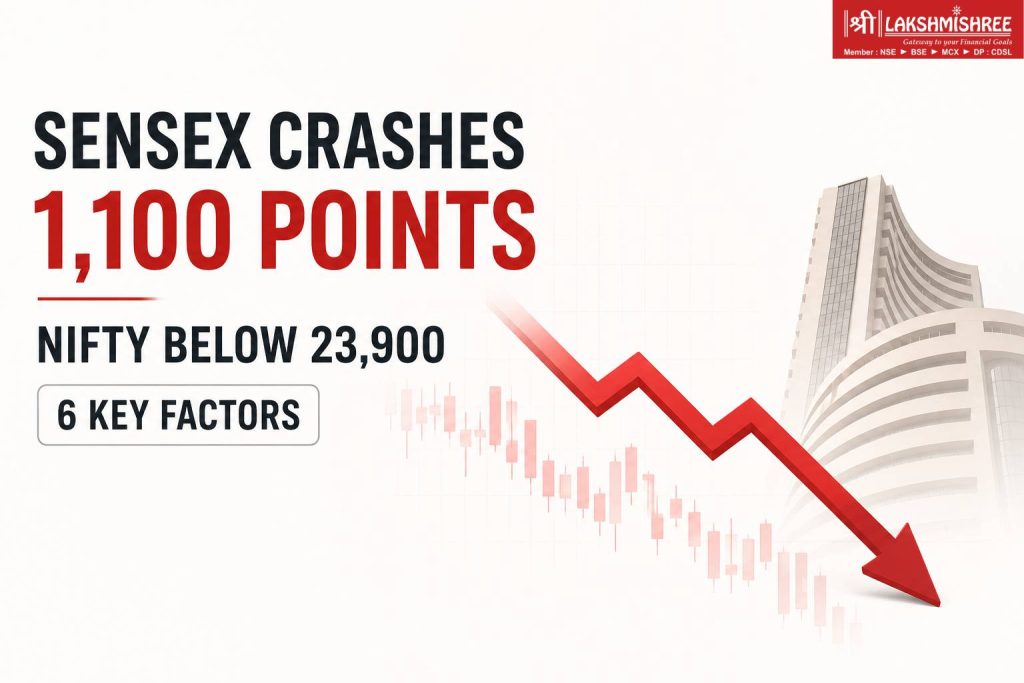
Indian equity markets witnessed a sharp selloff on Monday, with benchmark indices tumbling more than 1% amid rising crude oil prices, renewed geopolitical uncertainty, and growing concerns over India’s macroeconomic stability.
The Sensex plunged over 1,100 points to near 76,226, while the Nifty slipped below the crucial 23,900 mark, reflecting widespread risk aversion across sectors. The decline erased nearly ₹6 lakh crore in investor wealth from listed companies on the BSE during early trade.
The selloff was driven primarily by fading hopes of a US–Iran peace agreement.
Investor sentiment deteriorated after reports suggested that negotiations between the two nations had stalled, reviving fears of prolonged instability in the Middle East and potential disruptions around the Strait of Hormuz—a critical global oil transit route. As a result, Brent crude surged above $105 per barrel, intensifying concerns over inflation, India’s import bill, and pressure on corporate margins.
The market reaction was immediate and broad-based.
All major sectoral indices traded in the red, while midcap and smallcap stocks also came under pressure. Oil marketing companies such as Indian Oil, BPCL, and HPCL declined sharply as higher crude prices threatened marketing margins and increased subsidy concerns.
Travel and consumption-linked sectors were among the worst affected.
Hotel stocks including Indian Hotels, Lemon Tree Hotels, and Chalet Hotels witnessed heavy selling, while airline major IndiGo dropped nearly 4%. Jewellery stocks also came under severe pressure after Prime Minister Narendra Modi urged citizens to delay discretionary spending such as foreign travel and gold purchases amid rising external pressures.
Titan, Kalyan Jewellers, and Senco Gold fell sharply as the market interpreted the Prime Minister’s remarks as a signal of growing concern around foreign exchange reserves and the widening current account deficit.
The rupee added to the pressure.
India’s currency weakened significantly against the US dollar, falling near the 95 mark in early trade as rising crude prices, persistent foreign institutional investor (FII) outflows, and a stronger dollar weighed on sentiment.
Foreign investors have remained consistent sellers in Indian equities throughout the year, with concerns around slowing earnings growth, currency depreciation, and better opportunities in AI-driven markets such as South Korea and Taiwan continuing to drive capital away from domestic markets.
Volatility indicators also signaled rising fear.
India VIX, often referred to as the market’s fear gauge, surged nearly 12%, indicating heightened uncertainty and expectations of sharper market swings in the near term.
Despite the sharp correction, analysts believe the market is currently undergoing a macro-driven repricing rather than a structural collapse. However, sentiment remains fragile, and near-term direction is likely to depend heavily on crude oil movement, geopolitical developments, currency stability, and foreign fund flows.
For now, the market is reacting to stress from every direction at once—
Rising oil prices.
Weakening currency.
Persistent foreign selling.
And fading hopes of geopolitical resolution.

Kaashika is a social media strategist and financial content creator at Lakshmishree. She specialises in simplifying complex IPO and stock market concepts into clear, easy-to-understand content. Having created over 500+ pieces of financial content across reels, blogs, website posts and digital creatives, Kaashika helps audiences connect with the world of finance in a more accessible and engaging way.