
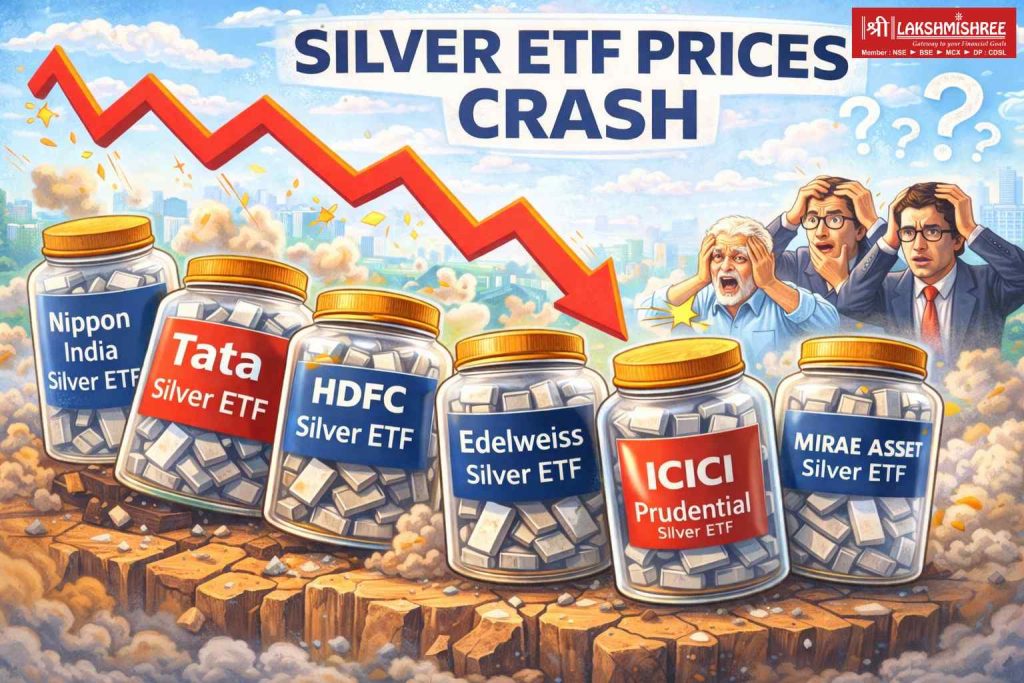
The sharp silver ETF price crash has rattled Indian investors, with several popular silver exchange-traded funds plunging 20–24% in a single session. Products such as Nippon India Silver ETF, Tata Silver ETF, ICICI Prudential Silver ETF, HDFC Silver ETF, and Edelweiss Silver ETF witnessed steep corrections, wiping out a significant portion of the gains built during the much-talked-about silver rally of 2025.
This sudden reversal has raised serious questions around the sustainability of the silver ETF rally, the risks embedded in commodity ETFs, and whether this fall is a temporary correction or a structural reset. Why silver ETF prices crashed, and what investors should do now has become a debated question lately.
1. Why Did Silver ETF Prices Crash?
The primary reason behind the silver ETF price crash lies in a disconnect between ETF prices and actual silver prices.
While MCX silver prices corrected only 3–5%, silver ETFs price crash was felt much more sharply. This happened because many silver ETFs were trading at a high premium over their indicative NAV (iNAV) due to aggressive buying by retail investors chasing returns.
When market sentiment shifted, this premium collapsed rapidly. As a result, ETF prices adjusted downward far more violently than the underlying commodity.
In simple terms:
- Silver prices corrected mildly
- ETF premiums collapsed sharply
- ETF prices fell disproportionately
This structural issue, not a collapse in silver demand, triggered the crash.
2. Role of Nippon India Silver ETF and Other ETFs
Large and liquid funds like Nippon India Silver ETF became the epicentre of selling pressure. Because these ETFs have higher trading volumes, they tend to react faster when investors rush for the exit.
Key observations:
- Heavy profit booking in Nippon India Silver ETF and Tata Silver ETF
- Sudden spike in selling volumes
- ETFs slipping below iNAV levels temporarily
Importantly, this was not fund-specific mismanagement. The fall was broad-based across all silver ETFs, indicating a market-wide sentiment reversal, not a problem with any single AMC.
3. Theories Behind the End of the Multibagger Rally
Several overlapping factors contributed to the sharp reversal:
a) Cooling of Safe-Haven Demand
Silver had rallied strongly on global uncertainty, geopolitical tensions, and inflation fears. As these risks eased, safe-haven buying weakened, reducing speculative demand for silver ETFs.
b) Profit Booking After Sharp Gains
Silver had already delivered outsized returns in a short span. Large investors and traders chose to lock in profits, triggering a cascade of selling.
c) ETF Structure Amplifying Volatility
Unlike physical silver or futures, ETFs are highly sensitive to sentiment, liquidity, and secondary-market demand. When panic sets in, ETF prices tend to overshoot on the downside.
d) Retail Overcrowding
Silver ETFs had become a “crowded trade”. Once returns slowed, the same retail enthusiasm that pushed prices up accelerated the fall.
4. What Should Investors Do Now?
This is the most critical question for investors holding Nippon India Silver ETF or other silver ETFs.
For Long-Term Investors
- Avoid panic selling purely based on one sharp correction
- Silver still has industrial demand drivers (solar, EVs, electronics)
- Corrections after sharp rallies are normal in commodities
For Short-Term Traders
- Expect continued high volatility in silver ETF prices
- ETF prices may swing independently of spot silver in the short run
- Strict stop-loss discipline is essential
For New Investors
- Avoid lump-sum entries immediately after a crash
- If interested, stagger exposure using small SIP-style allocations
- Track iNAV vs market price carefully before buying
Portfolio Allocation Advice
- Silver ETFs should remain a hedging asset, not a core holding
- Limit exposure to 5–10% of the portfolio
- Combine with diversified assets rather than betting on one commodity
The Bigger Lesson from the Silver ETF Price Crash
The silver ETF price crash is not just about silver, it is a reminder of how financial products can magnify emotions. When optimism dominates, ETF prices can overshoot on the upside. When sentiment breaks, the same structure can exaggerate losses.
For investors who entered silver ETFs solely on recent returns, this episode highlights the importance of:
- Understanding ETF mechanics
- Tracking premium/discount to NAV
- Respecting volatility in commodity investing
To help investors navigate this clearly, we’ve analysed and ranked the best silver ETFs in India for 2026 based on liquidity, tracking error, expense ratio, and stability during corrections.
Read more and in depth on: Best Silver ETFs in India 2026 [Updated]

Kaashika is a social media strategist and financial content creator at Lakshmishree. She specialises in simplifying complex IPO and stock market concepts into clear, easy-to-understand content. Having created over 500+ pieces of financial content across reels, blogs, website posts and digital creatives, Kaashika helps audiences connect with the world of finance in a more accessible and engaging way.