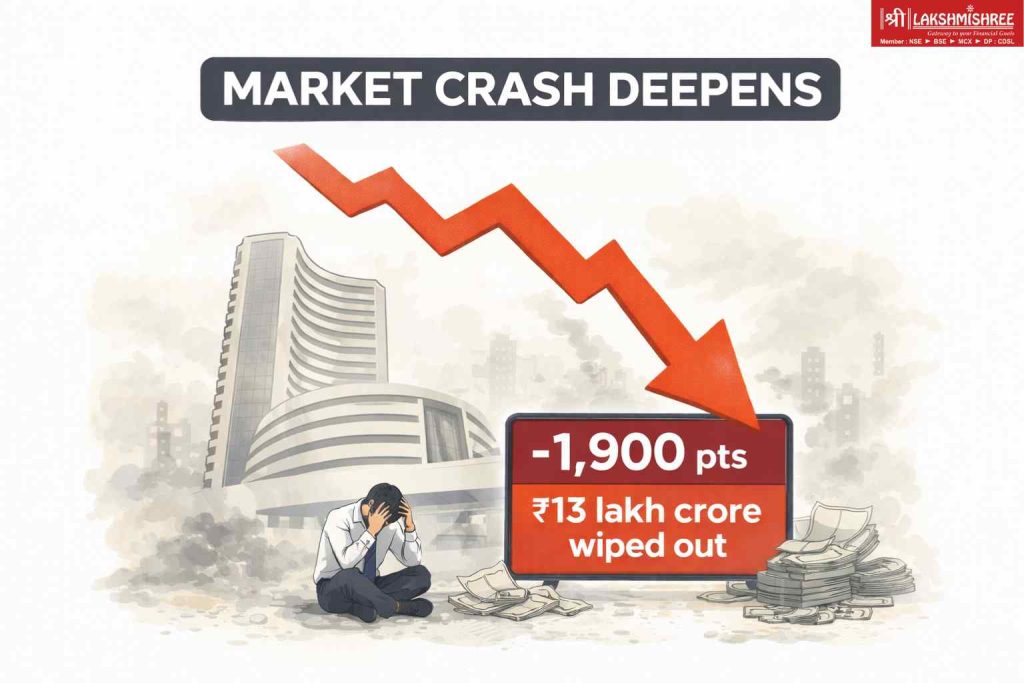
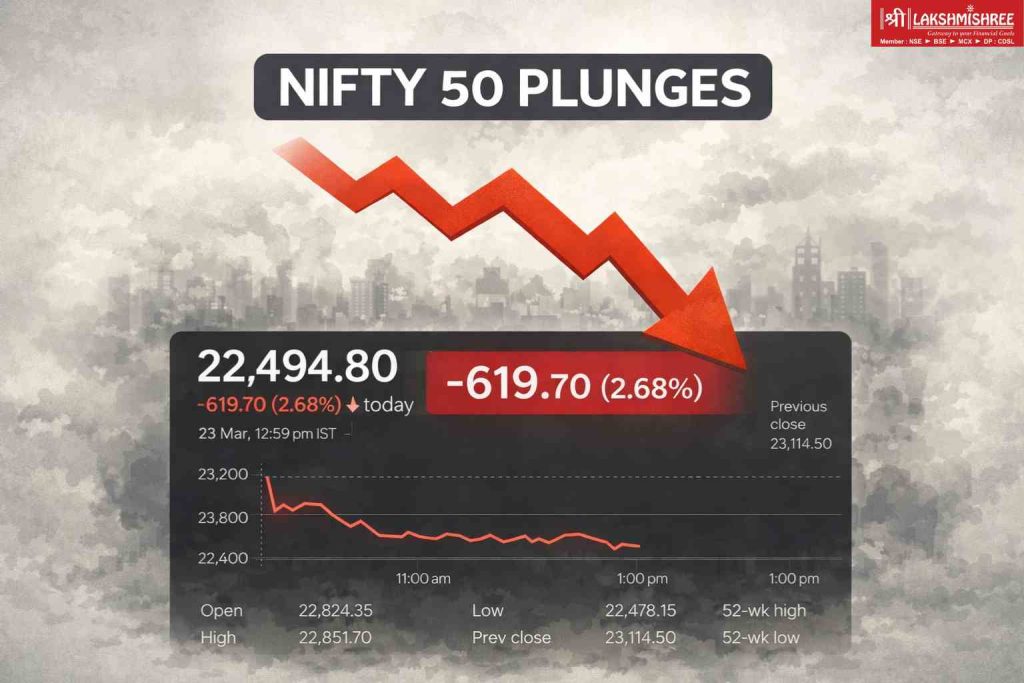
March 23, 2026 — Indian equity markets witnessed a sharp sell-off on Monday (Black Monday), with the BSE Sensex plunging over 1,900 points and the Nifty 50 slipping below the crucial 22,500 level in afternoon trade, as escalating geopolitical tensions, a weakening rupee and broad-based selling weighed heavily on investor sentiment.
By around 12:30 pm, the Sensex was down nearly 1,930 points at 72,601, while the Nifty 50 fell to 22,494. The steep decline erased close to ₹13 lakh crore from the total market capitalisation of BSE-listed companies, dragging it down to around ₹416 lakh crore.
The sell-off was widespread across sectors, with banking, metals, auto and infrastructure stocks leading the losses. Several heavyweight stocks traded in the red, amplifying the decline in benchmark indices and reflecting a clear risk-off mood in the market.
Among individual stocks, shares of Adani Enterprises dropped over 5 percent to hit a 52-week low of ₹1,826, marking one of their sharpest declines in recent months. Auto major Ashok Leyland also came under pressure, falling more than 4 percent following a brokerage downgrade, adding to the negative sentiment in the sector.
The ongoing geopolitical tensions in West Asia continued to remain a key trigger for the market weakness. Concerns over disruption in global energy supplies have pushed crude oil prices higher, raising fears of inflation and pressure on corporate margins.
At the same time, the Indian rupee remained under pressure near record lows against the U.S. dollar, reflecting sustained foreign investor outflows and a stronger global dollar environment. The currency weakness has further dampened investor confidence and added to volatility in equity markets.
Global cues also remained negative, with weakness across Asian markets contributing to the sell-off. Investors remained cautious amid uncertainty over interest rates, inflation trends and geopolitical developments.
The broader market also saw significant declines, with midcap and smallcap stocks witnessing sharp cuts, indicating that the selling pressure was not limited to large-cap stocks but spread across the market.
Market participants are closely tracking developments in global energy markets, currency movements and geopolitical events, as these factors are expected to continue driving market direction in the near term.

Kaashika is a social media strategist and financial content creator at Lakshmishree. She specialises in simplifying complex IPO and stock market concepts into clear, easy-to-understand content. Having created over 500+ pieces of financial content across reels, blogs, website posts and digital creatives, Kaashika helps audiences connect with the world of finance in a more accessible and engaging way.