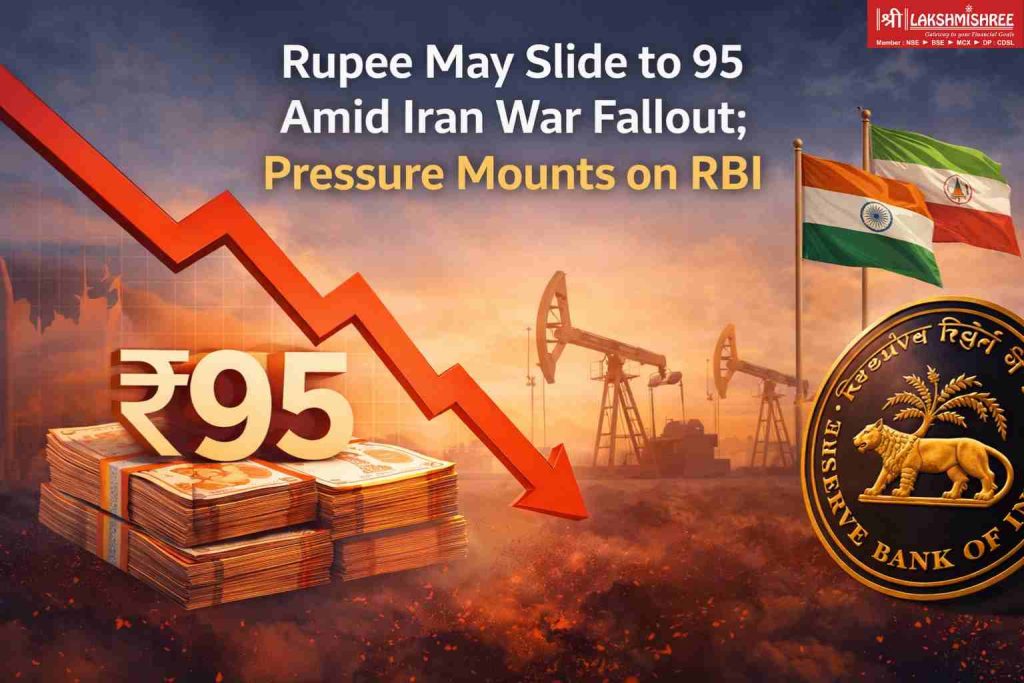
The Indian rupee could weaken sharply to 95 against the US dollar over the next year as the ongoing Iran conflict continues to disrupt global energy markets and widen India’s external imbalances, according to Goldman Sachs.
The warning comes at a time when the rupee is already hovering near record lows, trading around 92.43 per dollar, reflecting sustained pressure from rising crude oil prices and global uncertainty.
Goldman Sachs’ India economist Santanu Sengupta noted that the currency remains vulnerable primarily due to a widening current account deficit, which is being exacerbated by higher oil import costs. India, which imports the bulk of its crude requirements, faces direct macroeconomic strain when global energy prices surge.
The West Asia conflict has pushed crude prices significantly higher, intensifying concerns over inflation and external stability. While inflation remains relatively contained for now, economists warn that a weaker rupee combined with elevated oil prices could eventually feed into consumer prices.
“If these pressures persist, the Reserve Bank of India may be forced to tighten monetary policy,” Sengupta said, adding that such a move may not be immediate but could become necessary in the coming months.
The RBI has already been actively intervening in currency markets to limit excessive volatility and prevent a disorderly fall in the rupee. However, sustained external pressures may test the central bank’s ability to stabilise the currency without policy adjustments.
Goldman Sachs has also revised India’s macro outlook in response to the evolving situation. The firm has cut its growth forecast for the current year to 6.5 percent from 7 percent, while raising its inflation estimate modestly. It expects the current account deficit to widen to 1.2 percent of GDP, up from earlier projections.
Despite these risks, economists believe the government’s fiscal measures may help cushion the immediate impact of rising energy costs. This could allow the RBI some time before taking more aggressive steps such as interest rate hikes.
However, uncertainty remains high. The trajectory of oil prices and the duration of the Iran conflict are seen as key variables that will determine the rupee’s path and the broader macroeconomic outlook.
For markets, the message is clear: the currency is becoming a central pressure point in the ongoing geopolitical crisis, and any further escalation could deepen volatility across financial assets.

Kaashika is a social media strategist and financial content creator at Lakshmishree. She specialises in simplifying complex IPO and stock market concepts into clear, easy-to-understand content. Having created over 500+ pieces of financial content across reels, blogs, website posts and digital creatives, Kaashika helps audiences connect with the world of finance in a more accessible and engaging way.