
WTI moves toward $95; IEA announces record 400 million barrel release, yet markets remain on edge. Sensex plunges 952 points, Nifty slips below 23,700; rupee weakens to ₹92.33 as banking and aviation stocks come under pressure
The ongoing conflict involving the United States, Israel, and Iran is now sending shockwaves across global energy markets and economies. Rising tensions in the Gulf region and attacks on vessels around the Strait of Hormuz, one of the world’s most critical oil transit routes, have pushed Brent crude prices above $100 per barrel.
At the same time, WTI crude futures have continued their upward trend, approaching the $95 per barrel mark for the second consecutive day. Iran has issued a stark warning that if the conflict escalates further, the world should be prepared for oil prices as high as $200 per barrel.
A spokesperson for Iran’s Islamic Revolutionary Guard Corps (IRGC) warned that attempts to artificially suppress oil prices would fail.
“You cannot artificially reduce oil prices. Oil prices depend on regional security, and the main source of insecurity is you yourselves,” the spokesperson said.
The IRGC further warned that any vessel linked to the United States, Israel, or their allies would be treated as a direct target, triggering further panic in global markets.
In recent days, several cargo ships and oil tankers have come under attack in the Gulf. After two tankers caught fire near Iraq’s Al-Faw port, Iraqi authorities were forced to halt operations at key oil terminals.
The Strait of Hormuz, through which nearly 20% of the world’s oil supply passes, is now effectively disrupted, with major insurance firms refusing to cover vessels travelling through the route. As a result, shipping activity through the strait has reportedly dropped by nearly 90 percent.
To stabilize markets, the International Energy Agency (IEA) has announced a record coordinated release of 400 million barrels of strategic oil reserves from its 32 member countries. This is the largest coordinated release in history and more than double the volume released after the Russia-Ukraine war in 2022.
The United States has separately pledged to release 172 million barrels from its strategic petroleum reserves over the next four months. However, despite these measures, markets remain highly volatile and oil prices continue to climb.
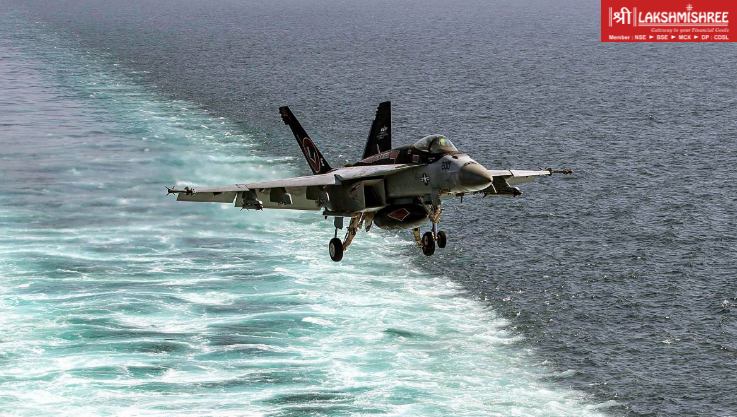
U.S. President Donald Trump, speaking at a rally in Kentucky, claimed that American forces had significantly weakened Iran’s military capabilities and destroyed 58 Iranian naval vessels.
However, he made it clear that the campaign is far from over.
“We will finish the job before we leave,” Trump said.
According to the Pentagon, the first six days of the war alone have already cost the United States approximately $11.3 billion, including more than $5 billion spent on munitions.
Prospects for a ceasefire appear distant. Iran has reportedly conveyed through intermediaries that peace negotiations would require a written guarantee from the United States that neither it nor Israel would attack Iran again in the future. Washington has so far rejected this condition.
Meanwhile, a one-hour conversation between Donald Trump and Russian President Vladimir Putin reportedly focused on diplomatic pathways to prevent further escalation, though no concrete outcome has yet emerged.
Hormuz Impact on India and Markets
The Middle East crisis is now beginning to affect India’s energy supply and financial markets. India imports nearly 88% of its crude oil, and much of that supply traditionally passes through the Strait of Hormuz.
With the route disrupted, India has increased purchases of Russian crude by nearly 50%, reaching around 1.5 million barrels per day, although supply concerns still remain.
The impact is also visible at the household level. LPG cylinder prices have risen by ₹60, and since a large share of India’s gas imports also transit through Hormuz, fears of supply disruption are growing. Retailers in several cities report that induction cooker sales have surged by nearly 95% as households look for alternative cooking options.
Financial markets have reacted sharply to the geopolitical shock. On March 12, the Sensex fell 952 points to open at 75,911, while the Nifty slipped below the crucial 23,700 level. The Indian rupee weakened to ₹92.33 against the US dollar, close to its recent record low.
Banking stocks faced the heaviest pressure, while aviation companies such as IndiGo (InterGlobe Aviation) declined as fuel costs surged with oil prices above $100 per barrel.
Analysts note that the relationship between oil prices and India’s economy is direct. When crude becomes more expensive, production costs rise, the rupee weakens, foreign investors pull money out, and consumer spending slows.
According to Goldman Sachs, every $1 increase in crude oil prices adds roughly $1.4 billion to India’s annual import bill. With oil prices already up about 61% since February 28, the additional burden on India’s economy could exceed $57 billion annually.

Kaashika is a social media strategist and financial content creator at Lakshmishree. She specialises in simplifying complex IPO and stock market concepts into clear, easy-to-understand content. Having created over 500+ pieces of financial content across reels, blogs, website posts and digital creatives, Kaashika helps audiences connect with the world of finance in a more accessible and engaging way.