
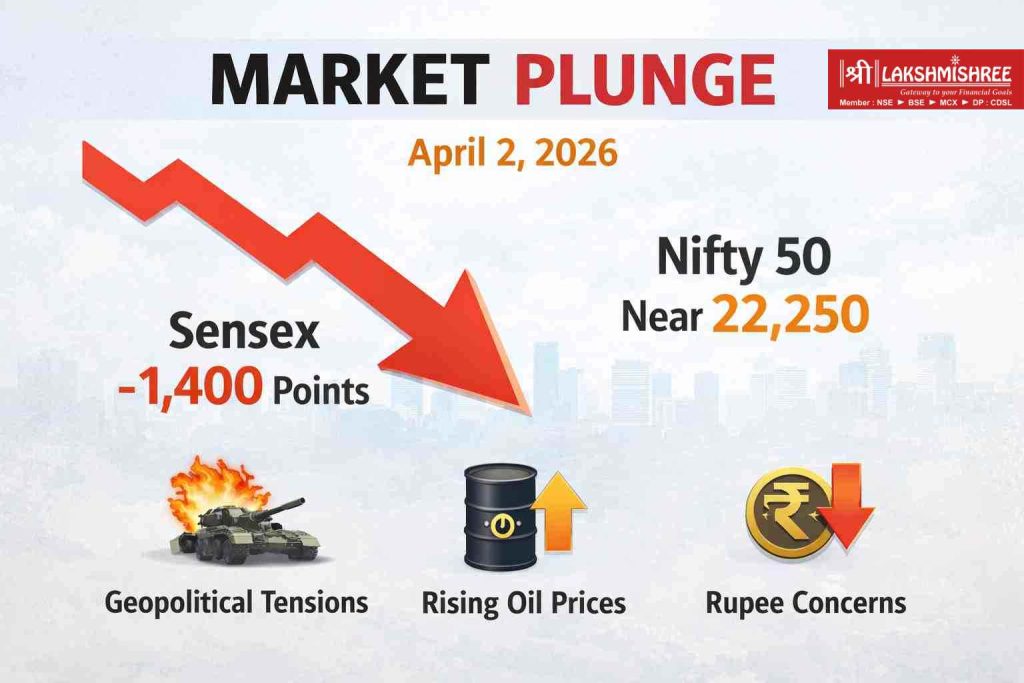
Indian equity markets came under sharp selling pressure on Thursday, with the Sensex plunging over 1,400 points and the Nifty 50 slipping close to the 22,250 mark in early trade, as renewed geopolitical tensions and domestic concerns weighed heavily on investor sentiment, April 2, 2026.
The BSE Sensex dropped nearly 2% to hover around 71,700 levels, while the NSE Nifty 50 declined to near 22,250, reversing the gains seen in the previous session. The sell-off was broad-based, with banking, financial and energy stocks leading the decline.
The primary trigger for the fall was a fresh escalation in global tensions after U.S. President Donald Trump signaled a possible intensification of military action against Iran. The renewed uncertainty pushed crude oil prices higher, raising concerns over inflation and economic stability, particularly for oil-importing countries like India.
Banking stocks were among the worst hit, reacting to recent regulatory tightening by the Reserve Bank of India aimed at curbing speculation in the currency market. The RBI’s directive to limit banks’ net open positions in the rupee has led to unwinding of positions, creating short-term pressure on financial stocks and adding to market volatility.
Currency-related concerns also remained in focus. Although the rupee had shown signs of recovery earlier in the week, persistent external pressures and foreign fund outflows continued to weigh on overall market confidence.
Global cues further added to the negative sentiment. Weakness across international markets, driven by geopolitical risks and uncertainty over energy supplies, reinforced a risk-off environment, prompting investors to reduce exposure to equities.
In addition, the recent sharp rally on April 1 triggered profit booking at higher levels, as traders moved to lock in gains amid rising uncertainty. This added momentum to the downside, accelerating the early decline in benchmark indices.
Market participants noted that the current volatility reflects a fragile balance between global developments and domestic policy actions. Rising oil prices, currency fluctuations and regulatory changes are collectively shaping near-term market direction.
Despite the sharp fall, analysts suggest that the broader trend remains dependent on how geopolitical tensions evolve and whether crude prices stabilize. Until then, markets are expected to remain highly sensitive to global headlines and policy signals.
The decline underscores the continuing influence of external factors on Indian equities, highlighting that investor sentiment remains closely tied to global risk conditions even as domestic fundamentals show resilience.

Kaashika is a social media strategist and financial content creator at Lakshmishree. She specialises in simplifying complex IPO and stock market concepts into clear, easy-to-understand content. Having created over 500+ pieces of financial content across reels, blogs, website posts and digital creatives, Kaashika helps audiences connect with the world of finance in a more accessible and engaging way.