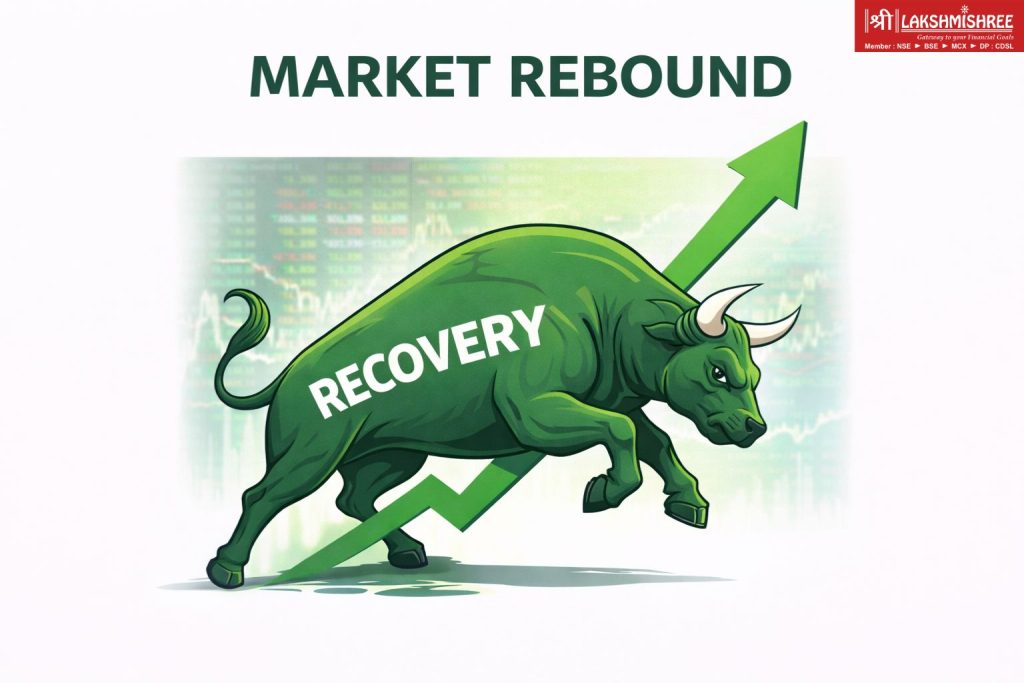
Indian equity markets recovered sharply during late morning trade on March 16, reversing a large part of their early losses as investors stepped in to buy stocks at lower valuations. Benchmark indices Sensex and Nifty rebounded strongly from intraday lows, supported by value buying, easing volatility indicators, and signs of easing geopolitical risks surrounding the Strait of Hormuz.
By around 11:36 AM IST, the BSE Sensex was trading at 74,687.06, up 123 points (0.17%), while the NSE Nifty 50 stood at 23,194.30, gaining 43 points (0.19%). Earlier in the session, both indices had opened under pressure amid global uncertainty linked to tensions in West Asia and rising crude oil prices.
However, as the session progressed, the market found support near key technical levels. The Sensex recovered nearly 700 points from its intraday low, while the Nifty climbed back above the 23,000 psychological mark, a level closely watched by traders and institutional investors.
Despite the rebound, broader market breadth remained weak. On the National Stock Exchange, around 1,073 stocks advanced, while 2,739 declined and 162 remained unchanged, indicating that the recovery was largely driven by select large-cap stocks rather than a broad-based rally.
Value Buying Emerges at Lower Levels
One of the primary drivers of the market’s rebound was value buying, where investors take advantage of lower prices following sharp declines.
After last week’s volatility and Monday’s weak opening, several large-cap stocks in sectors such as banking, IT, and energy began attracting buyers. Portfolio managers and institutional investors often use such periods of panic selling to accumulate fundamentally strong companies at discounted valuations.
Analysts note that this behaviour is typical during uncertain geopolitical phases. When markets decline sharply due to external risks rather than domestic economic weakness, long-term investors often step in to deploy capital.
The rebound from lower levels therefore reflects a tactical shift in investor behaviour, where market participants view the recent correction as an opportunity rather than a signal of structural weakness.
Volatility Indicator India VIX Falls
Another factor that helped stabilize investor sentiment was the decline in India VIX, the volatility index often referred to as the market’s “fear gauge.”
India VIX fell about 3 percent during the session, indicating that expectations of extreme market swings are moderating. A falling VIX typically signals that investors expect reduced selling pressure and fewer abrupt price movements.
During periods of geopolitical uncertainty, volatility indices often spike sharply as traders hedge their positions using options. The decline in VIX therefore suggests that traders are beginning to price in a more stable short-term outlook, at least compared with the heightened fears seen earlier in the day.
Market strategists say the VIX level around 21–22 still indicates elevated uncertainty, but the drop from higher levels shows that panic-driven trading is gradually easing.
Geopolitical Developments Offer Relief
Investor sentiment also improved after reports suggested potential steps to stabilize shipping routes through the Strait of Hormuz, one of the world’s most critical energy transit corridors.
According to a report by the Wall Street Journal, the United States is preparing to announce the formation of an international coalition aimed at escorting commercial vessels through the Strait of Hormuz. Such a move could help secure shipping lanes and reduce the risk of disruptions to global oil supplies.
Nearly 20 percent of the world’s oil supply passes through the narrow waterway, making it a key focus for global financial markets during the ongoing tensions in West Asia.
For India, which imports more than 85 percent of its crude oil, any disruption in the Strait could have serious economic consequences, including higher fuel costs, inflationary pressure, and a widening current account deficit.
Signs that global powers are working to secure the route therefore helped ease some of the market’s worst fears.
Indian LPG Carriers Safely Cross Hormuz
Another development that reassured investors was the safe passage of two India-flagged LPG carriers through the Strait of Hormuz.
The vessels Shivalik and Nanda Devi, carrying approximately 92,712 metric tonnes of liquefied petroleum gas, successfully crossed the strait last week while en route to India. The successful transit eased immediate concerns about disruptions in energy shipments reaching the country.
Energy supply security has become a key focus for policymakers as tensions in West Asia intensify. India relies heavily on imports from the region not only for crude oil but also for liquefied petroleum gas used in households and industry.
Diplomatic Engagements Underway
Diplomatic efforts are also playing a role in stabilizing sentiment. India’s External Affairs Minister S. Jaishankar confirmed in an interview with the Financial Times that India is engaged in discussions with Iran and other stakeholders regarding the evolving situation.
According to Jaishankar, diplomatic dialogue has already produced “some results,” indicating that negotiations are ongoing to prevent further escalation in the region.
Markets often react quickly to such signals because geopolitical conflicts can significantly affect commodity prices, shipping routes, and global trade flows.
Technical View: Key Levels for Nifty and Sensex
From a technical perspective, analysts believe the market’s ability to reclaim the 23,000 level on the Nifty is an important short-term signal.
The level is widely regarded as a psychological and technical support zone, where buying interest tends to emerge. Holding above this mark could help stabilize sentiment and prevent further downside in the near term.
However, traders caution that volatility may remain elevated in the coming days as markets continue to track developments in West Asia and movements in global crude oil prices.
Outlook: Volatility Likely to Persist
While the intraday rebound indicates resilience in the market, analysts believe the broader outlook will depend heavily on geopolitical developments and global commodity prices.
If oil prices remain elevated and tensions around shipping routes intensify, Indian markets could continue to experience sharp swings. On the other hand, diplomatic progress and stable energy supplies could help restore investor confidence.
For now, the market appears to be entering a cautious consolidation phase, where investors remain alert to global developments while selectively accumulating stocks during periods of weakness.
As geopolitical risks continue to evolve, market participants are likely to keep a close watch on oil prices, global shipping security, and diplomatic signals from major economies.

Kaashika is a social media strategist and financial content creator at Lakshmishree. She specialises in simplifying complex IPO and stock market concepts into clear, easy-to-understand content. Having created over 500+ pieces of financial content across reels, blogs, website posts and digital creatives, Kaashika helps audiences connect with the world of finance in a more accessible and engaging way.