India and the European Union on Tuesday finalized a landmark Free Trade Agreement (FTA), concluding years of complex negotiations with a pact that promises to dismantle barriers for European automakers and winemakers while integrating New Delhi into the West’s strategic defense architecture.
European Commission President Ursula von der Leyen, standing alongside Indian Prime Minister Narendra Modi at Hyderabad House, termed the agreement the “mother of all deals,” projecting it would generate millions of jobs across both regions. The pact, which covers economies with a combined population of nearly 2 billion, represents the most extensive tariff liberalization India has ever granted to a trading partner, signaling a decisive pivot in New Delhi’s economic policy amid a climate of heightened global trade uncertainty.
A Strategic Pivot in Volatile Times
The agreement arrives at a critical geopolitical juncture. With global supply chains increasingly weaponized and traditional trade routes facing disruption, the India-EU FTA is designed as a stabilizer. “When trade is weaponized, this deal is key,” von der Leyen stated, emphasizing that a successful India contributes to a more stable world order.
For India, the deal is not merely economic but strategic. Prime Minister Modi described the signing as a “decisive new chapter” in relations between two major democratic powers. The agreement moves beyond the transactional nature of buying and selling goods to establish a deep Security and Defence Partnership (SDP), signaling growing trust between Brussels and New Delhi.
The Auto Sector Overhaul: A Win for German Engineering
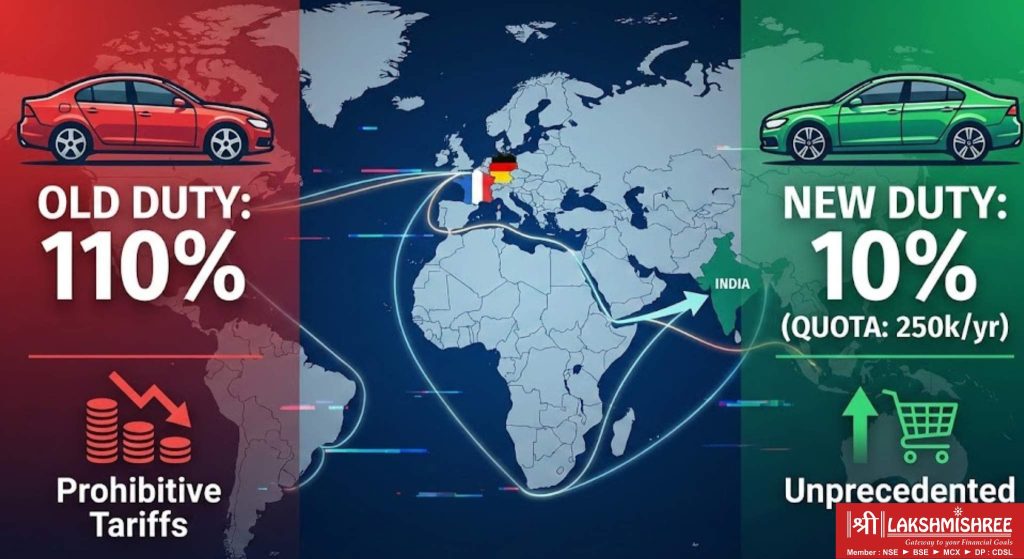
In perhaps the most significant concession for European industry, India has agreed to a phased but drastic reduction in import duties on passenger vehicles. Tariffs, which currently stand at a prohibitive 110%, will be slashed to as low as 10% for a quota of 250,000 vehicles annually.
This provision serves as a massive victory for German and French automakers who have long lobbied for access to India’s aspiring middle class. Furthermore, the agreement mandates the full abolition of duties on car parts over a five-to-ten-year horizon. This timeline allows domestic manufacturers time to adapt while incentivizing European firms to integrate Indian suppliers into their global value chains.
Wine, Spirits, and a “Calibrated” Agri-Opening
The consumer goods landscape in India is set for a shake-up as the deal targets steep agri-food duties, which currently average over 36%. Indian consumers can expect lower retail prices on European wines, olive oil, and premium chocolates as these tariffs are dismantled.
However, negotiators navigated the politically sensitive landscape of Indian agriculture with caution. According to an official EU factsheet released post-signing, key staples including rice, sugar, and meat remain protected and outside the scope of liberalization. This “calibrated opening” ensures that India’s vast small-holder farming community is insulated from direct European competition, a non-negotiable red line for Indian negotiators throughout the talks.
Defense and Security: The New Pillar
Beyond the ledger of tariffs and quotas, the summit solidified a robust security framework. The new Security and Defence Partnership (SDP) aims to strengthen cooperation in maritime security, cyber threats, and space technology.
A key outcome is the establishment of an industry-led India-EU Defence Industry Forum. This body is tasked with bridging the gap between European defense technology and Indian manufacturing capabilities, potentially paving the way for joint production of defense hardware in India. Additionally, a Security of Information Agreement was concluded to facilitate the exchange of classified intelligence, a move that underlines the deepening strategic alignment.
European Council President António Costa acknowledged India’s growing diplomatic weight, stating that the EU could “count on” Prime Minister Modi to help create conditions for peace in ongoing global conflicts. Invoking Mahatma Gandhi, Costa remarked, “Peace will not come out of a clash of arms but out of justice lived and done by unarmed nations.”
Powering the Future: Green Hydrogen and Connectivity
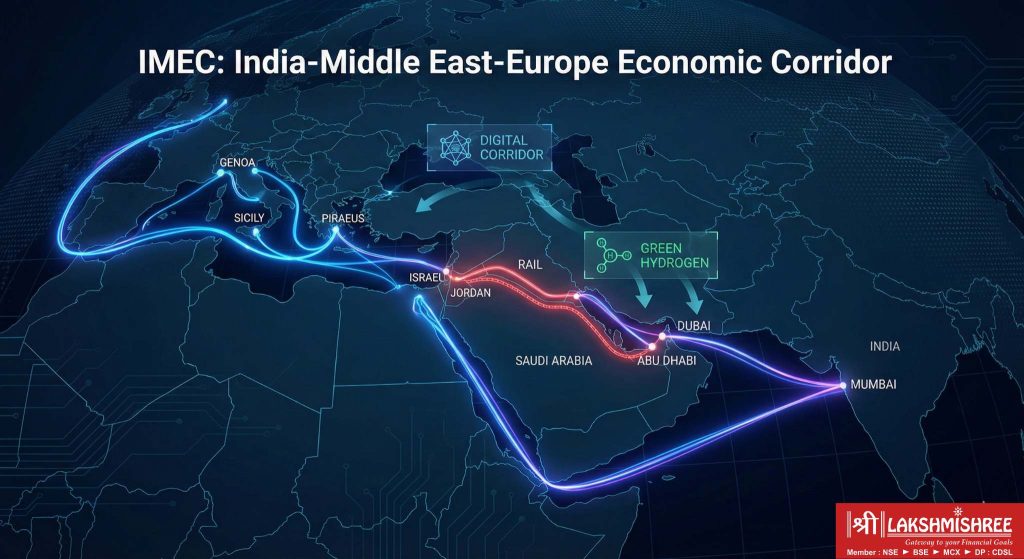
The FTA places a heavy emphasis on future-proofing the economic relationship through energy transition. The leaders reactivated the Joint Working Group on Energy Security and operationalized a dedicated Task Force on Green Hydrogen. This collaboration aims to scale up the production, storage, and distribution of green hydrogen, critical for decarbonizing hard-to-abate sectors like steel and cement in both regions.
Connectivity was another focal point, with specific commitments to deepen the India-Middle East-Europe Economic Corridor (IMEC). By developing “Green Shipping Corridors” and the “EU-Africa-India Digital Corridor”—which includes the Blue Raman submarine cable system—the partners aim to build trade routes that are resilient to geopolitical shocks and natural disasters.
Conclusion: A Blueprint for 2026 and Beyond
As the details of the agreement are parsed by industries on both continents, the immediate outlook is one of cautious optimism. For European exporters, the door to the world’s most populous nation has swung open wider than ever before. For India, the deal secures not just markets, but critical technology transfers and a powerful ally in the West.
The final ratification process will now commence, but the message from New Delhi is clear: India is open for business, but on terms that secure its strategic autonomy and economic future. “When India succeeds,” von der Leyen noted in her closing remarks, “the world becomes more stable.”

Kaashika is a social media strategist and financial content creator at Lakshmishree. She specialises in simplifying complex IPO and stock market concepts into clear, easy-to-understand content. Having created over 500+ pieces of financial content across reels, blogs, website posts and digital creatives, Kaashika helps audiences connect with the world of finance in a more accessible and engaging way.