Escalating geopolitical tensions in West Asia and uncertainty surrounding the Strait of Hormuz are beginning to ripple across global financial markets, with Indian equities opening under pressure on Monday as investors reacted cautiously to the evolving situation.
By 10:00 AM IST, the Nifty 50 was trading around 23,036, down about 115 points, while the BSE Sensex slipped roughly 380 points to 74,183. The market volatility indicator India VIX was at 21.96 as of 10:00 AM IST, down 3.02 percent from its previous close, suggesting that although investors remain cautious, panic levels have moderated after the initial reaction to geopolitical developments.
Market analysts say the current movement reflects a risk-adjustment phase, as investors evaluate the potential economic fallout from rising oil prices, supply chain disruptions and heightened global uncertainty.
Oil Prices at the Center of Market Anxiety
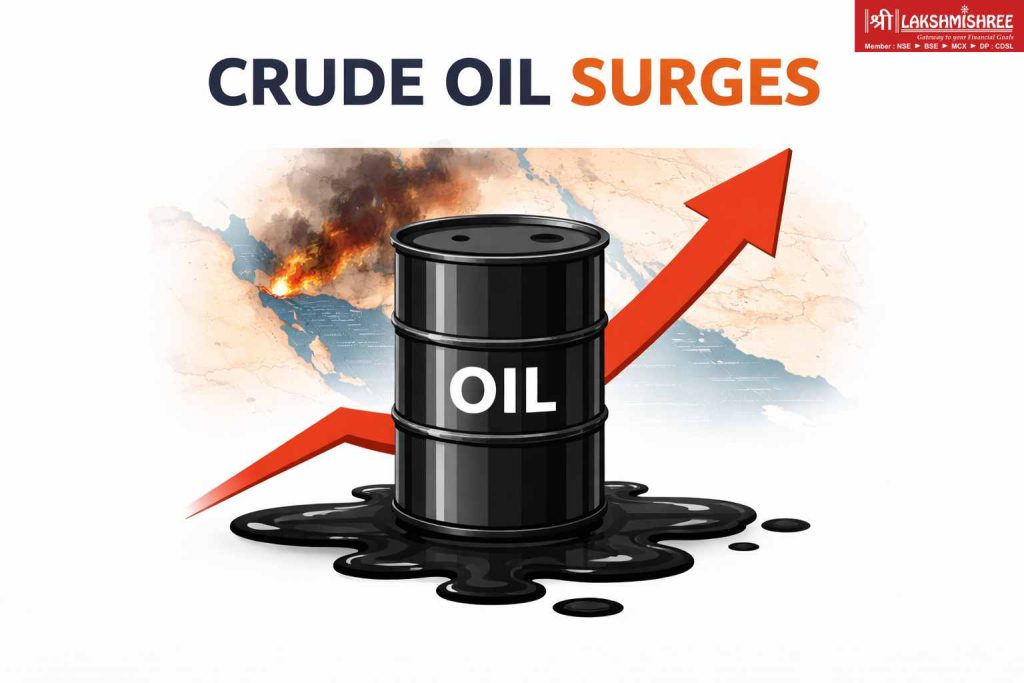
Energy markets remain the central driver of investor sentiment. Brent crude is currently trading near $103.42 per barrel, after briefly spiking above $106 following reports of military strikes on Iran’s Kharg Island, a strategic facility that handles a major share of Iran’s oil exports adding more to Harmuz tension.
For India, which imports more than 85 percent of its crude oil, sustained high prices could increase the country’s import bill, widen the current account deficit and raise inflationary pressures across the economy.
Historically, spikes in oil prices have had a direct impact on Indian equity markets because higher energy costs affect transportation, manufacturing input costs, and consumer spending.
Strategic Metals Surge Amid Defense Demand
Beyond energy markets, the conflict is also reshaping demand in the global commodities space, particularly for strategic industrial metals linked to defense manufacturing.
One of the biggest beneficiaries has been tungsten, a dense metal widely used in missiles, drone components, armor-piercing ammunition and aerospace systems. Some market reports suggest that tungsten demand has surged sharply as defense production ramps up globally.
At the same time, copper continues to see sustained demand due to its essential role in military electronics, electrical systems, communication networks and advanced defense hardware.
Commodity analysts describe this shift as part of a broader trend toward “metal-intensive warfare,” where modern conflicts increase the demand for strategic minerals critical to weapons manufacturing and defense infrastructure.
Bullion Demand Rises as Investors Seek Safety
Amid volatility in equity and commodity markets, investors are also increasing their exposure to safe-haven assets.
Across India’s bullion markets, 24-carat gold is trading near ₹1.60 lakh per 10 grams, while silver prices are hovering around ₹2.70 lakh per kilogram.
Precious metals traditionally gain traction during periods of geopolitical uncertainty as investors look to hedge against currency fluctuations, market volatility and global economic risks.
Sector Rotation in Equity Markets
Market strategists say the current geopolitical environment is already influencing sectoral shifts within equity markets.
When oil prices surge and global tensions rise, investors often move away from discretionary consumption sectors such as automobiles, luxury goods and travel, which tend to be sensitive to rising costs and economic slowdown.
Instead, capital typically flows toward defensive sectors including energy, defense manufacturing, utilities, and technology services, which are considered more resilient during periods of economic and geopolitical stress.
Markets Enter “Geopolitical Risk Phase”
With the West Asia conflict entering a more uncertain phase, financial markets worldwide are now closely tracking developments related to energy supply routes, shipping security in the Strait of Hormuz, and diplomatic responses from major economies.
For India’s stock markets, the coming weeks could remain volatile as investors assess how sustained oil prices, global commodity movements and geopolitical risks might influence inflation, corporate earnings and capital flows.
For now, analysts say the market is entering what is often described as a geopolitical risk phase, where sentiment shifts rapidly with each new development in the conflict.

Kaashika is a social media strategist and financial content creator at Lakshmishree. She specialises in simplifying complex IPO and stock market concepts into clear, easy-to-understand content. Having created over 500+ pieces of financial content across reels, blogs, website posts and digital creatives, Kaashika helps audiences connect with the world of finance in a more accessible and engaging way.