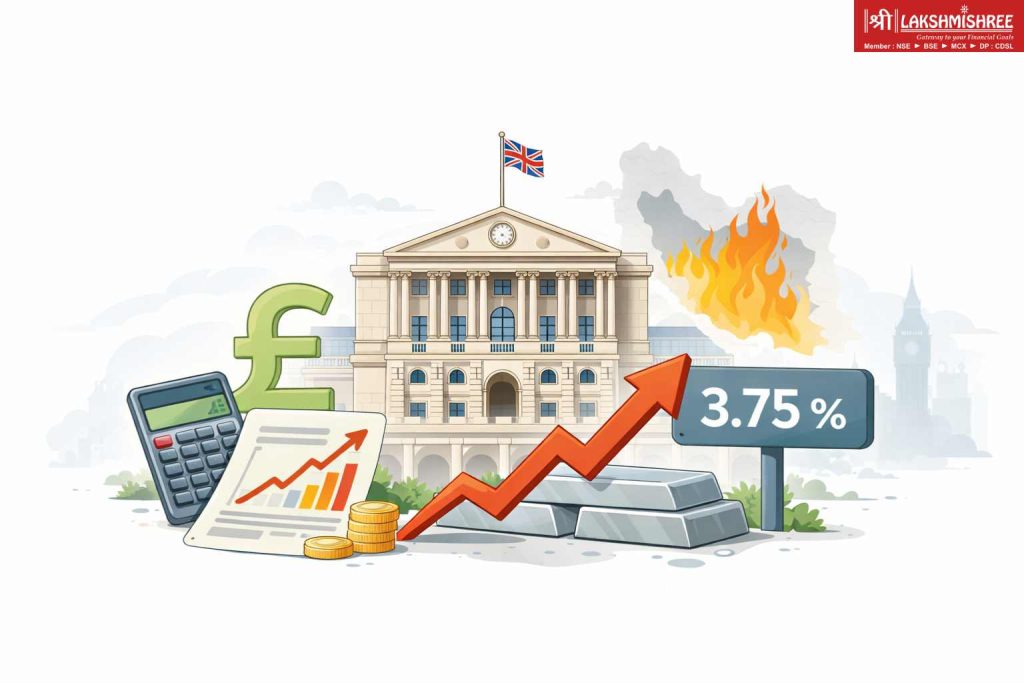
The global economic impact of the Iran war is now clearly reflecting in central bank decisions, with the Bank of England on Thursday holding its key interest rate steady at 3.75%, abandoning earlier expectations of rate cuts amid rising inflation risks linked to surging energy prices.
The decision, which was widely anticipated after the escalation of conflict in West Asia, marks a significant shift in the monetary policy outlook. As recently as February, economists had expected the UK central bank to begin easing rates to support a slowing economy. However, the sharp spike in oil and gas prices following attacks on critical energy infrastructure has altered that trajectory.
The Bank of England indicated that while it has paused for now, it remains prepared to raise rates if inflationary pressures intensify. Governor Andrew Bailey emphasized that the central bank is closely monitoring developments and stands ready to act to ensure inflation remains under control.
The move reflects a broader global trend, as central banks across major economies reassess their policies in response to the war-driven energy shock. The US Federal Reserve has also held rates steady, while similar stances have been observed from central banks in Canada, Japan, Switzerland and Sweden. The European Central Bank is also expected to follow suit, signalling a coordinated global pause in monetary easing.
At the heart of this shift is the surge in energy prices, which is feeding directly into inflation across economies. Higher oil and gas prices are not only increasing fuel costs but are also expected to push up food prices due to rising fertilizer and transportation expenses. This creates a renewed inflation cycle, forcing central banks to prioritise price stability over growth.
For households and businesses, the decision has immediate implications. Interest rates set by central banks influence borrowing costs across the economy, including mortgages, business loans and savings rates. By holding rates higher for longer, borrowing is likely to remain expensive, which could slow consumption and investment activity.
The economic outlook has also become more uncertain. The Bank of England warned that the UK economy could grow more slowly than previously expected, as higher energy costs and tighter financial conditions weigh on demand. The duration and intensity of the war remain key variables, making future policy decisions highly dependent on geopolitical developments.
What emerges from this moment is a clear shift in the global economic narrative. The Iran war is no longer just a geopolitical event; it is reshaping inflation expectations, delaying rate cuts and tightening financial conditions worldwide. Central banks, which were preparing to support growth, are now being forced into a defensive stance to contain inflation.
As long as energy markets remain volatile and geopolitical tensions persist, interest rates are likely to stay elevated, reinforcing a new phase of cautious monetary policy across the global economy.

Kaashika is a social media strategist and financial content creator at Lakshmishree. She specialises in simplifying complex IPO and stock market concepts into clear, easy-to-understand content. Having created over 500+ pieces of financial content across reels, blogs, website posts and digital creatives, Kaashika helps audiences connect with the world of finance in a more accessible and engaging way.