
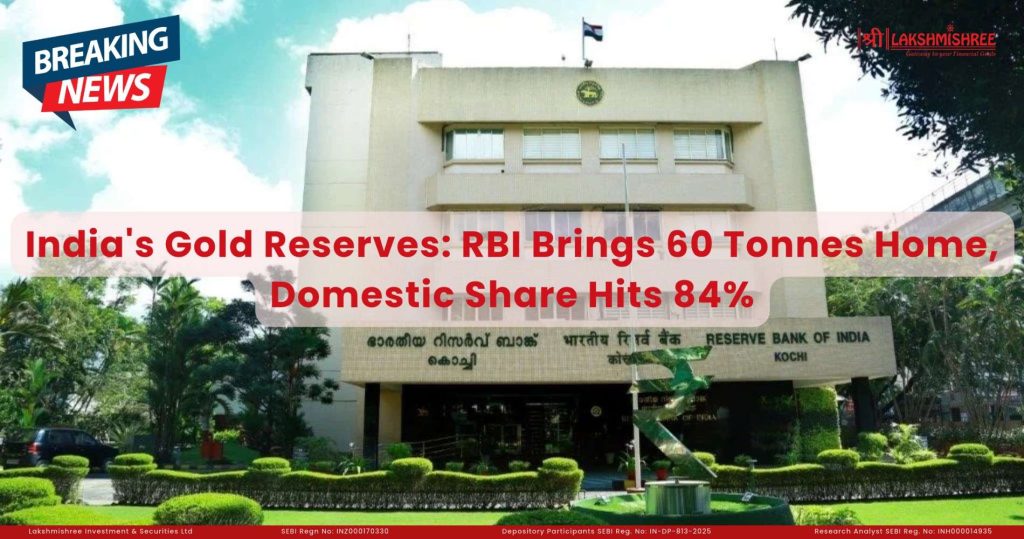
The RBI gold reserves have undergone a significant shift, with the Reserve Bank of India (RBI) bringing back 60.08 tonnes of gold from overseas storage facilities between April and September 2026. The move has increased the share of India’s gold reserves held domestically to approximately 84%, compared with 77.23% at the end of March 2026. The development reflects the central bank’s continued focus on strengthening domestic custody of its gold assets amid changing global geopolitical and economic conditions.
RBI’s Domestic Gold Holdings Increase to 740 Tonnes
According to the RBI’s half-yearly report on the management of foreign exchange reserves, India’s total gold holdings stood at 880.52 tonnes at the end of September 2026. Out of this, 740.13 tonnes were stored within India, compared with 680.05 tonnes at the end of March.
Meanwhile, the quantity of gold held overseas declined from 197.67 tonnes to 140.39 tonnes during the six-month period. These overseas holdings are primarily kept with the Bank of England and the Bank for International Settlements (BIS).
The overall quantity of gold held by the RBI remained unchanged during this period. This indicates that the increase in domestic reserves resulted from the transfer of existing gold holdings from international storage facilities rather than fresh purchases.
The RBI has gradually increased the domestic storage of its gold reserves over the past few years, reflecting growing attention towards the security and accessibility of strategic assets.
Value of Gold Reserves Declines Despite Higher Domestic Holdings
While the quantity of gold remained unchanged, the overall value of India’s gold reserves declined during the six-month period.
The value of the country’s gold holdings fell to $106.08 billion at the end of September 2026, compared with $115.40 billion at the end of March. This decline was primarily attributed to changes in international gold prices.
International gold prices averaged approximately $4,721 per troy ounce in April before declining to around $4,319 in September, marking a fall of nearly 9%.
The RBI’s report highlighted factors such as rising US Treasury yields, a stronger US dollar and expectations of tighter monetary policy as contributors to the movement in international gold prices.
Consequently, gold’s share in India’s total foreign exchange reserves declined from 16.70% in March to 14.38% in September 2026.
India’s Foreign Exchange Reserves Rise to $737.78 Billion
Alongside changes in gold holdings, India’s overall foreign exchange reserves also recorded an increase during the April-September period.
The country’s foreign exchange reserves increased by $46.67 billion, rising from $691.11 billion at the end of March to $737.78 billion at the end of September 2026.
The RBI also adjusted the composition of its foreign currency assets (FCA). The share of investments held in securities increased to 87.06% at the end of September from 84.31% six months earlier.
Out of the total foreign currency assets of $608.26 billion, approximately $529.57 billion was invested in securities. Meanwhile, deposits with other central banks and the BIS stood at $35.95 billion, while deposits with overseas commercial banks reached $42.75 billion.
RBI Maintains Focus on Safety and Liquidity
The central bank continues to prioritise the safety and liquidity of India’s foreign exchange reserves while considering opportunities to optimise returns.
According to the RBI, its investments primarily comprise bonds and treasury bills issued by highly rated sovereign governments, central banks and international institutions.
Most of these investments can also be converted into cash at short notice through outright sales or repurchase markets, providing flexibility in managing the country’s foreign exchange requirements.
The latest shift in gold holdings highlights the RBI’s approach towards strengthening domestic custody while maintaining a diversified foreign exchange reserve portfolio. With geopolitical uncertainties and changing global financial conditions continuing to influence central bank reserve management, the security and accessibility of India’s strategic assets remain important considerations.
Sources: Moneycontrol, Nov 26, 2026
For more updates on stock market, businesses and financial news, visit the Lakshmishree Investment and Securities News section.

News Desk