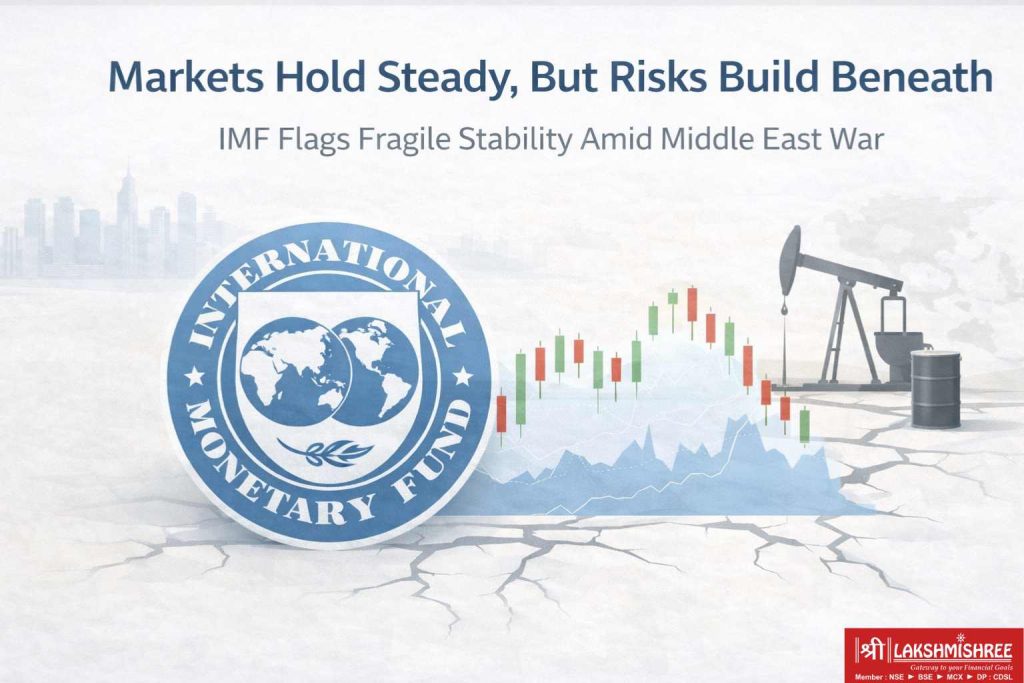
Global financial markets are showing resilience amid the ongoing Middle East conflict, but underlying risks remain elevated, according to International Monetary Fund(IMF),in a report published on April 14, 2026.
Markets entered 2026 from a position of strength, supported by rising asset prices and low volatility. However, the outbreak of hostilities in West Asia has disrupted that environment, triggering declines in equities, a rise in bond yields and increased volatility across asset classes. The shift has been largely driven by higher energy prices and renewed inflation concerns, the IMF noted.
Despite these pressures, market functioning has remained orderly — a key distinction in assessing financial stability. According to the IMF, the current phase reflects a structured repricing of assets rather than systemic stress, with markets absorbing shocks through price adjustments rather than liquidity breakdowns.
However, the report cautions that this resilience should not be misinterpreted as stability.
The primary transmission channel of the conflict has been inflation. Rising crude oil prices have pushed inflation expectations higher globally, leading to tighter financial conditions. Bond yields have increased and yield curves have flattened, indicating growing concerns about future economic growth.
This places central banks in a difficult position. While inflation control remains a priority, prolonged tightening could weigh on growth and labor markets if geopolitical tensions persist.
The IMF also highlighted rising concerns around public debt. Many advanced economies are entering this phase with elevated debt levels and limited fiscal flexibility. At the same time, a shift toward more price-sensitive investors means bond markets may now react more sharply to inflation shocks than in previous cycles.
Emerging markets remain particularly vulnerable. Although structural resilience has improved over the past decade, exposure to volatile capital flows and higher global yields continues to pose risks, especially for economies dependent on external financing.
Crucially, the IMF warns that the most significant risks lie in amplification mechanisms rather than the initial shock itself. Elevated leverage, concentration in equity markets and tight credit spreads increase the likelihood of forced selling and liquidity stress in the event of further deterioration.
The rapid expansion of private credit markets — often less transparent — adds to these concerns, as valuation risks and funding mismatches remain largely untested under adverse conditions.
Policy responses, meanwhile, remain uneven. While fiscal and monetary policy space is constrained, financial stability tools such as liquidity support, stress testing and regulatory oversight provide some buffer.
The broader takeaway, according to the IMF, is that current market stability reflects adjustment rather than immunity.
“Resilience should not be inferred from the absence of stress,” the report notes, emphasizing that risks remain tilted to the downside even as markets continue to function smoothly.
As geopolitical uncertainty persists, policymakers are being urged to focus on preparedness rather than prediction. The coming weeks will be critical in determining whether markets can continue to absorb shocks without triggering broader financial instability.

Kaashika is a social media strategist and financial content creator at Lakshmishree. She specialises in simplifying complex IPO and stock market concepts into clear, easy-to-understand content. Having created over 500+ pieces of financial content across reels, blogs, website posts and digital creatives, Kaashika helps audiences connect with the world of finance in a more accessible and engaging way.