
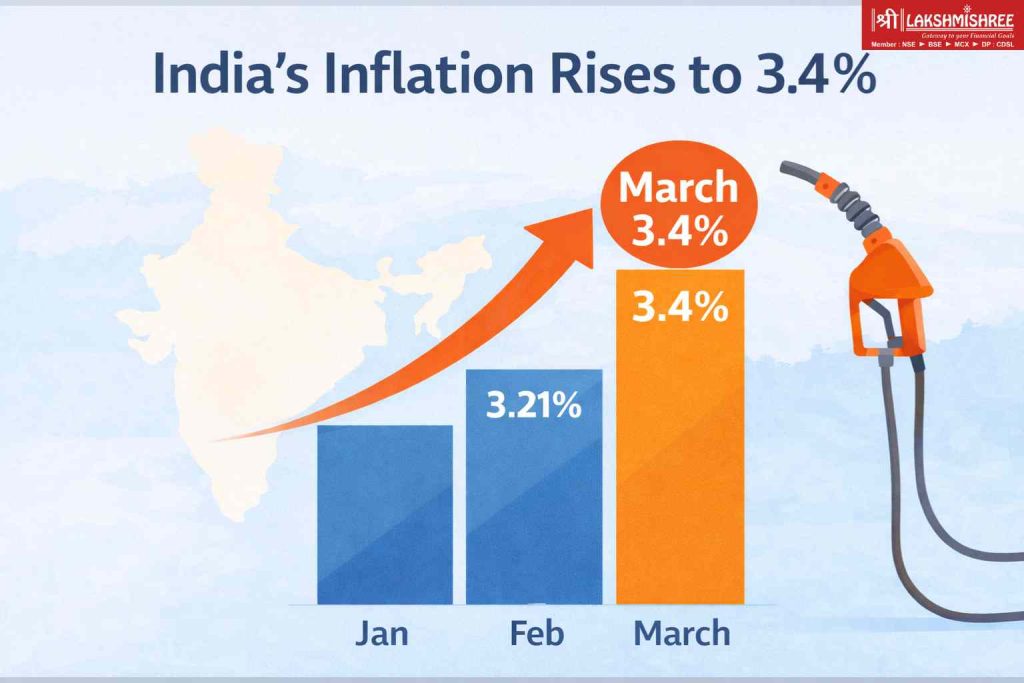
India’s retail inflation edged higher to 3.4 percent in March, reflecting early signs of pressure from rising geopolitical tensions and global supply disruptions, even as overall price levels remained within the Reserve Bank of India’s comfort zone, April 13, 2026.
Inflation Movement
India’s retail inflation rose to 3.4% in March from 3.21% in February, reflecting early pressure from global supply disruptions.
What’s Driving It
The uptick was primarily led by rising fuel costs amid escalating tensions in West Asia and disruptions in global oil flows.
Still Under Control
Despite the increase, inflation remains below the RBI’s 4% target for the 12th consecutive month, indicating stability in domestic prices.
RBI’s View
The central bank has flagged external risks but emphasized that India’s economic fundamentals remain strong enough to absorb shocks.
What It Means
The data signals the beginning of global pressures feeding into the domestic economy, especially through oil and currency channels.
RETAIL INFLATION DATA
The latest data shows a slight increase from February’s 3.21 percent, with the uptick largely driven by higher fuel costs linked to the ongoing conflict in West Asia. Rural inflation stood at 3.63 percent, while urban inflation was recorded at 3.11 percent under the revised consumer price index framework.
The inflation rise comes at a time when global markets are grappling with disruptions triggered by the escalating conflict involving the United States and Iran. The imposition of a naval blockade on Iranian ports has intensified uncertainty in the Strait of Hormuz, a key route for global oil shipments, leading to volatility in energy prices.
Despite these pressures, inflation has remained below the RBI’s medium-term target of 4 percent for 12 consecutive months, indicating relative stability in domestic price conditions. Analysts note that while fuel-driven inflation has started to reflect external shocks, it has been partially offset by a sharp decline in gold prices during the month.
The Reserve Bank of India has acknowledged the emerging risks but emphasized the strength of domestic fundamentals. RBI Governor Sanjay Malhotra stated that the economy is better positioned to absorb shocks compared to previous years, although the current environment reflects a clear supply-side challenge.
The central bank has maintained a cautious stance, indicating that it will closely monitor evolving global developments before making further policy adjustments. It also projected inflation at 4.6 percent for the next financial year, with expectations of moderate fluctuations across quarters.
A key structural change in the inflation calculation has also come into effect with the revised CPI basket, which now uses 2024 as the base year. The updated framework reduces the weight of food items while increasing the share of housing, utilities, and services, offering a more contemporary reflection of consumption patterns.
For markets and investors, the data presents a mixed picture. While inflation remains under control, the upward movement signals the beginning of external pressures filtering into the domestic economy. Rising crude oil prices, currency volatility, and global uncertainty remain key risks that could shape the inflation trajectory in the coming months.
In essence, the latest reading highlights a transition phase—where domestic stability is being tested by global shocks. The ability of inflation to remain within target despite these pressures underscores resilience, but also reinforces the need for vigilance as geopolitical risks continue to evolve.

Kaashika is a social media strategist and financial content creator at Lakshmishree. She specialises in simplifying complex IPO and stock market concepts into clear, easy-to-understand content. Having created over 500+ pieces of financial content across reels, blogs, website posts and digital creatives, Kaashika helps audiences connect with the world of finance in a more accessible and engaging way.