
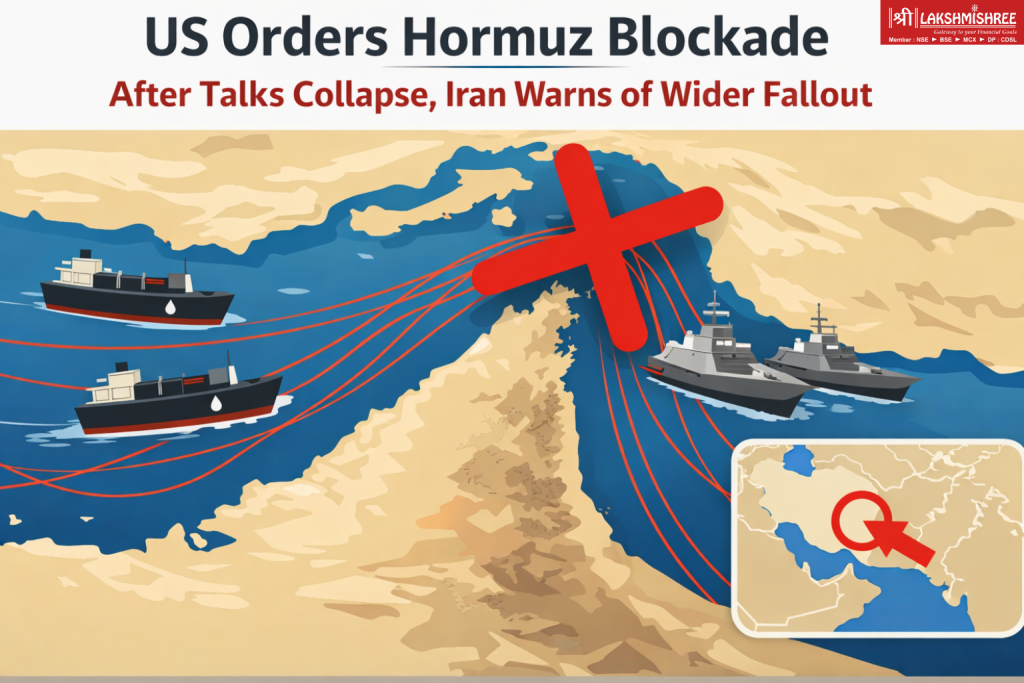
The United States is set to begin a naval blockade of Iranian ports in the Strait of Hormuz, escalating tensions in an already volatile West Asia conflict after diplomatic efforts between Washington and Tehran collapsed over the weekend on April 13, 2026.
The move follows a failure of high-level talks held in Islamabad, which both sides described as coming close to an agreement but ultimately breaking down over key disagreements, including nuclear issues and control over the strategic waterway. The Strait of Hormuz, a critical global energy corridor, has remained largely disrupted since hostilities intensified in late February.
According to U.S. officials, naval operations are expected to begin later in the day, targeting maritime traffic linked to Iranian ports while maintaining that freedom of navigation for other vessels will not be affected. However, the announcement signals a sharp escalation in economic and military pressure on Tehran.
Iran, meanwhile, has rejected U.S. claims and warned of broader consequences. Officials stated that security in the Persian Gulf “will be either for everyone or no one,” indicating the possibility of retaliatory measures that could further destabilize the region. Iranian authorities have also questioned U.S. assertions regarding naval movements in the strait, denying that American warships successfully transited the route in recent operations.
The breakdown in negotiations has heightened fears of a prolonged conflict, with both sides hardening their positions. Iranian Foreign Minister Abbas Araghchi said talks had reached an advanced stage but accused the U.S. of shifting its demands, while American leadership has maintained that pressure tactics are necessary to force compliance.
Beyond the immediate military implications, analysts warn that even a partial reopening of the Strait of Hormuz may not quickly stabilize global energy markets. Shipping operators and insurers remain cautious, with many unwilling to resume operations until long-term security assurances are in place. This hesitation could prolong disruptions in oil and liquefied natural gas supplies, keeping prices elevated and adding strain to global economies.
At the same time, signs of reconstruction have begun within Iran, with rail services and critical infrastructure gradually being restored after weeks of damage from sustained conflict. However, these developments remain overshadowed by the broader geopolitical uncertainty.
The evolving situation underscores the fragility of the region’s security environment, where diplomatic setbacks can quickly translate into military escalation. Market participants and policymakers alike are expected to closely monitor developments in the Strait of Hormuz, as the outcome will have far-reaching implications for global trade, energy supply chains, and financial markets in the weeks ahead.

Kaashika is a social media strategist and financial content creator at Lakshmishree. She specialises in simplifying complex IPO and stock market concepts into clear, easy-to-understand content. Having created over 500+ pieces of financial content across reels, blogs, website posts and digital creatives, Kaashika helps audiences connect with the world of finance in a more accessible and engaging way.