
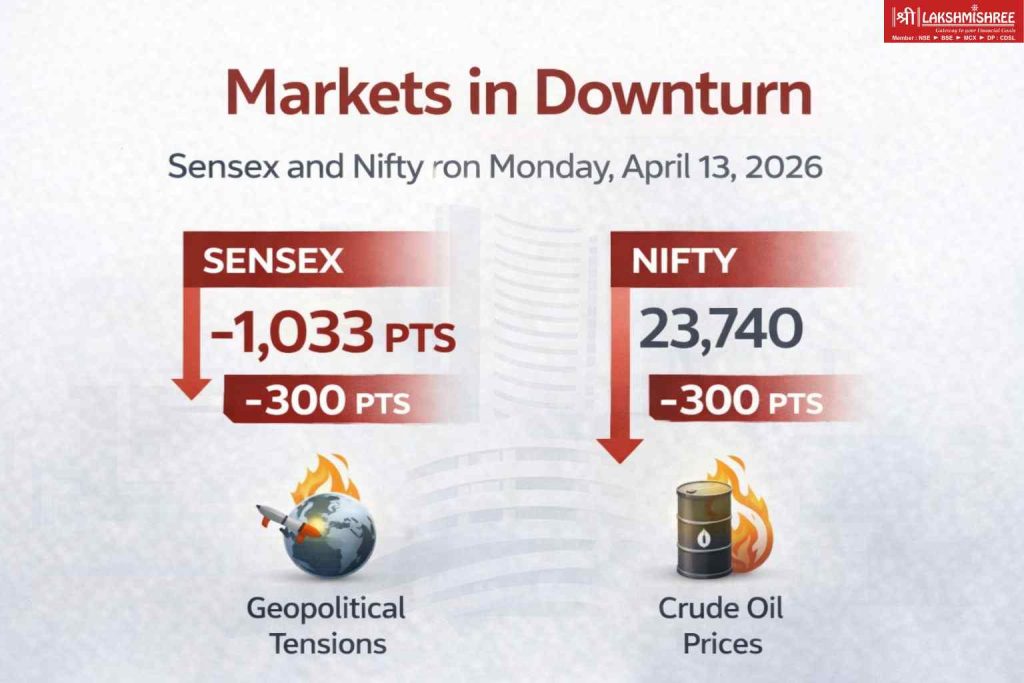
Indian equity markets declined sharply on Monday, April 13, 2026, with the Sensex falling over 1,000 points and the Nifty 50 slipping below the 23,750 mark, as renewed geopolitical tensions and rising crude oil prices dampened investor sentiment.
At around mid-morning trade, the Sensex was down 1,033 points at 76,518, while the Nifty dropped over 300 points to 23,740, reflecting broad-based selling across sectors.
The sell-off came after optimism from the previous week faded quickly. Markets had rallied nearly 6% last week on hopes of a ceasefire between the United States and Iran, but those expectations weakened after recent negotiations failed to produce a concrete agreement.
The breakdown of talks has raised concerns about a prolonged conflict in West Asia, triggering a risk-off sentiment globally. Reports of a potential U.S. naval blockade in the Strait of Hormuz further escalated tensions, adding to uncertainty in global markets.
Crude oil prices reacted sharply to these developments. Brent crude surged over 7% to trade above $102 per barrel, raising fresh concerns for oil-importing economies like India. Higher oil prices are seen as a key risk factor, as they can widen the current account deficit, fuel inflation and impact corporate margins.
The impact was clearly visible across sectors, with all major Nifty indices trading in the red. Broader markets also weakened, with mid-cap and small-cap indices falling around 1.5% each, indicating widespread selling pressure.
Banking and financial stocks, which carry significant weight in the indices, were among the top losers. Heavyweights such as HDFC Bank and ICICI Bank declined sharply, dragging the benchmarks lower.
Oil marketing companies also came under pressure, as rising crude prices threaten to squeeze their margins. Stocks like BPCL, HPCL and Indian Oil recorded notable declines during the session.
Currency movements added to the negative sentiment. The Indian rupee weakened by 49 paise to around 93.32 against the U.S. dollar, reflecting increased demand for the greenback amid global uncertainty.
At the same time, the India VIX — often referred to as the market’s fear gauge — rose sharply to 21.3, signaling a rise in volatility expectations and heightened nervousness among investors.
Global cues also remained weak, with Asian markets trading lower and U.S. futures indicating a subdued start, further weighing on domestic equities.
The current decline highlights how quickly market sentiment can shift in response to geopolitical developments. After a brief phase of recovery, uncertainty has once again taken center stage, with oil prices and global tensions emerging as key drivers.
Market participants are expected to closely monitor further developments in U.S.-Iran relations and crude oil trends, as these factors are likely to determine the near-term direction of equities.

Kaashika is a social media strategist and financial content creator at Lakshmishree. She specialises in simplifying complex IPO and stock market concepts into clear, easy-to-understand content. Having created over 500+ pieces of financial content across reels, blogs, website posts and digital creatives, Kaashika helps audiences connect with the world of finance in a more accessible and engaging way.