Indian equity markets witnessed a sharp reversal on Thursday, breaking a five-session winning streak, as fading hopes around the U.S.-Iran ceasefire and rising oil prices weighed on investor sentiment, April 9, 2026.
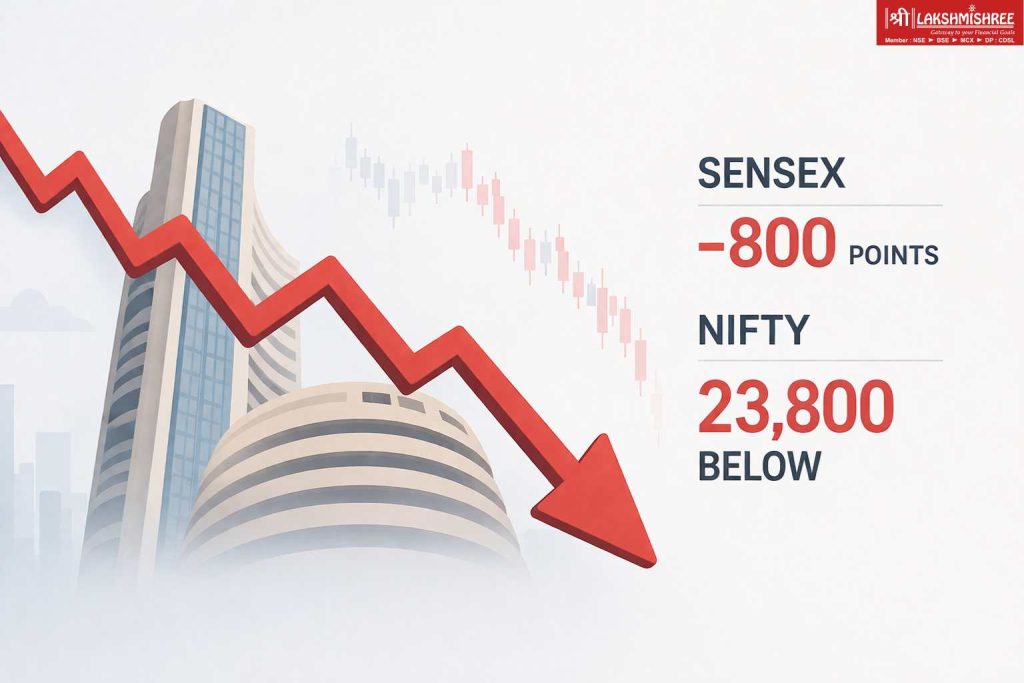
After a strong rally in the previous session, benchmark indices opened lower and extended losses through early trade. The BSE Sensex fell over 800 points to hit an intraday low of 76,754, while the NSE Nifty 50 slipped more than 200 points to trade below the 23,800 mark. The decline reflects how quickly market sentiment can shift in response to global developments.
The primary trigger for the downturn was renewed uncertainty around the fragile ceasefire between the United States and Iran. While a temporary truce had initially lifted global markets, fresh reports of violations and continued military activity in the region have raised doubts over its sustainability. The Strait of Hormuz, a crucial global oil transit route, also remained disrupted, adding to investor concerns.
This uncertainty immediately impacted crude oil prices, which reversed their previous decline. Brent crude rose over 2% to around $96.70 per barrel, while U.S. crude approached $97. The rebound in oil prices is particularly significant for India, as higher crude costs tend to increase inflationary pressures, widen the current account deficit and weigh on corporate profitability.
Global market cues also remained weak. Asian markets traded in the red, with declines seen across major indices including Japan’s Nikkei, South Korea’s Kospi and China’s Shanghai Composite. U.S. futures also indicated a softer opening, suggesting that the cautious sentiment is not limited to domestic markets but part of a broader global risk-off trend.
Back home, sectoral trends highlighted selective pressure. IT stocks emerged as the biggest laggards, with the Nifty IT index falling nearly 1%, led by declines in major technology companies. Heavyweight stocks such as Infosys, HCLTech and Larsen & Toubro were among the top losers, falling up to 2%. In contrast, metal and power stocks showed resilience, with Tata Steel, NTPC and Power Grid trading in positive territory.
Interestingly, broader markets displayed relative strength despite the benchmark decline. Midcap and smallcap indices managed to stay in the green with marginal gains, indicating that domestic investor participation continues to provide underlying support to the market.
Volatility also edged higher, with the India VIX rising over 1% after a sharp drop in the previous session. This suggests that uncertainty has returned to the market, even if not at extreme levels.
Another key factor weighing on sentiment is the continued selling by foreign institutional investors (FIIs). Overseas investors have remained net sellers for several sessions, offloading equities worth thousands of crores. This persistent outflow has added pressure on benchmark indices, even as domestic institutional investors have attempted to absorb the impact.
The broader takeaway from the day’s movement is clear: the recent rally was largely driven by expectations of easing global tensions, and any sign of reversal in that narrative can quickly unwind gains. Markets are currently highly sensitive to geopolitical developments, particularly those affecting energy prices.
Looking ahead, the direction of the market will depend largely on how the geopolitical situation evolves. If the ceasefire stabilizes and oil prices cool, markets could regain momentum. However, any escalation in tensions may keep volatility elevated in the near term.
For investors, the current phase underscores the importance of staying cautious and focusing on underlying fundamentals rather than short-term market swings.

Kaashika is a social media strategist and financial content creator at Lakshmishree. She specialises in simplifying complex IPO and stock market concepts into clear, easy-to-understand content. Having created over 500+ pieces of financial content across reels, blogs, website posts and digital creatives, Kaashika helps audiences connect with the world of finance in a more accessible and engaging way.