Saudi Arabia has raised the price of its flagship crude to a record premium for Asian buyers, signaling tightening global oil supply conditions as disruptions in the Strait of Hormuz continue to unsettle energy markets on April 6, 2026.
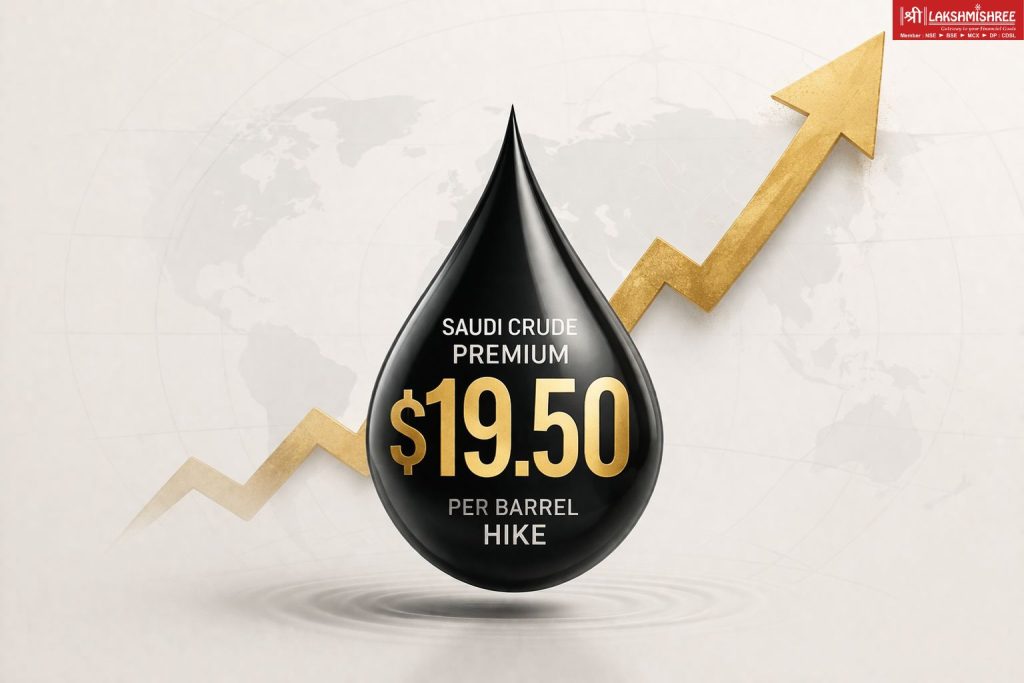
State-owned Saudi Aramco has priced its Arab Light crude for May deliveries at a premium of $19.50 per barrel over the regional benchmark, reflecting a sharp escalation in supply risk. While the premium is lower than extreme market expectations of up to $40 per barrel, it still represents a historic high, underscoring the severity of current disruptions.
The pricing move comes against the backdrop of a near choke in oil flows through the Strait of Hormuz, a critical maritime route that typically handles nearly one-fifth of global oil and liquefied natural gas shipments. The ongoing U.S.-Israel conflict with Iran has significantly constrained energy movement from the Persian Gulf, introducing a substantial geopolitical risk premium into global oil prices.
The impact is already visible across markets. Brent crude prices have surged more than 50% in recent weeks, while fuel prices have risen sharply across major economies including the United States, Europe and Asia. The rapid escalation highlights how supply-side disruptions, rather than demand dynamics, are currently driving energy markets.
Despite these constraints, OPEC+ has attempted to stabilize supply expectations by announcing a second consecutive increase in production. The group plans to raise output by 206,000 barrels per day starting May. However, the effectiveness of this measure remains uncertain.
Industry assessments indicate that increased output may not fully offset disruptions in the Gulf. OPEC+ itself has acknowledged that damage to energy infrastructure and logistical bottlenecks could prolong supply instability. Repairing affected facilities is both capital-intensive and time-consuming, suggesting that disruptions could persist beyond the immediate conflict period.
Energy executives have also issued strong warnings. Saudi Aramco CEO Amin H. Nasser described the situation as potentially “catastrophic” for global oil markets, noting that approximately 180 million barrels of supply have already been disrupted. He emphasized that the current crisis represents one of the most severe challenges faced by the region’s oil and gas industry.
The broader concern extends beyond immediate price spikes. Sustained disruption in the Strait of Hormuz could have cascading effects across global supply chains, impacting not only energy markets but also industries dependent on stable fuel costs. The Strait remains a critical chokepoint, and any prolonged instability could amplify inflationary pressures worldwide.
Analytically, the current phase of the oil market reflects a structural shift from price volatility driven by demand cycles to one dominated by geopolitical supply risks. The introduction of a sustained risk premium indicates that markets are increasingly pricing in the possibility of prolonged disruption rather than a short-term shock.
For importing economies such as India, the implications are significant. Higher crude prices translate into increased import bills, currency pressure and potential inflationary spillovers, which could influence monetary policy and economic growth trajectories.
In the near term, market direction will depend on two key variables: the duration of disruptions in the Strait of Hormuz and the ability of alternative supply channels to compensate for restricted flows. Until clarity emerges on these fronts, global oil markets are likely to remain elevated and volatile.
The current pricing by Saudi Arabia, therefore, is not merely a commercial adjustment but a reflection of a deeper recalibration in global energy markets, where geopolitical risk has become the dominant driver of price discovery.

Kaashika is a social media strategist and financial content creator at Lakshmishree. She specialises in simplifying complex IPO and stock market concepts into clear, easy-to-understand content. Having created over 500+ pieces of financial content across reels, blogs, website posts and digital creatives, Kaashika helps audiences connect with the world of finance in a more accessible and engaging way.