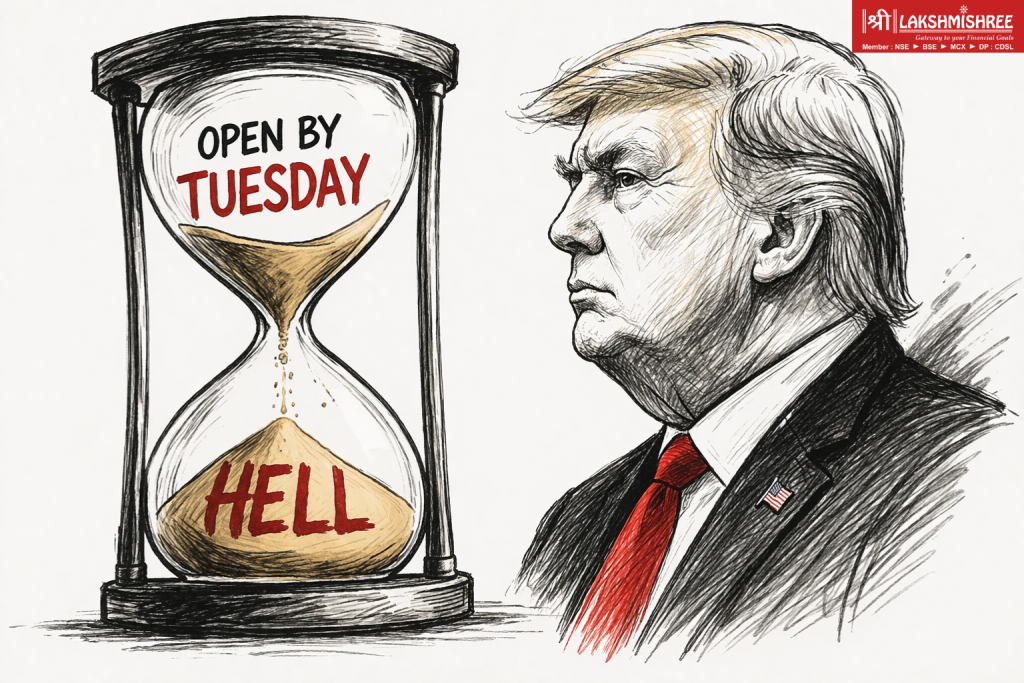
U.S. President Donald Trump has intensified his warnings against Iran, threatening to strike critical civilian infrastructure if the Strait of Hormuz is not reopened by Tuesday, 8:00 P.M. Eastern Time i.e., April 5, even as Tehran mocked the remarks and warned of direct retaliation, April 6, 2026.
In a strongly worded social media post, Trump warned that the United States could target key infrastructure such as power plants and bridges, escalating pressure on Iran amid the ongoing conflict. He reiterated that failure to comply with U.S. demands could result in severe consequences, signaling a hardening stance as the deadline approaches.
“Tuesday will be Power Plant Day, and Bridge Day, all wrapped up in one, in Iran. There will be nothing like it!!! Open the Fuckin’ Strait, you crazy bastards, or you’ll be living in Hell – JUST WATCH! Praise be to Allah”. President DONALD J. TRUMP
The threat marks a significant escalation in rhetoric, with Trump earlier setting a deadline for Iran to reopen the Strait of Hormuz, a critical global oil transit route that has remained disrupted since hostilities intensified in late February. The waterway handles nearly 20% of global oil shipments, making it central to global energy security.
Iran, however, responded sharply. Officials dismissed the U.S. threats, with some making sarcastic remarks undermining Washington’s position, while the Foreign Ministry warned that any attack on Iranian infrastructure would be met “in kind.”
Our armed forces have made it clear that in case Iran’s infrastructure is attacked, we would react in kind
Iran’s foreign ministry spokesperson
Iranian representatives also condemned the threats at the international level, stating that targeting civilian infrastructure would have severe humanitarian consequences and could violate international norms. Senior officials indicated that the Strait would not be reopened under pressure, and any resolution would depend on broader negotiations and conditions tied to the ongoing conflict.
The exchange highlights a widening standoff, with both sides adopting increasingly aggressive positions. While Trump has indicated that negotiations may still be possible, his warnings suggest that military options remain firmly on the table.
On the ground, the conflict has already seen strikes on key infrastructure across the region, raising concerns over the safety of energy assets and supply chains. Analysts note that targeting power and transport infrastructure could significantly escalate the situation, with wider implications for global markets.
The Strait of Hormuz remains the central flashpoint. Any prolonged disruption or escalation could further drive volatility in crude oil prices, impact global trade flows and increase inflationary pressures, particularly for energy-importing economies.
Market participants and policymakers are closely monitoring developments, as the situation reflects a fragile balance between diplomatic efforts and escalating military rhetoric. With both sides signaling strength, the risk of further escalation remains high.
For now, the confrontation underscores the growing uncertainty in global geopolitics, with the Strait of Hormuz at the center of a crisis that continues to shape energy markets and investor sentiment worldwide.

Kaashika is a social media strategist and financial content creator at Lakshmishree. She specialises in simplifying complex IPO and stock market concepts into clear, easy-to-understand content. Having created over 500+ pieces of financial content across reels, blogs, website posts and digital creatives, Kaashika helps audiences connect with the world of finance in a more accessible and engaging way.