
In a surprising turn for global markets, gold and silver prices witnessed a sharp decline on Thursday despite escalating tensions in West Asia and continued volatility in equity markets. Traditionally seen as safe-haven assets during geopolitical crises, both metals fell significantly, indicating that deeper macroeconomic forces are currently outweighing fear-driven demand.
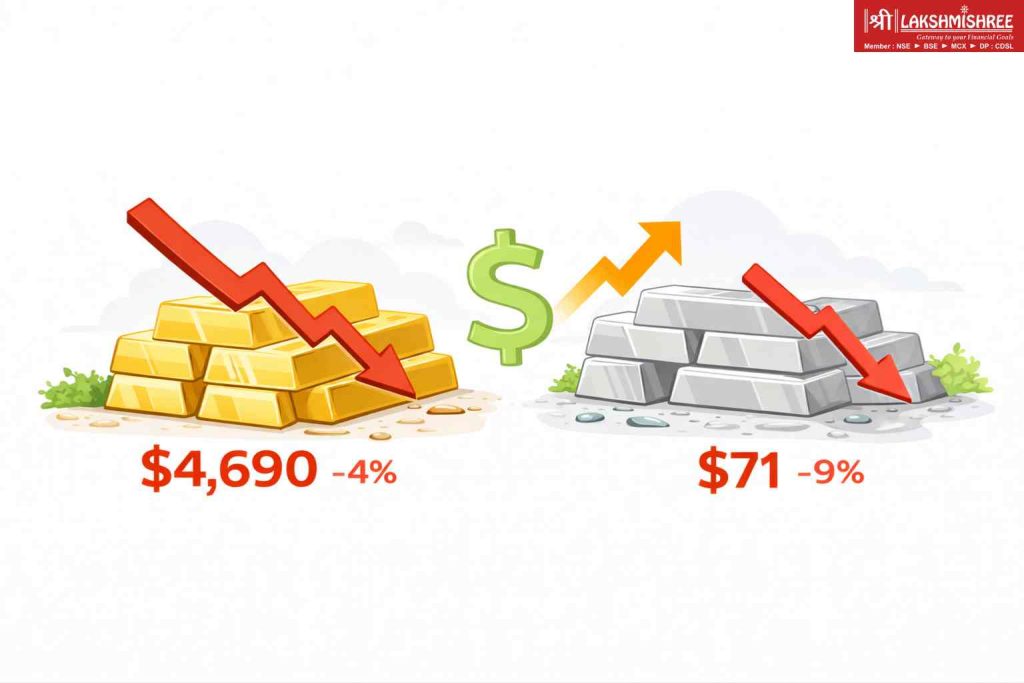
In international markets, gold dropped over 4% to around $4,690 per ounce, while silver plunged nearly 9% to below $71, marking their lowest levels in nearly a month. The weakness was not limited to precious metals alone, as platinum and copper also declined, pointing to a broader pullback across commodities.
The decline comes at a time when investors would typically expect gold and silver to rally. However, the current environment is being shaped less by geopolitical risk and more by inflation, interest rates and currency movements.
The primary driver behind the fall is the sharp rise in crude oil prices, which has intensified global inflation concerns. As inflation rises, expectations of interest rate cuts by the US Federal Reserve have weakened significantly. This has altered the investment landscape, making interest-bearing assets like bonds more attractive compared to gold and silver, which do not offer returns.
At the same time, the US dollar has strengthened considerably, adding further pressure on bullion prices. A stronger dollar makes gold and silver more expensive for global buyers, reducing demand and pushing prices lower. This inverse relationship between the dollar and precious metals is now clearly visible in current market movements.
Another key shift is where investors are allocating their capital. Instead of flowing into gold and silver, safe-haven demand is increasingly moving towards energy markets, particularly crude oil, which has become the focal point of the current crisis. With oil prices surging over 40% since the conflict began, energy has emerged as the dominant asset reflecting geopolitical risk.
This change highlights a broader transformation in how markets react during crises. Gold and silver are no longer responding solely to war or uncertainty; instead, they are being influenced by a complex mix of inflation trends, monetary policy expectations and global liquidity conditions.
Domestic markets mirrored the global trend. On the MCX, gold slipped below ₹1.50 lakh per 10 grams, while silver dropped sharply towards ₹2.30–2.35 lakh per kilogram, reflecting heavy selling pressure throughout the trading session.
The ongoing decline also signals a shift in investor sentiment. Gold has now recorded multiple consecutive sessions of losses, suggesting that the correction is not merely a short-term reaction but part of a broader repositioning in global markets.
Looking ahead, the direction of gold and silver will depend less on geopolitical developments alone and more on signals from central banks and currency movements. If inflation remains elevated and interest rates stay higher for longer, bullion may continue to face pressure despite ongoing global uncertainty.
The current phase underscores a critical shift in market dynamics. Even in the midst of war and financial volatility, it is macroeconomics—rather than fear—that is driving asset prices, reshaping the traditional role of gold and silver in times of crisis.

Kaashika is a social media strategist and financial content creator at Lakshmishree. She specialises in simplifying complex IPO and stock market concepts into clear, easy-to-understand content. Having created over 500+ pieces of financial content across reels, blogs, website posts and digital creatives, Kaashika helps audiences connect with the world of finance in a more accessible and engaging way.