THE HORMUZ CHOKE: OIL CROSSES $100 AS IRAN DEPLOYS SEA MINES
Global energy markets spiraled into a “Scenario 2” crisis on Day 13 of the escalating conflict as Brent Crude breached the $100 psychological ceiling, settling at $100.09. The surge comes despite a historic release of 400 million barrels from IEA reserves, an intervention effectively neutralized by Iran’s successful blockade of the Strait of Hormuz.
Tehran’s maritime forces have reportedly struck five vessels in the last 48 hours, threatening to drive prices to $200 per barrel if U.S. strikes continue. In Washington, the Pentagon released a staggering fiscal update, confirming that the first six days of active combat have cost the American treasury $11.3 billion, with no signs of de-escalation.
India has responded with a dramatic strategic pivot. New Delhi has increased its intake of Russian Siberian Light and Urals crude by 50 percent, hitting a record 1.5 million barrels per day to bypass the Persian Gulf chokepoint. While energy security is being rerouted, the domestic consumer is feeling the immediate shock; LPG wait times have expanded to 25 days across major metros, triggering a 95 percent surge in induction cooker sales as households flee the gas crisis.
On Dalal Street, the Nifty 50 plummeted 829 points to close at 23,639, marking its sharpest contraction since the conflict began. While Defense and PSU Power stocks remained resilient, the broader market capitulated under the weight of an 8.2 percent inflation estimate and a weakening Rupee, which is now flirting with the ₹93 mark against the Dollar.
The Global Chokepoint: A Maritime Graveyard
The Strait of Hormuz, a narrow sliver of water through which 20% of the world’s oil flows, has effectively ceased to function as a commercial artery. Overnight, the IEA declared the conflict the “largest supply disruption in the history of the global oil market.” Despite the Biden and Trump administrations coordinating a massive 172-million-barrel release from the Strategic Petroleum Reserve (SPR), the market remains unimpressed.
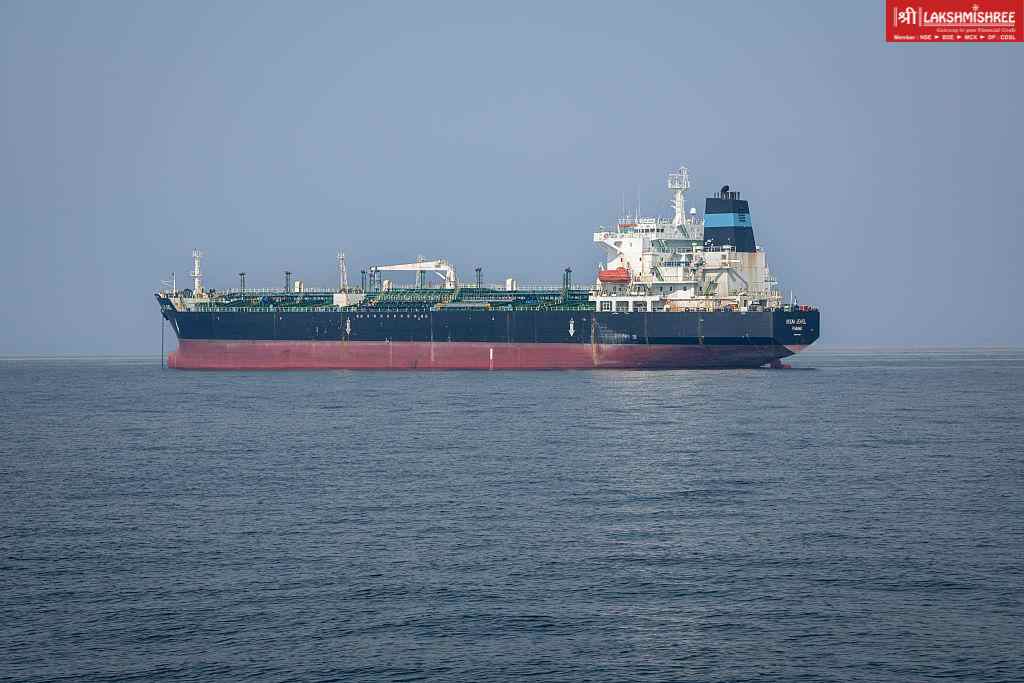
“Barrels in a tank in Texas cannot replace the physical flow of oil through the Gulf,” said one analyst at Kpler. The reality on the water is grim: three more tankers were reported ablaze in Iraqi waters this morning. The Thai-flagged vessel Mayuree Naree was struck by projectiles, leaving three crew members trapped in a burning engine room. Iran’s Revolutionary Guard (IRGC) has abandoned all ambiguity, stating that the waterway is “undoubtedly” under their control and that any vessel state-side or allied that ignores their warnings will be fired upon.
The $11 Billion Week: Washington’s Burn Rate
In a closed-door briefing on Capitol Hill, Pentagon officials revealed the sheer velocity of the war’s cost. The U.S. has spent $11.3 billion in just the first six days—a burn rate of nearly $2 billion a day. Over $5 billion of that sum was spent purely on high-end munitions as U.S. forces utilized AI-driven targeting to strike 5,500 locations across Iran.
Despite President Trump’s claims at a Kentucky rally that “we won” and that Iran has “no navy and no air force,” the tactical reality suggests a stalemate of attrition. Iran’s “ghost” infrastructure—mobile drone launchers and hidden missile silos—continues to pepper the Gulf with strikes. “We’ve got to finish the job,” Trump told supporters, even as he admitted to tapping the SPR “a little bit” to stave off $5-a-gallon gasoline in the American heartland.
The Human Toll: From Schools to Shelters
The fog of war has claimed its most tragic dividend yet. Preliminary Pentagon reports suggest that “outdated intelligence” led to an American missile strike on an elementary school in Iran on February 28. The strike killed 168 children and 14 teachers. Iranian state media has broadcast images of mass funerals, fueling a wave of anti-Western sentiment that has complicated any hope for a diplomatic exit.
In the UAE, the sounds of war have replaced the city’s famous fireworks. Children in Abu Dhabi and Dubai are reportedly suffering from acute anxiety as Iranian missiles are intercepted directly over residential skyscrapers. Schools have moved online, and the “SAKINA” mental health hotline has been flooded with over 500 calls from families terrified by the nightly boom of interceptions.
India’s Survival Pivot: The Russian Life-Line
For India, the closure of Hormuz is a direct threat to the national kitchen. The Strait carries 55% of India’s LPG and 30% of its LNG. With shipments at a “trickle,” the domestic price of cooking gas has jumped by ₹60 for households and ₹114 for commercial users.
New Delhi’s response has been one of cold pragmatism. By ramping up Russian oil imports to 1.5 million bpd, India is attempting to bypass the Gulf crisis entirely. This “Northern Route” strategy is the only thing keeping Indian refineries at capacity. However, the secondary effects are hitting the streets. In Kolkata, retailers report a near-total sell-out of induction cookers. “People are afraid of a future where the gas cylinder simply doesn’t arrive,” said a shop owner in Behala.
A Region in Flames: The Lebanon Expansion
The conflict is no longer contained to the Iranian plateau. In Lebanon, the death toll has surged past 600 as Israel expands its “Northern Shield” operations against Hezbollah. Over 800,000 people have been displaced, fleeing the Dahiya district of Beirut.
Iranian President Masoud Pezeshkian, in his first public set of demands, laid out a three-point ultimatum for peace: recognition of “legitimate rights,” payment of war reparations, and firm international guarantees against future aggression. The Western response has been a doubling down on military pressure, leaving the world in a state of suspended animation as Day 13 draws to a close.
As the “Closing Bell” rang in Mumbai, the sentiment was clear: the world is no longer waiting for the war to end; it is learning to survive in its wreckage. With oil at $100 and the Strait of Hormuz a no-go zone, the global economy has entered uncharted waters.

Kaashika is a social media strategist and financial content creator at Lakshmishree. She specialises in simplifying complex IPO and stock market concepts into clear, easy-to-understand content. Having created over 500+ pieces of financial content across reels, blogs, website posts and digital creatives, Kaashika helps audiences connect with the world of finance in a more accessible and engaging way.