
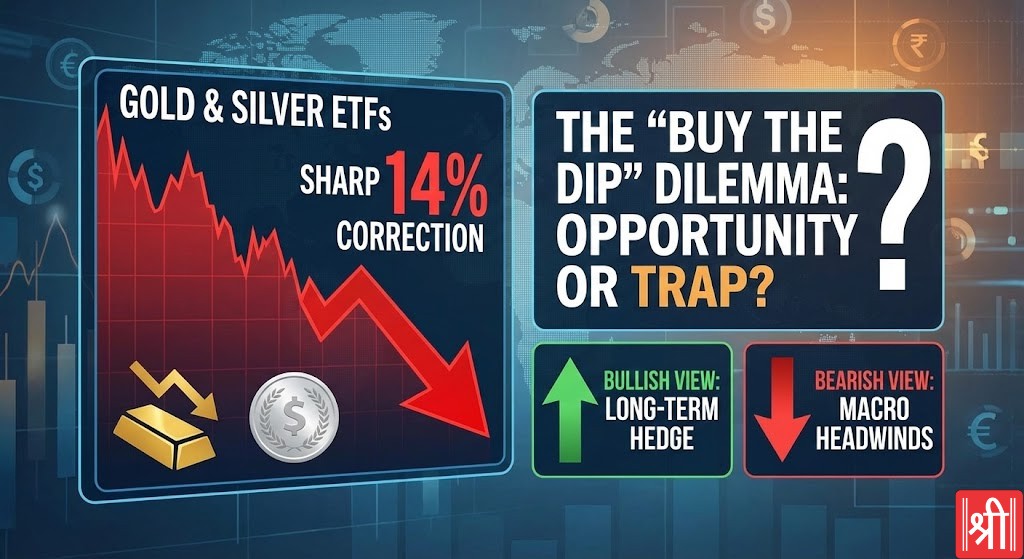
For investors seeking sanctuary in precious metals during uncertain times, recent weeks have delivered a harsh reality check. The perceived safe havens of gold and silver have experienced significant turbulence, leading to sharp drawdowns in the Exchange Traded Funds (ETFs) that track them.
Some leveraged silver ETFs have seen plunges exceeding 14% from recent highs, while standard gold ETFs have faced their most significant weekly retreat in months. This sudden reversal has left retail investors and portfolio managers alike asking two crucial questions: What triggered this aggressive sell-off, and does this pullback represent a golden buying opportunity or the start of a deeper bear market?
To navigate this, it is essential to understand the macroeconomic gears that turned against precious metals and weigh the arguments for and against re-entering the market.
The Anatomy of the Crash: Why Prices Plunged
The fundamental driver of precious metals prices rarely changes: they are viewed as a hedge against currency devaluation and economic instability. However, they are also non-yielding assets—they pay no dividends and no interest. This characteristic makes them extremely sensitive to the cost of money.
The recent crash was not caused by a single event, but a confluence of macroeconomic factors that simultaneously undermined the investment case for bullion.
1. The “Higher for Longer” Federal Reserve Realization
The primary catalyst for the sell-off was a violent resetting of market expectations regarding the US Federal Reserve’s monetary policy.
Heading into the recent period, markets had aggressively priced in multiple interest rate cuts for the year, anticipating a rapidly cooling economy. However, a string of hotter-than-expected inflation reports (both CPI and PPI), combined with resilient labor market data, forced the Fed to adopt a more “hawkish” stance.
Fed officials have reiterated that they are in no rush to lower rates until inflation is firmly back to their 2% target. When interest rates stay high, bonds and savings accounts offer attractive, risk-free yields. This increases the “opportunity cost” of holding gold and silver, which yield nothing. Investors essentially dumped non-performing metals to chase guaranteed yields in fixed income.
2. The Resurgent US Dollar and Spiking Yields
Directly tied to the Fed’s stance was the reaction in the currency and bond markets. The US Dollar Index (DXY) staged a powerful rally. Since gold and silver are globally priced in dollars, a stronger greenback makes these metals more expensive for foreign buyers, crushing demand and pressuring prices downward.
Simultaneously, US Treasury yields soared. The 10-year Treasury yield—a critical benchmark for global finance—broke through key resistance levels. When the “risk-free” rate rises significantly, it acts as kryptonite for gold prices.
3. Why Silver Suffered More
While gold took a significant hit, silver’s drop was far more severe, explaining the 14%+ drops in related ETFs.
Silver is often referred to as “gold on steroids.” It has a higher “beta,” meaning it is naturally more volatile than gold. Furthermore, silver is a hybrid asset. It is partly a precious monetary metal, but roughly half of its demand comes from industrial applications (electronics, solar panels, etc.).
When fears arise that the Fed might keep rates high enough to slow the economy and potentially trigger a recession, the industrial demand outlook for silver darkens, compounding the selling pressure it already faces as a precious metal.
The ETF Connection
It is important for investors to understand that the ETFs themselves—such as the SPDR Gold Shares (GLD) or iShares Silver Trust (SLV)—are not broken. They functioned exactly as designed.
These funds hold physical bullion in vaults to back their shares. When the spot price of the underlying metal drops due to global trading dynamics, the Net Asset Value (NAV) of the ETF drops in near-perfect lockstep. The crash was an asset class problem, not a financial product problem.
The Investment Dilemma: To Buy or Not to Buy the Dip?
With prices significantly lower than their recent peaks, the debate now shifts to strategy. Is this a fleeting discount or a falling knife?
The Case for “Buying the Dip” (The Bullish View)
Proponents of entering the market now argue that the fundamental reasons to hold gold remain intact long-term.
- Geopolitical Hedging: The global stage remains fraught with tension, from conflicts in Eastern Europe and the Middle East to ongoing trade friction between superpowers. Gold remains the ultimate insurance policy against geopolitical black swans.
- Central Bank Demand: Despite fluctuations in retail sentiment, global central banks have been buying gold at a record pace to diversify their reserves away from the US dollar. This provides a strong, long-term floor under prices.
- Technical Oversold Conditions: Many technical analysts argue that the sell-off was too fast and too deep. Relative Strength Indicators (RSIs) suggest the metals are “oversold,” indicating that a relief rally is statistically overdue as short-sellers cover their positions.
- The Inevitable Pivot: Bulls argue that the Fed cannot keep rates this high forever without breaking the economy or the commercial real estate market. Eventually, they must cut, and when they do, gold should soar.
The Case for Caution (The Bearish View)
Conversely, cautious voices warn that the immediate trend is downward and the macroeconomic headwinds are too strong to fight right now.
- Don’t Fight the Fed: The old adage applies. As long as data shows persistent inflation and a strong economy, the Fed will remain a formidable obstacle to gold rallies. Buying now could be premature (“catching a falling knife”) if yields have room to run higher.
- The Opportunity Cost is Real: With cash equivalents paying 5%, the incentive to park money in a volatile, non-yielding asset is currently very low for mainstream portfolio managers.
- Technical Damage: The recent drop broke through several key technical support levels on price charts. Bearish argue this as indicates a change in the medium-term trend from positive to negative, suggesting lower prices ahead before a true bottom forms.
Conclusion
The recent 14% crash in some silver ETFs and the significant correction in gold ETFs serves as a stark reminder that even “safe havens” are not immune to volatility, especially when the cost of money changes dramatically.
The sell-off was a rational market reaction to the realization that interest rates will remain higher for longer than previously hoped. For investors, the decision to “buy the dip” depends largely on their time horizon and risk tolerance. Long-term accumulators focused on insurance against future crises may view these prices as attractive entry points. However, short-term traders must remain wary of a macroeconomic environment that currently favors the dollar and high-yield bonds over bullion.

Kaashika is a social media strategist and financial content creator at Lakshmishree. She specialises in simplifying complex IPO and stock market concepts into clear, easy-to-understand content. Having created over 500+ pieces of financial content across reels, blogs, website posts and digital creatives, Kaashika helps audiences connect with the world of finance in a more accessible and engaging way.