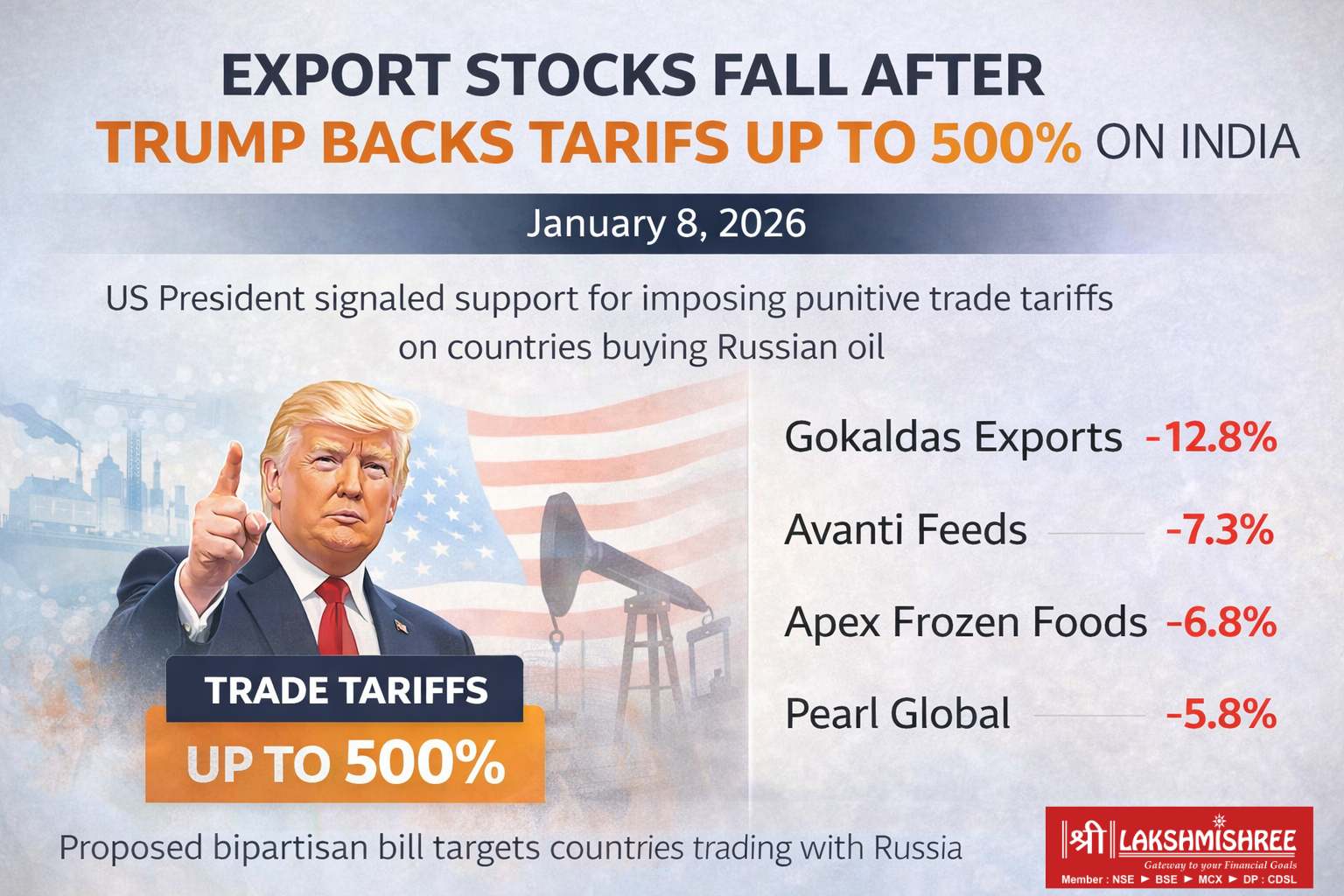

On January 21, 2026, Indian equity markets endured one of their sharpest sell-offs in recent memory with the BSE Sensex tumbling over 1,000 points and the **NSE Nifty 50 sliding beneath the psychologically crucial 25,000 mark. The unprecedented rout wiped out approximately ₹6 lakh crore in market capitalisation, leaving investors bewildered and risk sentiment deeply shaken.
The fall extended a multi-day downswing, dragging key benchmark indices to multi-month lows and narrowing hopes for a near-term rebound. Against this backdrop, both domestic and global headwinds combined to undermine confidence across sectors.
Here’s a detailed breakdown of what triggered this sudden market slump and the factors that have kept Dalal Street under pressure.
1. Global Geopolitical Tensions and Trade Uncertainty
One of the primary drivers of the sell-off was renewed geopolitical tension emanating from the United States, especially controversial trade rhetoric and tariff fears linked to policy statements by U.S. political leaders. These developments stoked fear of a fresh bout of global trade conflicts, disrupting global supply chains and raising the spectre of retaliatory measures that could slow economic growth.
Investors tend to shun riskier assets like equities in such environments, preferring safe havens, leading to heavy selling in emerging markets like India. Moreover, concerns about protectionist impulses in major economies aggravated global risk aversion.
2. Foreign Institutional Investor (FII) Outflows
Foreign portfolio investors have been net sellers in Indian markets for several sessions, a trend that intensified amid global uncertainty. Persistent FII outflows weaken liquidity, pressuring benchmark indices. These outflows reported as significant even in the days preceding the crash, reflected a broader shift of global capital toward safer developed-market assets such as U.S. Treasuries.
Fear of further tightening in global monetary conditions and higher interest rates overseas made returns in developed markets more attractive, drawing capital away from risk assets in India.
3. Weak Corporate Earnings and Sectoral Strain
Another key factor compounding the market slump was a slew of disappointing corporate earnings. Several heavyweight companies, particularly in the technology and banking sectors, reported mixed or lacklustre quarterly results, undercutting investor expectations and intensifying the sell-off in their stocks.
The IT sector, a significant component of India’s market capitalisation, saw notable declines as profit outlooks faltered and demand concerns emerged. This underperformance not only dragged the sector lower but also rippled across indices.
4. Record Weakness in the Indian Rupee
Currency markets added further strain to investor sentiment. The Indian rupee weakened to record lows against the U.S. dollar, a development that can have a dual impact: increasing import costs while signalling capital outflows.
A depreciating rupee often reflects broader macroeconomic concerns and can encourage foreign investors to exit risk assets, especially in equity markets. For multi-national corporations listed in India, a weaker rupee also dampens earnings expectations when translated into foreign earnings.
5. Technical Market Stress and Risk Aversion
Technical indicators in equity markets showed increasing weakness prior to the crash. Breaches of crucial support levels in index charts triggered automated selling and panic among algorithmic traders. When indices slip below widely observed moving averages or psychological benchmarks like 25,000 on the Nifty, stop-loss triggers and margin calls can accelerate declines.
Retail traders and short-term funds are particularly sensitive to such technical cues, and broad-based selling can result when a critical mass of positions is liquidated rapidly.
Broader Market Impacts
The sell-off was not isolated to headline indices. Midcap and smallcap segments also registered double-digit percentage losses in recent sessions, amplifying total investor wealth erosion. In fact, some analysts estimate overall market capitalisation losses approaching ₹18 lakh crore over three days when considering cumulative drops across indices.
Sector performance varied, but defensive assets like gold and government bonds saw increased demand as investors rotated out of equities.
What This Means Going Forward
In the wake of today’s crash Sensex and Nifty, market participants are recalibrating expectations:
- Volatility is likely to remain elevated as global geopolitical developments evolve.
- Corporate earnings outlooks will be closely monitored, especially for export-oriented sectors sensitive to global demand.
- Foreign investor behaviour will continue to be a key gauge for market stability.
- Technical support levels on benchmark indices will be watched to assess the risk of deeper corrections.
Regulatory bodies and policymakers may also intervene if retail panic intensifies, but historically, interventions have been targeted rather than sweeping.
Conclusion
The Indian stock market’s descent below 25,000 on the Nifty and the steep Sensex decline exemplify how global tensions, capital flows, earnings performance, currency dynamics, and technical market stress can converge to create a sharp correction. While the precise duration and depth of this downturn are uncertain, the current landscape signals a period of heightened risk awareness among domestic and international investors alike.
Investors are advised to evaluate diversification, risk tolerance, and long-term fundamentals before making decisions during such turbulent phases.

Kaashika is a social media strategist and financial content creator at Lakshmishree. She specialises in simplifying complex IPO and stock market concepts into clear, easy-to-understand content. Having created over 500+ pieces of financial content across reels, blogs, website posts and digital creatives, Kaashika helps audiences connect with the world of finance in a more accessible and engaging way.