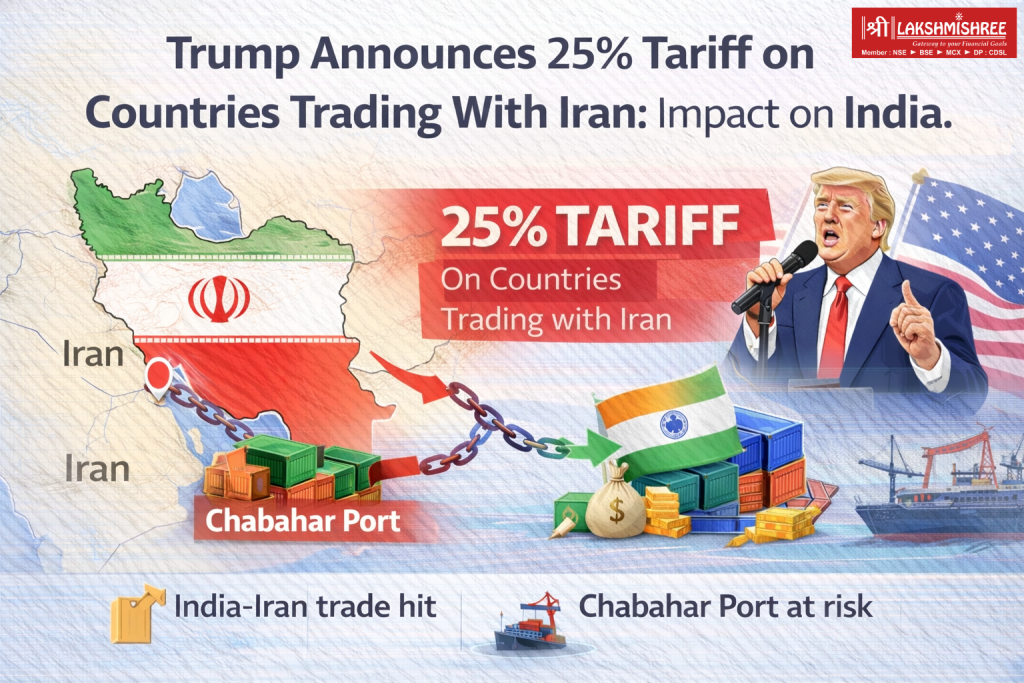
US President Donald Trump has announced a 25% tariff on countries that continue to trade with Iran, significantly escalating Washington’s economic pressure on Tehran and raising fresh concerns for nations with commercial and strategic ties to the country, including India.
The announcement, made via Trump’s Truth Social platform, comes amid ongoing nationwide protests in Iran and an intensified crackdown by Iranian authorities. Trump described the tariff as “final and conclusive,” signalling a tougher stance that goes beyond direct sanctions on Iran to penalise third-party trading partners.
What the Trump 25% Iran Tariff Means
Under the new framework, any country conducting trade with Iran could face an additional 25% import tariff when exporting goods to the United States. Unlike traditional sanctions, which target Iranian entities, this measure expands the scope by directly impacting partner countries.
Trade analysts note that this approach is designed to force nations to reassess their economic engagement with Iran by increasing the cost of access to the US market. The policy mirrors earlier US actions targeting countries importing Russian oil, but applies the pressure more broadly.
Impact on India–Iran Trade
India is not Iran’s largest trading partner, but bilateral trade remains economically relevant. In FY 2024–25, India’s total trade with Iran stood at approximately $1.68 billion, comprising exports of $1.24 billion and imports of $0.44 billion.
Key Indian exports to Iran include:
- Organic chemicals (~$513 million)
- Fruits and nuts (~$312 million)
- Mineral fuels and related products (~$86 million)
While these numbers represent a small share of India’s overall trade, the concern lies in compounded tariff exposure. Indian exporters are already facing higher US tariffs linked to Russian oil purchases, and the Iran-related levy could further weaken export competitiveness.
India–US Trade Talks Under Pressure
The Trump Iran tariff announcement coincides with ongoing India–US trade negotiations, which are already strained by tariff disputes and market access issues. The new measure adds complexity, potentially narrowing diplomatic room for compromise.
Experts point out that even limited Iran exposure can trigger uncertainty for exporters, as US buyers may factor geopolitical risks into sourcing decisions, impacting orders and pricing.
Chabahar Port: Strategic Project at Risk?
One of the most sensitive issues is the Chabahar Port project in Iran, a cornerstone of India’s regional connectivity strategy. The port allows India access to Afghanistan and Central Asia while bypassing Pakistan and also supports humanitarian supply routes.
Although Chabahar has previously received limited exemptions from US sanctions, analysts warn that indirect effects of the new tariff regime could emerge. Financing, insurance, logistics partnerships, and private sector involvement may become more cautious under heightened sanction risks.
Legal Uncertainty in the US
Trump’s tariff authority is currently under review by the US Supreme Court, which is examining the legality of broad executive-imposed trade penalties. A ruling is expected soon.
If the court limits executive powers, enforcement of the Iran-linked tariffs could weaken. Conversely, a favourable ruling would strengthen Washington’s ability to use tariffs as a geopolitical tool, increasing uncertainty for trading partners like India.
Global Implications and Comparisons
China, Iran’s largest trading partner, is expected to face the greatest impact, followed by the UAE, Turkey, and select European nations. Many countries may now restructure trade channels or seek exemptions to reduce exposure.
For India, the challenge is balancing strategic autonomy, energy security, and export competitiveness amid a more fragmented global trade environment.
Conclusion: What Lies Ahead for India
The immediate economic impact of Trump’s 25% tariff on countries trading with Iran may be manageable for India. However, the broader implication is clear: global trade is increasingly being shaped by geopolitics rather than economics alone.
India’s response is likely to focus on diversification of export markets, diplomatic engagement with Washington, and safeguarding strategic projects such as Chabahar. How effectively these pressures are managed will influence India’s trade trajectory and geopolitical positioning in 2026 and beyond.

Kaashika is a social media strategist and financial content creator at Lakshmishree. She specialises in simplifying complex IPO and stock market concepts into clear, easy-to-understand content. Having created over 500+ pieces of financial content across reels, blogs, website posts and digital creatives, Kaashika helps audiences connect with the world of finance in a more accessible and engaging way.