India is set to present the Union Budget 2026 on February 1, 2026, at a time when the country continues to stand out as one of the world’s fastest-growing major economies. With real GDP growth projected at 7.4% for FY26, the budget is expected to reinforce economic momentum while navigating global uncertainty, fiscal consolidation, and domestic structural priorities.
Unlike earlier budgets that were shaped by post-pandemic recovery or inflation management, Budget 2026 is widely seen as a continuity budget with strategic intent—one focused on strengthening long-term growth drivers rather than introducing abrupt or disruptive policy shifts.
Economic Backdrop: Growth Resilience Amid Global Headwinds
The global economic environment entering 2026 remains challenging. Growth across advanced economies has moderated, financial conditions remain tight, and geopolitical tensions continue to influence trade flows, capital movement, and commodity prices. Against this backdrop, India’s economic performance has remained comparatively resilient.
Key macro indicators shaping Budget 2026 include:
- Real GDP growth (FY26): ~7.4%
- Inflation: Moderating toward the Reserve Bank of India’s comfort range
- Credit growth: Broad-based across retail, MSMEs, infrastructure, and services
- Fiscal consolidation: On track following a calibrated deficit-reduction path
This combination of growth and stability provides the government with policy space to support expansion without compromising fiscal discipline—an equilibrium likely to define the budget’s underlying philosophy.
A First in Decades: Union Budget 2026 to Be Presented on a Sunday
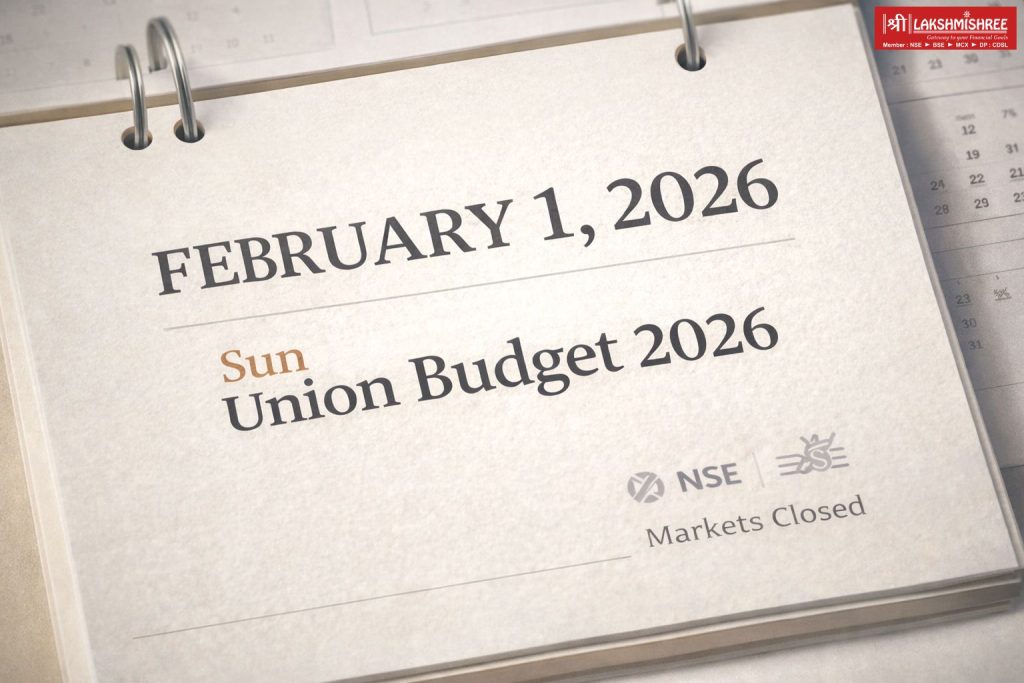
Union Budget 2026 carries a quiet but notable distinction—it will be presented on a Sunday, a rarity in India’s parliamentary and budgetary history. Traditionally, Union Budgets have been presented on weekdays to align with parliamentary schedules and market hours. A Sunday presentation signals a subtle but meaningful shift in how the budget is positioned.
The timing is significant for several reasons. First, it allows policymakers, investors, industry leaders, and analysts a full day to study the budget’s provisions before financial markets reopen on Monday. This reduces the scope for knee-jerk reactions and enables more considered interpretation of fiscal measures, sectoral allocations, and policy signals.
Second, the choice reflects the evolving nature of budget communication. In a digital, real-time information environment, budgets are no longer consumed only within Parliament or trading rooms. They are analysed simultaneously by domestic households, global investors, businesses, and institutions. Presenting the budget on a non-trading day accommodates this broader audience without immediate market pressure.
Finally, the symbolism aligns with the broader tone expected from Budget 2026 measured, forward-looking, and execution-focused. While the day itself does not alter policy substance, it reinforces the government’s emphasis on clarity, preparedness, and stability at a time of global economic uncertainty.
Infrastructure Spending: Execution Over Expansion
Capital expenditure has been a central pillar of India’s recent growth strategy, and Budget 2026 is expected to sustain this emphasis. However, the focus is likely to shift from aggressive expansion toward execution, completion, and efficiency.
Priority areas include:
- Railways, logistics corridors, and freight infrastructure
- National highways and expressways
- Urban transport, housing, and municipal infrastructure
- Defence manufacturing and domestic supply chains
Rather than headline-driven increases, the budget is expected to stress timely project completion, asset monetisation, and enhanced private-sector participation, particularly through structured public-private partnerships.
Manufacturing and Supply Chain Integration
Manufacturing remains central to India’s medium-term growth strategy, especially as global companies reassess supply chains. Budget 2026 is expected to continue supporting domestic manufacturing through targeted, outcome-linked incentives.
Likely policy directions include:
- Refinement and selective extension of Production-Linked Incentive (PLI) schemes
- Greater focus on component and intermediate manufacturing
- Support for electronics, semiconductors, defence, and specialty chemicals
- Export-oriented assistance for MSMEs
The broader objective is to move beyond assembly-led growth toward value-added manufacturing, strengthening India’s position in global supply chains.
Consumption and the Middle-Class Focus
Household consumption remains a key growth engine. Building on earlier tax and GST measures, Budget 2026 may include calibrated steps to support demand without undermining fiscal prudence.
Potential measures include:
- Simplification of personal income tax structures
- Targeted relief for salaried taxpayers
- Continued rationalisation of indirect taxes on essential goods
Incremental increases in disposable income could provide support to consumption-linked sectors such as retail, FMCG, housing, and automobiles.
Employment and Skill Development
Employment generation remains a structural priority. Budget 2026 is expected to continue shifting emphasis from short-term employment support toward long-term workforce readiness.
Key focus areas include:
- Skill development and vocational training
- Support for labour-intensive industries
- Incentives for formal job creation through social-security-linked schemes
The objective is to align India’s demographic advantage with productive employment opportunities across manufacturing, infrastructure, and services.
Fiscal Discipline and Market Confidence
Financial markets will closely track fiscal-deficit projections in Budget 2026. The government has consistently reiterated its commitment to consolidation, and this approach is expected to continue.
The anticipated strategy includes:
- Gradual deficit reduction without sharp expenditure cuts
- Prioritisation of capital expenditure over revenue spending
- Strategic divestments rather than broad-based privatisation
This balanced approach supports investor confidence while preserving growth capacity.

Kaashika is a social media strategist and financial content creator at Lakshmishree. She specialises in simplifying complex IPO and stock market concepts into clear, easy-to-understand content. Having created over 500+ pieces of financial content across reels, blogs, website posts and digital creatives, Kaashika helps audiences connect with the world of finance in a more accessible and engaging way.